FSD AFRICA ANNUAL IMPACT REPORT 2025

Unlocking Africa’s Capital to Transform its Future:
Five Years of Impact

A word from our Chairperson

As 2025 draws to a close, FSD Africa can look back on a year of profound disruption—and some remarkable achievements. The abrupt end of USAID and significant cuts across bilateral aid have focused a fundamental rethink on how the international community engages itself in Africa’s development. In parallel, African leaders have been clear; the continent must advance greater economic self-determination, mobilise more domestic resource, and accelerate private sector-led growth.

For this shift to take root, Africa’s domestic financial markets must rise to the challenge. Throughout 2025, a consensus has emerged that Africa’s commercial banks, pension funds and sovereign wealth funds must assume a much larger role in financing development. Doing so would reduce Africa’s reliance on external development finance—finance that is not always available when needed and often comes at a high cost.

This conviction sits at the heart of FSD Africa’s strategy. Faced with serious economic, social and environmental problems, Africa needs a financial system that is fit-for- purpose - deeper financial markets that are supportive of investment and better able to address systemic risks, imbalances and inequities - such as those driven by high levels of debt, the changing climate and persistent social disparities that mean that men have better opportunities than women, and that younger people struggle to find jobs across a continent whose median age is 19.

The geopolitical realignments of 2025 have only made FSD Africa’s mission more urgent. I say that without any sense of complacency because there is so much hard work for us ahead. Yet I am confident that FSD Africa, with its unique approach to strengthening financial markets with grants and technical assistance and reinforcing this by actually investing directly in the financial system, can play an outsized, catalytic role in driving economic transformation in Africa. By bringing capital and know-how together in imaginative ways, we can unlock opportunities for entrepreneurs, investors and jobseekers, across the continent.

This Development Impact Report 2025 tells an important story. It reflects on our previous strategy which concluded last year. It shows how we will build on those lessons in our new 2025-2030 strategy. And it highlights the breadth and depth of our impact across the financial system. The diversity of the projects and transactions featured is a source of great pride to the Board. It demonstrates the effectiveness of our “whole of system” approach to financial market transformation.

The persistence and technical skill of the teams at FSD Africa and FSD Africa Investments shine through these stories: this is complex work that requires significant dedication.

I am especially proud that, in a year of shrinking Official Development Assistance, FSD Africa has successfully diversified its partnerships. Two years ago, we made a deliberate decision to broaden our funding base. This has paid off in 2025, with significant new grant agreements with the Gates Foundation, Quadrature Climate Foundation, the Children’s Investment Fund Foundation, Mastercard Foundation and Norad, the Norwegian development agency. We are thrilled to welcome these new partners to FSD Africa and thank them all for their generosity and confidence in us. These partnerships will allow us to keep driving forward our new strategy in critical areas such as sovereign debt advisory work, SME financing and resilient urban infrastructure.

The UK government remains our largest partner. We are deeply grateful for the support we receive from FCDO and DEFRA. It was particularly affirming that this year FCDO country posts accounted for almost a quarter of our total funding, a much higher figure than last year.

We are excited that FSD Africa will become increasingly multilateral in character. New funding partners can lean on us – we have strong governance and a hard-working, ethical and engaged corporate culture. But we also recognise it will take time for us to be able to replicate the scale and flexibility of FCDO’s funding. We are therefore greatly encouraged that FCDO continues to indicate its intention to maintain its support for FSD Africa.

Looking ahead to 2026, we do so with confidence and renewed ambition. I extend my deepest thanks to my colleagues on the Board for their dedication and commitment, and to the entire FSD Africa team for another year of excellent achievement.
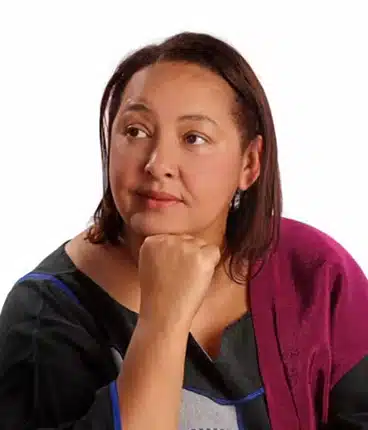
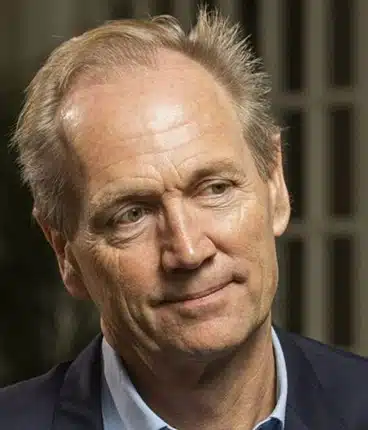
Frannie Leutier
Board Chair, FSD Africa

A word from our CEO

Welcome to FSD Africa’s 2025 Impact Report. As our 2021– 2025 strategy period concludes, this report reflects on the progress we have made and the lessons that will guide the implementation of our strategy for the next five years

The past year was marked by dramatic events, including political violence in parts of the continent, sparked by frustration at the slow pace of economic reform and perceived governance failures. Following aid budget cuts in the early part of the year, the OECD now estimates that ODA will fall by between 9% and 17% in 2025, accelerating a downward trajectory. But despite negative localised impacts, Africa’s economic resilience has been quite impressive. Indeed, the IMF predicts that GDP growth will rise to 4.4% in 2026 and that more than half of the world’s fastest-growing economies will be from Africa

Nonetheless Africa’s financing needs and the opportunity for investment far outstrip what can be provided through public funding. We should focus relentlessly on creating conditions that are conducive for private investment. Strengthening financial markets is a crucial part of that.

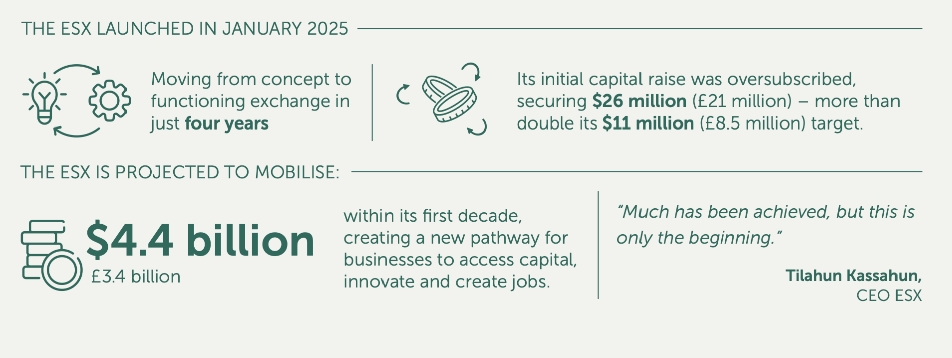
This is what FSD Africa is in business to do and our commitment to doing it is rock solid. We continue, for example, to support the mobilisation and catalysation of capital, to finance infrastructure development and other transformative initiatives. This year we provided technical and financial support to help build Ethiopia’s first modern- era securities exchange, which is projected to raise over $4.4 billion (£3.4 billion) in its first decade.

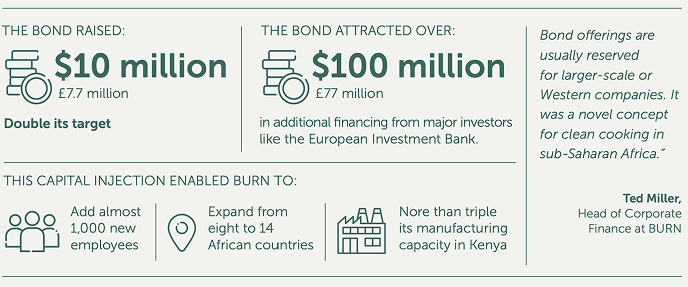
We also partner with private sector players to help transform markets. The technical assistance we provided to BURN – a clean cookstove manufacturer – has helped the company raise $110 million (£85 million). BURN has now expanded its presence from eight to 14 African countries, added almost 1,000 new employees and more than tripled its manufacturing capacity.

Our support for early-stage climate innovations has helped test new, scalable models that can be replicated across the continent. The start-ups we have supported are providing climate solutions to over 1.3 million people and businesses. They have gone on to raise $15 million (£11.6 million) in follow-on funding, in markets that have been very difficult for capital raising.

As we look ahead, our 2025–2030 strategy will build on all this work. We will continue to leverage strategic partnerships to design, implement and invest in catalytic interventions in Africa’s financial markets, while promoting thought leadership to influence a shift in the way capital is allocated – for the benefit of people and the planet.

I acknowledge the generous support of the UK Government’s Foreign, Commonwealth & Development Office. Their continued commitment has been instrumental in bringing in new partners, such as the Gates Foundation, the Children’s Investment Fund Foundation (CIFF), Quadrature Climate Foundation, Mastercard Foundation, Shell Foundation and Norad. These are influential actors with many excellent ideas and we look forward with great excitement to seeing how these partnerships develop.

My gratitude also extends to the dedicated FSD Africa team, whose tireless dedication and creativity are playing a vital role in transforming the continent.

Mark Napier
CEO, FSD Africa

A word from our Principal Funder

THE FOREIGN, COMMONWEALTH & DEVELOPMENT OFFICE

Africa is poised for continued growth and meaningful development in the years to come. The continent boasts abundant natural capital, a growing youth population and a rapidly expanding pool of assets under management. Africa’s financial s ystems c ontinue t o e volve t owards achieving greater levels of self-reliance, to meet the continent’s vast development and financing needs.

The UK’s approach to Africa is evolving. We are gradually shifting from the position of donor to investor, working in partnership with African countries to our shared objectives on inclusive growth and economic transformation. The continent has a growing pool of investable domestic capital through pension funds, insurers and sovereign wealth funds, which can be channelled into critical areas of development while generating returns for investors.

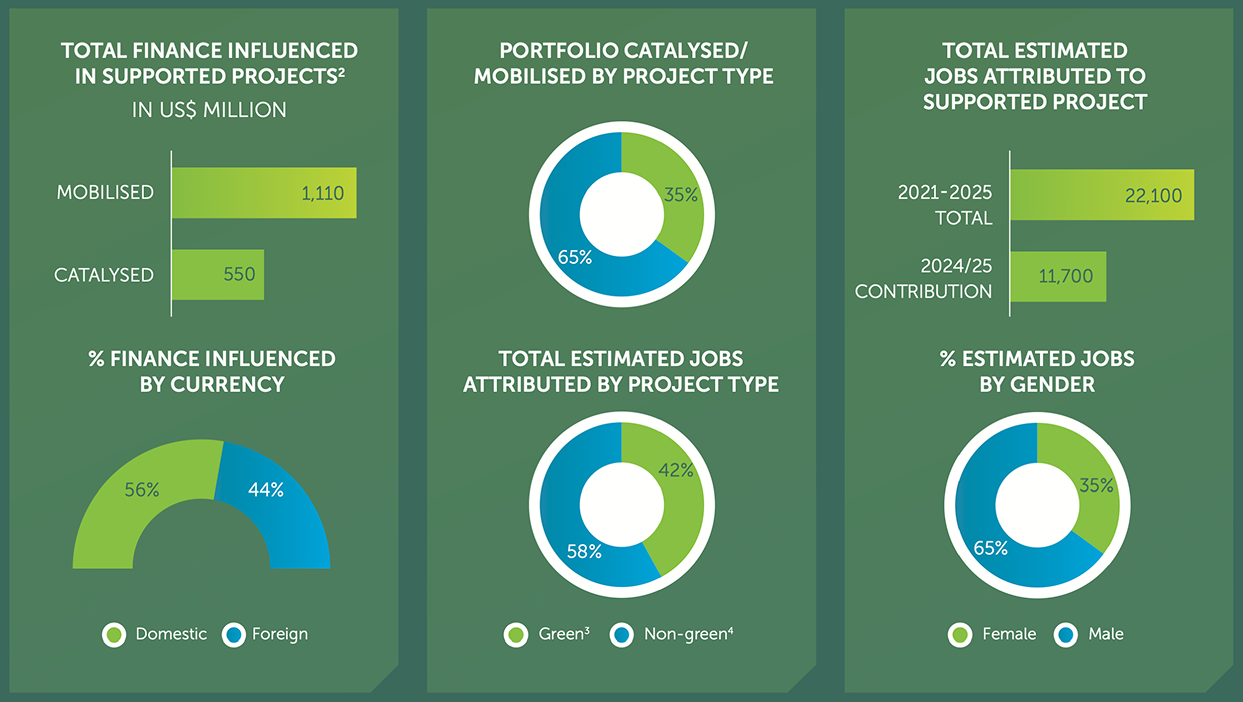
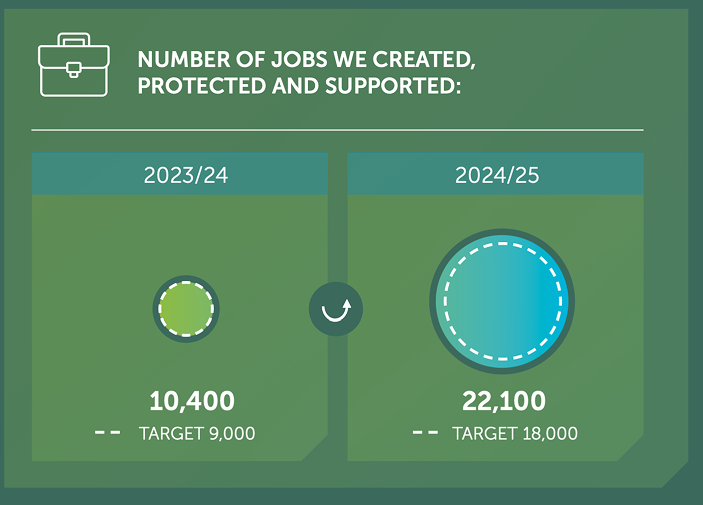
FSD Africa is one of our key partners on the continent, leading the way in building robust domestic capital markets. It’s doing this by designing innovative new financial products, providing technical assistance and upstream policy work, working on regulatory reform, and creating environments in which financial market innovation can take place. In the closing months of 2025, FSD Africa demonstrated its value by supporting Nigeria’s Lagos State to launch the first ever subnational Green Bond in West Africa, which will be used to finance solar power plants, as well as forestry, agriculture and water projects. In the last five years, FSD Africa has supported the mobilisation of £1.3 billion ($1.7 billion) of private capital through many other transactions like this one, of which more than a third is local capital. This has impacted the real economy, supported over 20,000 jobs, and improved access to basic services for over 1 million people.

Public financing alone will never be sufficient to tackle the global development challenges we face. We proudly support FSD Africa’s efforts to back early-stage entrepreneurs in Africa by financing debt and equity funds that are investing in businesses who are pioneering smart, local solutions for sustainability. For example, FSD Africa’s decision to invest $3.1 million (£2.4 million) in Spark Energy demonstrated its support toward a fund manager deploying capital to solar project developers that are addressing Africa’s access to reliable and sustainable energy in the commercial and industrial sectors in southern Africa.

FSD Africa Investments (FSDAi) has demonstrated the impact of deploying catalytic investments to enable a just transition for Africa, where women and girls are not left behind. The FSDAi Nyala Facility has provided both debt and equity financing to several funds across Africa, who are providing more early-stage financing for women-led small and growing enterprises in East Africa and Francophone West Africa regions. The FSDAi Nyala Facility is shaping the future of gender-lens investing in Africa, accelerating the shift towards a more inclusive and diverse capital base.

The UK is proud of the results FSD Africa has achieved over the last 13 years. We support FSD Africa’s new five-year strategy, which will see it double down on catalytic interventions that enable sustainable capital allocation. This impact report evidences the unique role that FSD Africa continues to play as a market facilitator for Africa’s green growth, a critical role given the urgent need to fill the climate finance gap. As you read the report, I invite you to reflect on Africa’s untapped potential, the immense talent and resources available to enable a just transition, and the promise for partnership and investment to achieve the shared mission of economic growth.

The Rt Hon. Baroness Chapman
Minister of State (International Development and Africa)
01

Our Impact

2021-2025

1.7M
TONNES
CO₂e reduced / avoided
69
TARGET:45
Regulations, policies and investment guidelines and master plans developed / refined
852
TARGET:441
Institutions reached by FSD Africa-sponsored capacity building and TA initiatives
1M
PEOPLE
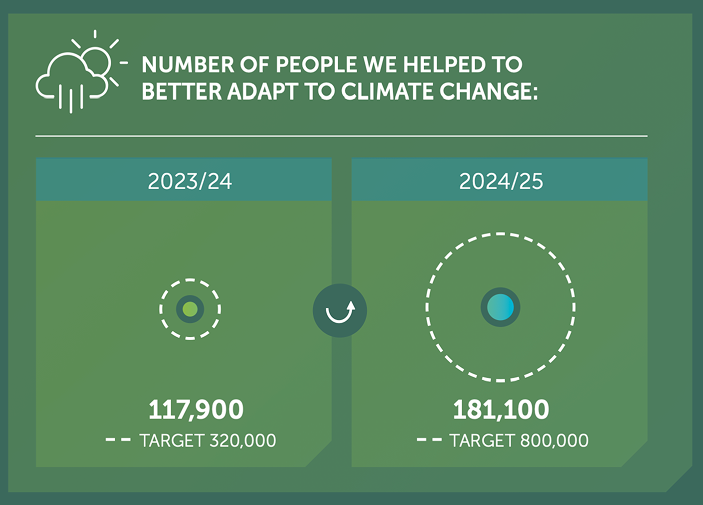
Improved access to basic services
12
TARGET:12
Market infrastructure designed/improved/adapted
27
TARGET:20
Transactions closed
Connecting Africa’s capital to its future

With private assets under management projected to grow, the continent has a powerful resource with which to fund a sustainable future. But a gap remains. Less than 2.7% of Africa’s pension fund assets, for example, are allocated to productive local sectors like infrastructure.


Bridging the gap

Bridging this gap is critical to growth, particularly in areas where challenges and opportunities intersect:

Climate action: Africa receives only 3.3%6 of global climate finance despite its vulnerability – there’s a clear need for investment in green instruments and adaptation technologies.

Energy transition: With vast solar resources, the continent could become a leader in renewable energy, addressing the needs of over 600 million people who lack access to electricity.

Inclusive finance: Market inefficiencies, such as the low percentage of venture capital directed to female entrepreneurs, point to untapped potential in high-growth, underserved ventures.


To tackle these challenges, Africa needs strong financial markets. This is where we make a difference. FSD Africa works with the financial sector to design and build the solutions needed to connect Africa’s capital with its most promising opportunities.

02
A five-year view:
What we’ve achieved
02

A five-year view: What we’ve achieved

This section looks at our performance against the goals we set for our 2021– 2025 strategic period. We hold ourselves accountable by using our goals to guide our work and measure our progress.

We’ve mobilised or catalysed finance for:

Small and Medium Enterprises (SMEs)
+$0M
£624 million
Adaptation and Resilience
+$0M
£289 million
Renewable Energy
+$0M
£100 million
AFRICA’S LOCAL FINANCIAL SYSTEMS
+$0M
£269 million
Strengthening Domestic Financial Markets
56%
of the transactions we’ve supported
have been financed in local currency.
We believe this is vital for building long-term resilience, as it mitigates foreign exchange risk and helps to leverage the continent’s own pool of funds.
03
Our Work: Evidence and Case Studies
03

Our Work: Evidence and Case Studies

This section provides evidence and case studies that show the impact our work has had. It highlights why we engage, how we execute and what our approach delivers.

Case Study: Burn Manufacturing

How a green bond financed millions of cleaner cookstoves

The Problem
In sub-Saharan Africa, nearly one billion people – half the population – rely on polluting fuels for cooking. The effects on public health, the environment and the economy are severe

BURN Manufacturing wants to change this. They produce clean cookstoves, which are safer to use and less polluting than traditional methods. But to reach more people with their products, they needed access to large- scale capital.

The Solution
In 2023, FSD Africa helped BURN launch its first green bond. Our technical assistance ensured the bond met international principles, persuading regulators to recognise the environmental benefits of clean cookstoves. In turn, that boosted BURN’s credibility with investors.

The Impact
Case study – Burn Manufacturing

What we've learnt:
Lessons in building renewable energy markets

KEY LESSON:

Catalytic capital is most effective when paired with stakeholder alignment.

Our experience in developing the Geothermal Risk Transfer Facility showed that for interventions to succeed, they must be tailored to the domestic context and incorporate the views of local stakeholders

A January 2025 roundtable we co-hosted with Kenya’s Ministry of Energy revealed that private developers were still held back by a lack of bankable power purchase agreements, and by financing instruments that weren’t aligned with the high-risk nature of exploration. This taught us that even a well-designed product can fail if the ecosystem isn’t ready to adopt it. We learnt that our role must go beyond technical design, to align incentives and build trust between regulators, developers and insurers. We now dedicate resources to building these collaborative platforms from the outset, ensuring the market is ready for the solutions we support.

We now dedicate resources to building these collaborative platforms from the outset, ensuring the market is ready for the solutions we support.

Case Study: Ethiopian Securities Exchange (ESX)

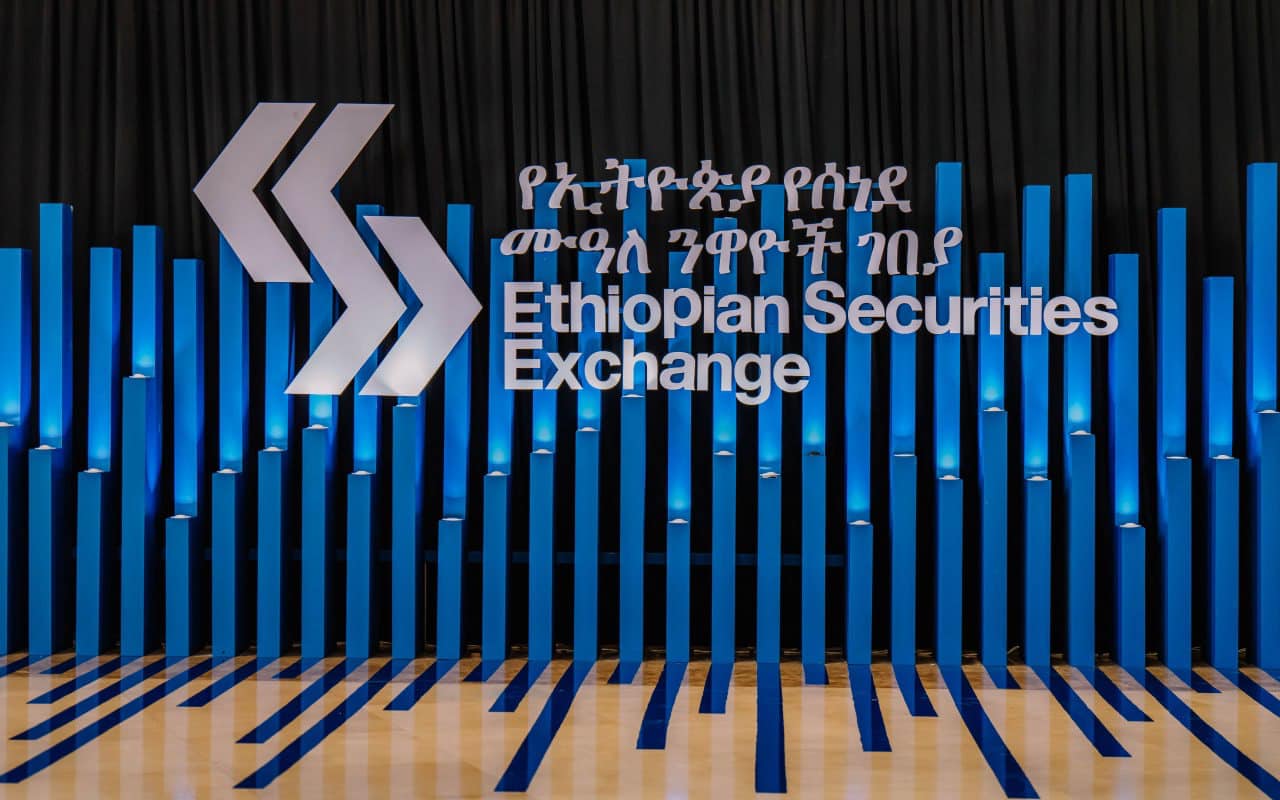
Building the ESX – Ethiopia’s first ever securities exchange

The Problem
For decades, Ethiopia had struggled with an underdeveloped financial sector. It had no securities exchange and no formal capital market. This held back private sector growth and led to heavy reliance on external borrowing, with private sector credit and domestic savings well below regional averages for sub-Saharan Africa.

The government’s 2019 Homegrown Economic Reform Agenda identified a critical need: to build a capital market that could connect investors with capital-starved businesses. As one official explained, “We needed a mechanism for the government and the private sector to raise long-term capital outside the banking system.”

The Solution
In 2020, a technical team began the task of creating a functioning capital market from scratch. FSD Africa played a pivotal role from the start, providing technical and financial support. “We didn’t have sufficient capacity, but FSD Africa addressed this gap,” says Assefa Sumoro, part of the technical team and now a leading official at the Ethiopia Capital Markets Authority.

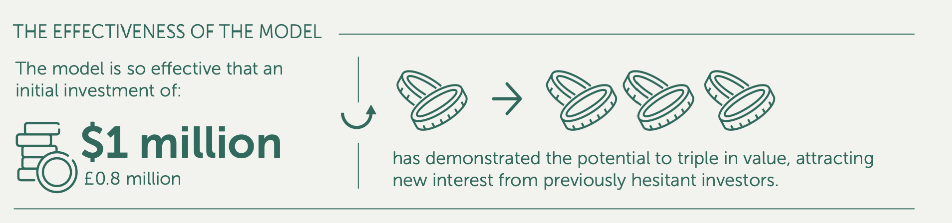
Our support included funding for the Central Securities Depository system, sponsoring training for over 600 Ethiopian professionals, providing technical input on the Capital Market Proclamation, and funding learning trips to other African exchanges. Our work culminated in a $1 million (£0.8 million) anchor investment in the new Ethiopian Securities Exchange.

The Impact
Case study – ETHIOPIAN SECURITIES EXCHANGE (ESX)

What we've learnt:
Lessons in deepening local financial systems

KEY LESSON:

Unlocking domestic capital requires investment in the capacity of local actors.

Our experience in developing the Geothermal Risk Transfer Facility showed that for interventions to succeed, they must be tailored to the domestic context and incorporate the views of local stakeholders

This is a lesson drawn directly from an external evaluation of our regulatory support programme. The evaluation found that a “lack of financial and human resources has emerged as a consistent challenge for regulators, slowing down implementation” of new market-building frameworks. Our work with the Africa Pensions Supervisors’ Network Programme showed us that while regulators were open to new investment guidelines, they lacked the in-house expertise to supervise new asset classes. This taught us that financing alone cannot solve the problem.

We now prioritise tailored training in our work, to give local decision makers the power to ensure our partners can own and manage new market solutions sustainably.

Case Study: Catalyst Fund

Seeding a climate-tech revolution

The Problem
To build climate resilience, Africa needs a pipeline of innovative, home-grown businesses. But early-stage climate ventures often struggle to secure the initial capital and expert support they need. Without investment, these start-ups can’t scale their solutions, and the growth of climate adaptation and resilience is being stifled.

The Solution
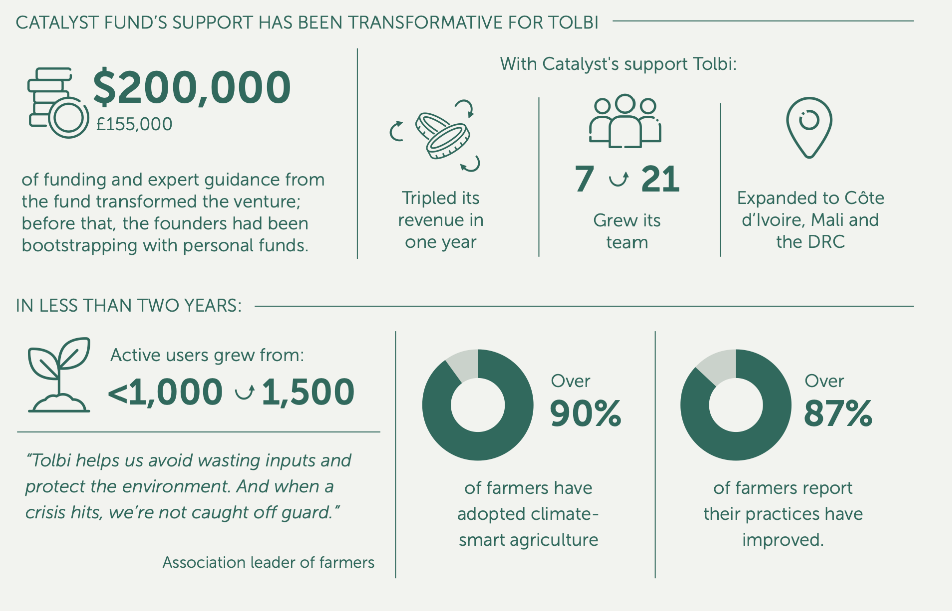
Catalyst Fund, anchored by a $4.5 million (£3.5 million) investment from FSDAi, was created to fill this gap. It provides pre-seed financing and hands-on venture building to start-ups developing climate solutions.

One such venture is Tolbi, a Senegalese agri-tech start-up. It uses AI and satellite imagery to provide smallholder farmers with hyper-local data on everything from crop health to weather patterns. This data helps farmers increase their yields and build resilience to climate shocks. It also helps them access financing from banks who previously saw them as too risky. As co-founder Mouhamadou Lamine Kebe says, “Without accurate data, there’s no visibility, and without visibility, there’s no investment.”

The Impact
Case study – Burn Manufacturing

What we've learnt:
Lessons in climate adaptation and resilience

KEY LESSON:

Building a new market requires a willingness to absorb the early-stage risks that the private sector can’t take on.

Our experience in developing the Geothermal Risk Transfer Facility showed that for interventions to succeed, they must be tailored to the domestic context and incorporate the views of local stakeholders

Our market analysis consistently showed a lack of bankable projects or clear business cases in emerging sectors like climate-smart agriculture. This was due to high infrastructural costs and technical risks that make commercial investors hesitant to be the first movers. It confirmed that one of our most crucial roles is to provide the patient, risk-tolerant capital that can demonstrate viability where others see risk. Investing in initiatives that focus on early-stage climate ventures has become an important part of our toolkit, with support for projects like Catalyst Fund helping to give commercial investors the confidence to follow.

Case Study: Women's Investment Club (WIC) Capital

Helping women-led businesses thrive

The Problem
This ‘missing middle’ financing gap, caused by societal barriers and limited financial inclusion, leaves a vital segment of the economy starved of the resources it needs. Women-led enterprises remain small or informal, unable to reach their potential – and that slows innovation, job creation and growth.

The Solution
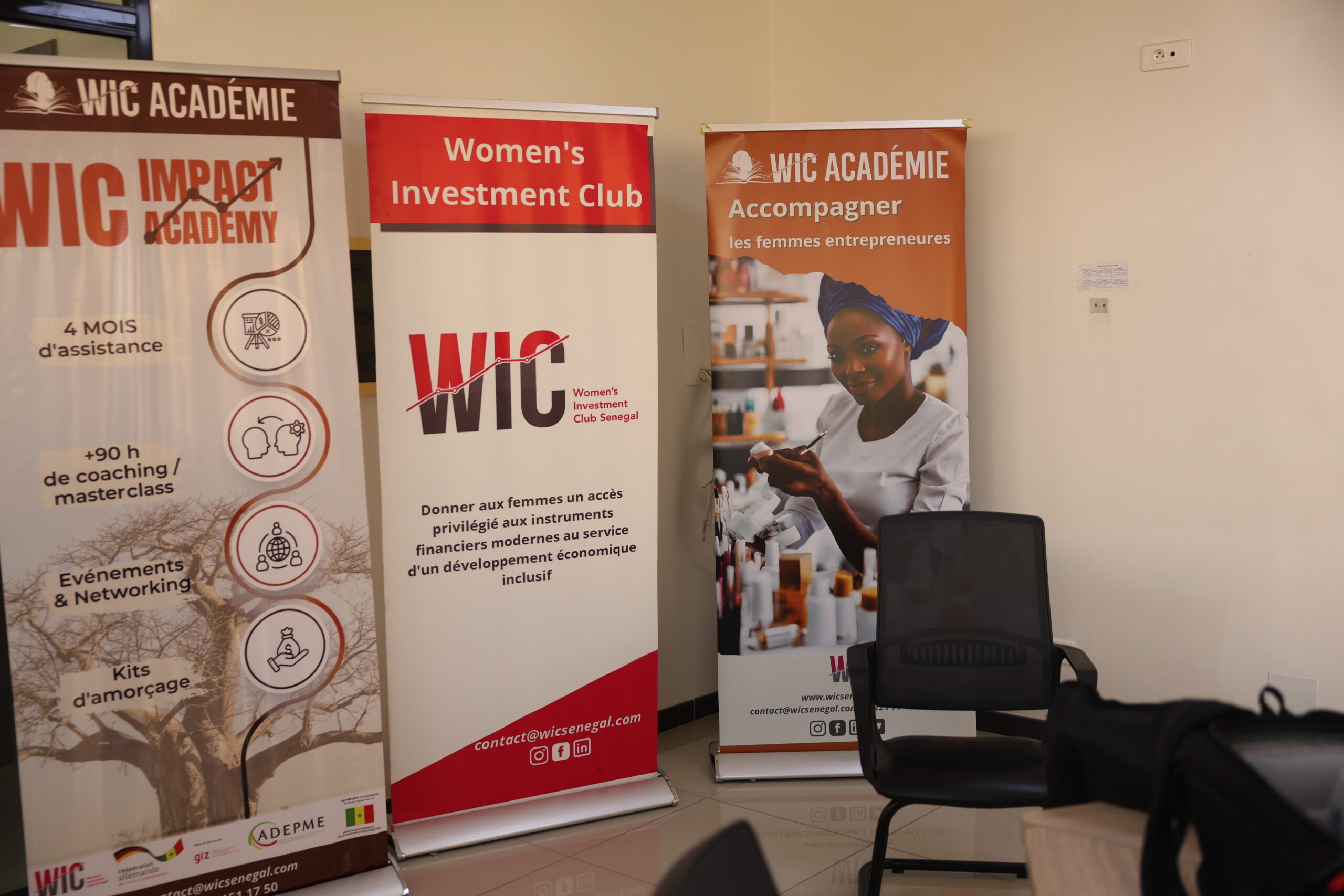
WIC Capital was launched in 2019 to tackle this challenge by blending investment with targeted technical assistance for women-led SMEs in Francophone West Africa. Recognising WIC Capital’s pioneering model, FSDAi Nyala Facility provided a $1 million (£0.8 million) loan in 2023 to help scale its operations. This support was more than just financial; it provided access to networks and advice that reinforced WIC’s strategy.

WIC Capital supports its investee founders with coaching in financial management, marketing and board governance, from experienced female mentors. This hands-on support de-risks WIC’s investments and prepares businesses for sustainable growth.

The Impact
Case study – Burn Manufacturing

What we've learnt:
Lessons in MSME investment and building the ecosystem

KEY LESSON:

A full and adaptive ecosystem of support is needed to bridge the SME financing gap, especially for women.

This lesson was drawn from our 2024 Gender Impact Tracing study, which found that while women’s participation in early-stage incubators is high, “very wide funding gaps emerge” as they seek commercial capital. This reveals an “intentionality gap”, where investor interest in women-led businesses often fails to translate into actual investment, because of risk perceptions and gender biases

Our research revealed that this gap is underpinned by nuanced challenges that require tailored responses, such as targeted selection and influence of investees. We’ve targeted funds already achieving gender impacts and are helping them grow by directing capital towards them and supporting the crowd-in of new investors. We’ve also helped funds to make changes to their existing teams and structures, to become more inclusive through collaborative partnership. Our due diligence process has enabled these funds to set up structures and reporting processes that make them attractive to institutional investors.