Kenya
Acacia EPZ
Collects, processes and exports gum arabic with more than 12,000 collectors, over 70% of them women, giving dryland communities a direct financial reason to keep Kenya's acacia woodlands standing.
A 12-month accelerator supporting African nature-first enterprises with catalytic capital, transaction support, and investor engagement.
About NFIL
NFIL helps promising nature-first businesses grow into scalable, investment-ready enterprises that can attract mainstream financing and deliver long-term environmental and economic value.
It focuses on nature-based business models where primary revenue comes from nature-positive products, services and supply chains — not from carbon finance. It also aims to generate practical learning on what works in African nature finance markets, helping strengthen future investment approaches, partnerships and market confidence.
What enterprises get
CAPITAL
A flexible returnable and non-returnable grants to help promising businesses scale.
TRANSACTION SUPPORT
Covering financial structuring, governance, impact metrics, investor readiness and other enterprise-specific needs.
INVESTOR ENGAGEMENT
Structured investor engagement and capacity building to increase appetite and capability to underwrite nature-first deals.
The challenge
Across Africa, businesses working to protect and restore nature often struggle to access finance, even where commercial demand is strong. Revenues can take time to materialise, ecological outcomes are challenging to measure and price, and investors often lack comparable deal examples or confidence in the market.
First Cohort
NFIL's first cohort supports five African enterprises embedding regenerative practices into agricultural and natural resource supply chains across land, freshwater, and marine ecosystems.
For NFIL, regenerative models are those that improve soil, water, and biodiversity over time while delivering commercially viable returns.
Meet the first cohort
The first NFIL cohort brings together five African enterprises whose revenues depend on protecting, restoring and sustainably managing nature. Select an enterprise to read its full profile.
Kenya
Collects, processes and exports gum arabic with more than 12,000 collectors, over 70% of them women, giving dryland communities a direct financial reason to keep Kenya's acacia woodlands standing.
Kenya
Acacia EPZ turns one of nature's oldest commodities into a modern engine for conservation and community income. The company collects, processes and exports gum arabic, a natural ingredient found in soft drinks, confectionery, pharmaceuticals and cosmetics, working with more than 12,000 collectors, over 70% of them women, across Kenya's dryland northern counties. Founded in 2015 by Sam Ombogo Nyamboga, Acacia EPZ has transformed what was once an informal, unpaid harvest into a structured, traceable source of income for thousands of families, while giving communities a direct financial reason to keep their acacia woodlands standing. Because the gum only flows from healthy trees, protecting the drylands is not a corporate add-on; it is the foundation of the business.
Global demand for gum arabic has long depended on Sudan, but conflict there has disrupted that supply and left international buyers searching for sources they can trust. Acacia EPZ is stepping into that gap with a model built on transparency: every kilogram can be traced from collector to shipment through the company's proprietary Dukawala platform. Rather than sourcing from conflict-affected areas, Acacia is opening a new, community-endorsed sourcing corridor in Abyei, South Sudan, developed in partnership with local authorities and a cross-border consortium committed to climate-resilient, conflict-free value chains. With revenues up 56% over the past two years and 300+ metric tonnes exported to date, Acacia EPZ already sells profitably to international buyers.
The Nature-First Innovation Lab selected Acacia because it proves that conservation can be both commercially viable and genuinely impactful: a business that turned an unpaid harvest into dignified income for thousands of families while safeguarding the woodlands they depend on. Through NFIL, Acacia EPZ aims to strengthen its financial fundamentals and connect with investors, scaling its supply of traceable, conflict-free gum arabic to meet growing international demand, sustaining both the drylands and the communities at the heart of its story.
Visit Acacia EPZ“Being selected for the Nature-First Innovation Lab is a real milestone for us. It recognises what we've believed since day one: that keeping Kenya's acacia woodlands standing and building genuine incomes for the families who harvest from them are the same task, not competing ones. The world needs a source of gum arabic it can trust, one that isn't tied to conflict, and that is exactly what we are building.”
Sam Ombogo Nyamboga, Founder & CEO, Acacia EPZ
Kenya
A regenerative agroforestry production platform and integrated value chain combining Brazilian syntropic agroforestry design with plant-nutrition science, technology, value addition, training and consultancy.
Kenya
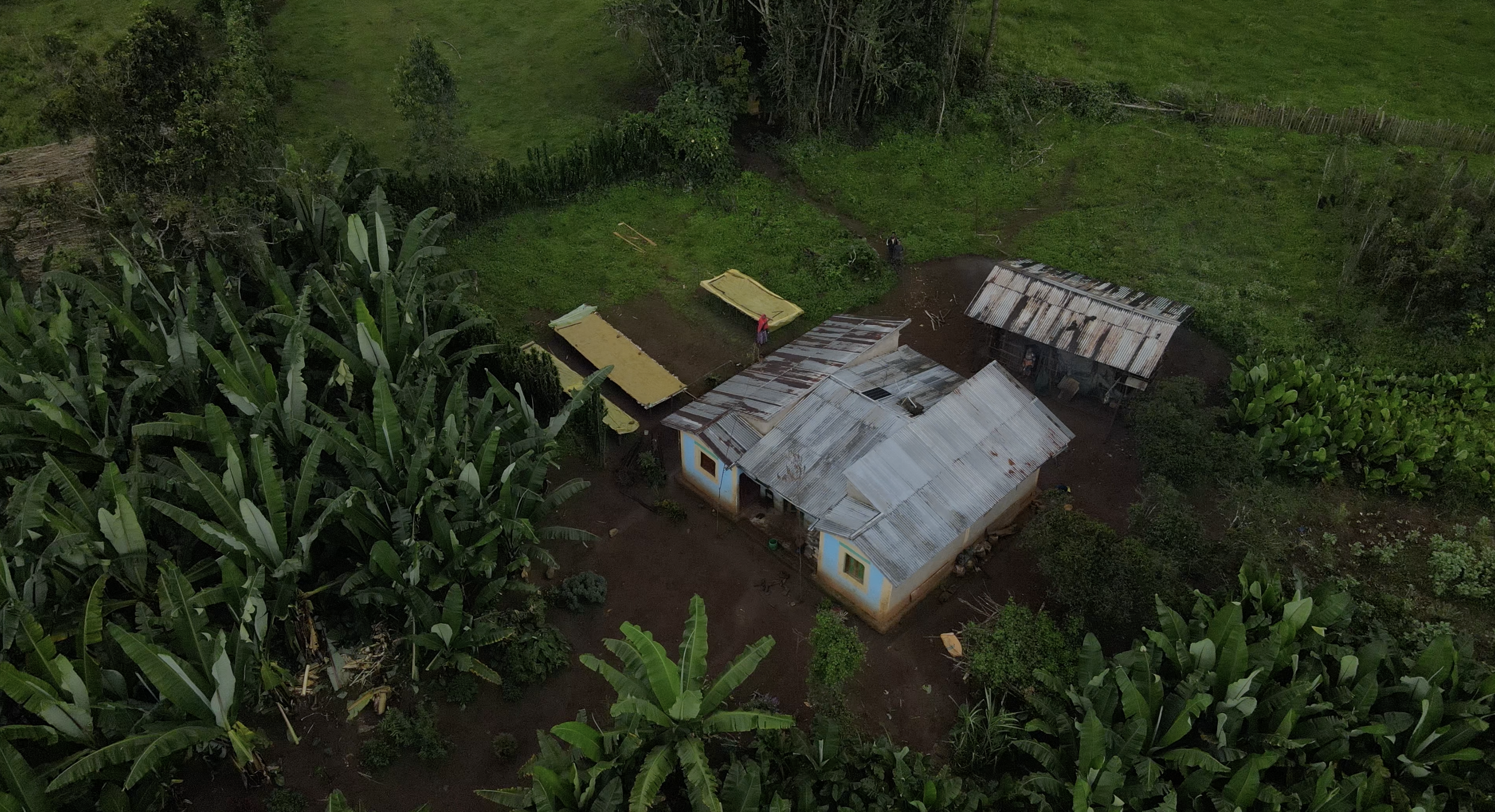
ForestFoods is a regenerative agroforestry production platform and integrated value chain combining Brazilian syntropic agroforestry design with plant-nutrition science, technology, value addition, training and consultancy. It develops resilient farming systems where food crops, trees, livestock, soil biology and natural ecosystem processes work together to produce food, livelihoods and restored landscapes.
Founded in 2022 by Sven Verwiel, Michelle Verwiel, Tim Vinopal and Gui Sobral, ForestFoods now operates across approximately seven hectares in three distinct agroecological zones: the Kenyan highlands around Limuru, the Rift Valley around Naivasha, and the dry side of Mount Kenya around Naro Moru and Timau.
Its nucleus farms serve as both production and training bases. They demonstrate the farming systems, develop skilled growers and support an expanding outgrower network. ForestFoods coordinates production, agronomy, quality control, farm-management technology, logistics, market access and processing so that individual farms can contribute to one dependable supply chain.
The platform combines primary production of vegetables, herbs, spices, fruit, eggs, timber and other perennial crops with value-added products such as teas, powders, essential oils, dehydrated foods and preserves. It also generates revenue through farm visits, training courses and consultancy, allowing ForestFoods to transfer its methods to other farms and landscapes. These activities reinforce one another: training develops the skilled workforce and future grower network, consultancy extends the model to new land, and additional production increases the volume moving through the company’s market and processing infrastructure.
ForestFoods is now scaling through a new coastal site at Shimba Hills, which will produce cocoa and a range of high-value horticultural crops, including vanilla, cinnamon and other spices, alongside fruit, nuts and timber. The site is intended to become a larger regenerative production, processing, training and market-access platform for the Kenyan coast and wider region.
ForestFoods was chosen for the depth of its regenerative practices and the potential of the Shimba Hills site. It is one of the few businesses demonstrating that syntropic agroforestry can function as a commercially viable farming and value-chain model in East Africa across multiple crops and agroecological zones. NFIL’s support is focused on helping the company prepare for its next round of investment, clarify how the Shimba Hills platform will operate commercially, and connect ForestFoods with investors who share its interest in resilient, regenerative food systems.
“Our ambition is to show that producing good food, restoring landscapes and creating meaningful livelihoods can go hand in hand with building a commercially successful business. As we expand to Shimba Hills, NFIL will help us strengthen the business model that connects our farms and growers with processing, training and reliable markets. We hope the programme will unlock the investment and partnerships we need to grow, working with people who share our long-term vision for regenerative food systems.”
ForestFoods

 East Africa
Works with smallholder farmers in Ethiopia, Kenya and Uganda to produce regenerative natural ingredients for beauty and personal care brands, and develops market instruments such as insetting units and the Bee Bond.
East Africa
Forested works with smallholder farmers in Ethiopia, Kenya, and Uganda to produce regenerative natural ingredients such as honey, beeswax, Nilotica shea butter, and other carrier and essential oils, which it sells to well-known beauty and personal care brands. The business started in Ethiopia as a honey manufacturing business, and has since grown into a multi-ingredient supplier trusted by companies that want ingredients that are regeneratively and equitably produced. Their impact is digitally measured and monitored via their Insetting Management System.
Forested is also growing the global market for regenerative agriculture by developing innovative ways for brands to pay for the environmental benefits their procurement enables (on top of the ingredient itself): market instruments like insetting units and outcomes-based financing vehicles like their Bee Bond. Insetting allows brands to fund emissions reductions and nature improvements within the same supply chains they source from, rather than purchasing unrelated offsets. Forested’s Bee Bond mobilizes climate adaptation finance to improve pollinator health in landscapes for increased agriculture yields.
Forested was chosen because it pairs genuinely premium, regenerative products with some of the most inventive financing thinking in the space, exploring tools like insetting and outcomes-based financing that could open up entirely new sources of capital for regenerative farming. NFIL will work alongside Forested to support its capital raise, scale up its impact, and provide strategic support as the company looks to grow its global brand relationships.
 Tanzania
Uses microbial fermentation to turn organic waste into protein-rich fish feed and natural fertiliser, cutting reliance on imports while returning nutrients to the soil.
Tanzania
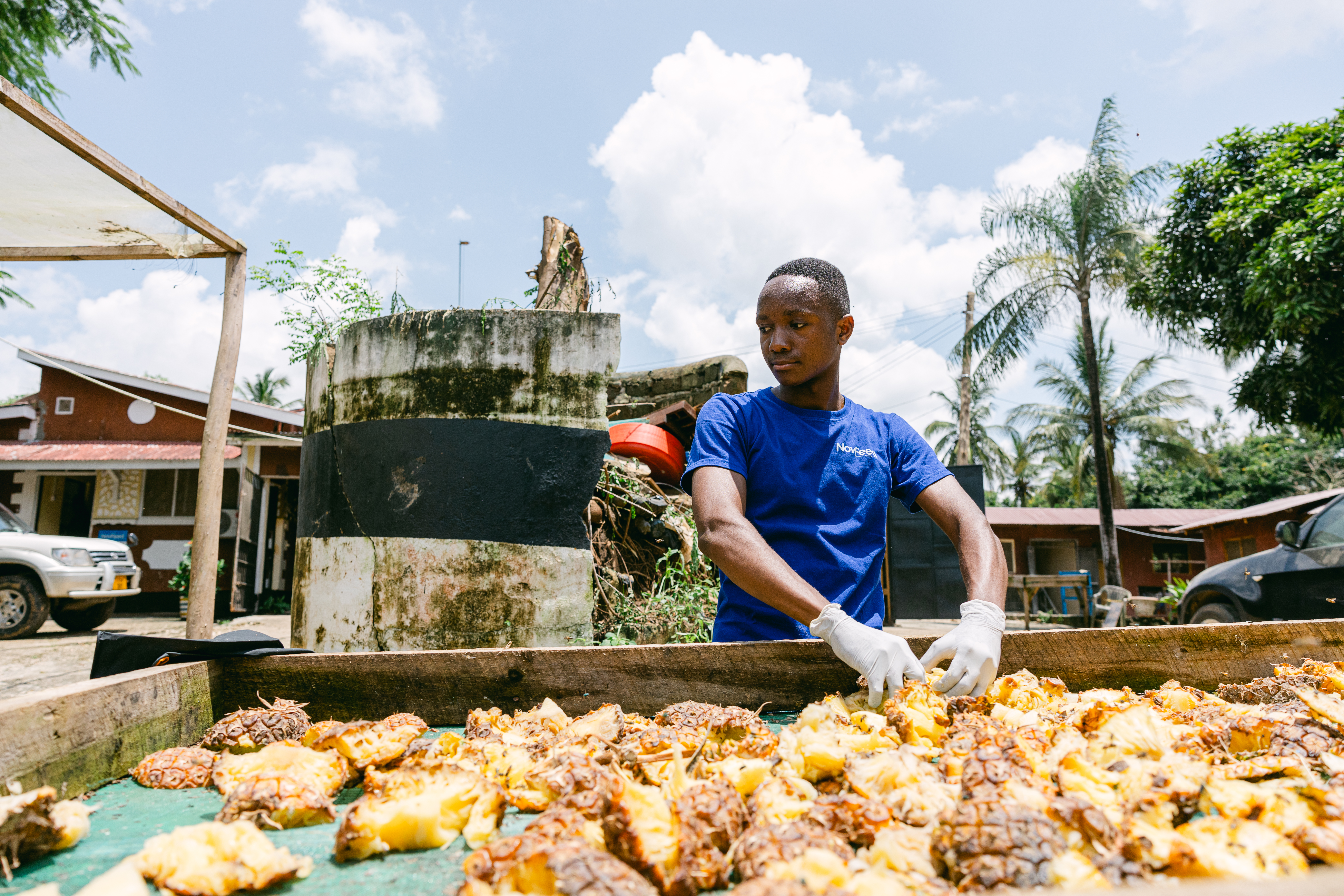
NovFeed runs a genuinely circular model, using microbial fermentation to turn organic waste into two separate products: protein-rich fish feed and natural fertiliser. Waste that would otherwise be burned or discarded becomes an input for both aquaculture and crop farming, cutting the need for imported feed and chemical fertiliser while returning nutrients to the soil rather than stripping them from it. Co-founded in 2020 by Diana Orembe and Otaigo Elisha, the company sells through more than 300 shops and distributors across Tanzania, a country that still imports most of its fish feed and fertiliser from abroad. NovFeed's fertiliser helps restore soil health, giving it a clear environmental benefit alongside its role in reducing that import dependence.
NFIL chose NovFeed for its innovative biological model and the impact it has on soil health, a critical piece of what makes the enterprise nature-positive, as well as its contribution to national goals around local production and reducing reliance on imports. As NovFeed enters its next phase of growth, NFIL will support the company in strengthening and consolidating its investor materials, developing a road-map for hiring and retaining key talent, and advancing its current raise through targeted investor introductions. The programme will also help NovFeed build on its growing market traction as it expands production and reaches larger commercial customers.
“Joining the NFIL cohort is a proud and exciting moment for the NovFeed team, as we continue building practical, nature-positive solutions that create value for farmers while contributing to more sustainable food systems. NFIL comes at the right stage as we prepare for our next phase of scale, allowing us to strengthen our investment readiness, refine our growth strategy, and connect with the capital, strategic partners, and markets we need to take our proven model from Tanzania to wider African markets.”
NovFeed
 Ghana
Sources, processes and exports shea butter and baobab, working with more than 1,000 women harvesters across 22 districts in Northern Ghana.
Ghana
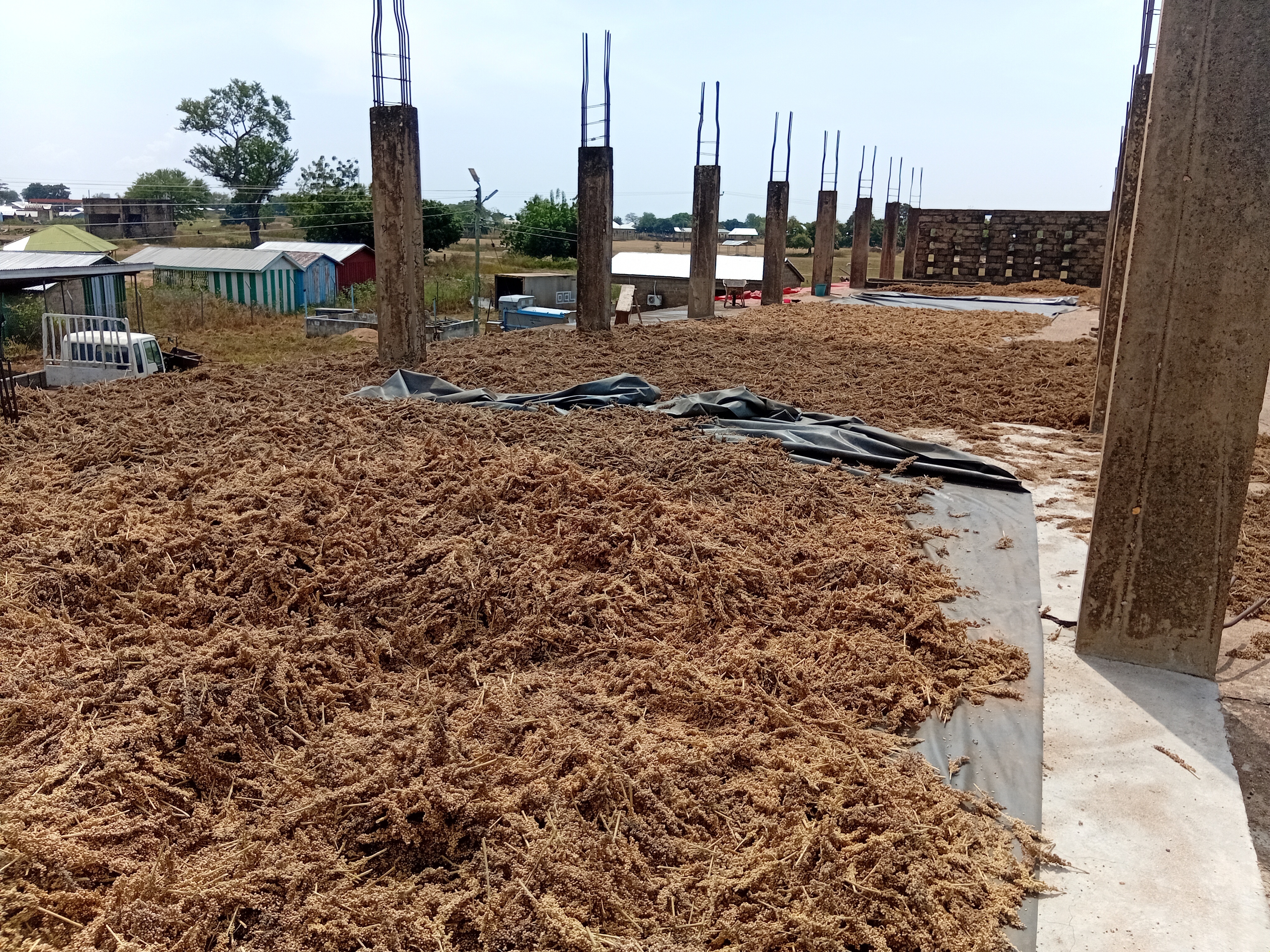
Savanna Agri Chains sources, processes and exports shea butter and baobab, natural ingredients used in skincare and food. Founded in 2016 and led by Julius Awaregya, the company works with more than 1,000 women who harvest across 22 districts in Northern Ghana. The company is certified by EcoCert SAS (NOP & EOS), enabling export of natural organic products into the Americas and European countries, as well as by ‘Regenified’, confirming that its farming practices actively restore the land, alongside organic and wild-harvest certifications.
Savanna has demonstrated positive revenue growth in the last three years, doubling its revenue between 2023 and 2025. The company now seeks investment to grow its operational footprint, which will increase its procurement coverage from 22 to 40 districts in Ghana and expand to the Central South Region in Burkina Faso, as well as increase the number of collectors and aggregators from 2,800 to 7,000, positively impacting their households' livelihoods.
Savanna was chosen for its genuine environmental impact: restoring land using methods such as natural composting and better water use, while steadily growing its sales and supporting a supply chain almost entirely run by women. NFIL's support will help Savanna get its finances and paperwork in order, formalise how the company is run, and prepare it to raise the money it needs to centralise its operations and upgrade its processing equipment so more of the value it generates can be captured locally.
Eligibility criteria
Based in Africa
Headquartered or primarily operating in Africa.
Nature-first
A nature-positive enterprise with a core revenue model which depends on protecting, restoring or sustainably managing ecosystems or biodiversity.
Regenerative supply chains
Operating in agroforestry, regenerative agriculture, sustainable wild harvest, nature-positive food or fibre value chains, and the broader blue economy, including freshwater and marine-based activities.
Post-feasibility
Have demonstrated proof-of-concept, are generating revenue, and are actively preparing to raise commercial investment.
Legal status
Registered legal private entity.
If you are a nature-positive enterprise looking to scale but your core revenue model is carbon credits, our sister accelerator programme, the Carbon Accelerator Programme for the Environment (CAPE), could be for you. Find out more here.
Living Lab
The Living Lab is the home for what NFIL learns along the way, including blog posts, publications and other learning pieces on what works in African nature finance. New content is added here as it becomes available.
The first learning pieces from the programme will be published here soon.
Partners
NFIL was launched by FSD Africa in partnership with Systemiq and the African Natural Capital Alliance (ANCA), as part of ongoing efforts to help build financial systems that work for nature and for Africa.
The programme is funded by UK International Development (FCDO), DEFRA, and NORAD, and delivered in collaboration with partners across Africa and internationally.

FAQs
About the programme and the first cohort
About the programme
NFIL supports post-feasibility, nature-positive enterprises operating in Africa. In practice, that means the enterprise has moved beyond the idea or pilot stage: its model works, it is generating revenue (or has a credible, near-term path to it), and it is seeking investment to grow.
NFIL supports enterprises from across Africa. The first cohort spans Kenya, Tanzania, Ghana and East Africa.
The core business activity should deliver evidenced benefits for nature — such as biodiversity, soil health, water, or ecosystem restoration — embedded in how the enterprise produces and sells, not as a side activity. Environmental and community integrity is assessed alongside commercial viability.
NFIL targets enterprises whose primary revenue is not carbon-linked. If carbon credits are the main revenue stream, CAPE, FSD Africa’s sister programme focused on carbon and biodiversity markets, may be a better fit. Enterprises with secondary carbon revenue alongside a core product business remain eligible for NFIL.
The support
Selected enterprises receive a tailored package, which may include:
No. NFIL is not an investor and does not take equity. It provides grants and advisory support designed to help enterprises reach the point where investors can make a decision.
Yes — there is no fee to participate. Some grants are structured as returnable, meaning they may be repaid once an enterprise successfully raises investment, allowing the capital to be recycled to support other enterprises.
The programme runs for 12 months. Support is sequenced and milestone-based: it deepens as enterprises progress, and the level of support is reviewed at defined decision points.
No programme can guarantee an investment outcome. NFIL’s goal is to get each enterprise to decision-grade readiness — a complete, credible package that investors can diligence and decide on.
This will depend on the use case of the particular grant and be determined during the grant administration. For returnable grants, this will likely be covered for working capital so repayment can extend beyond the 12 months of this accelerator. Returnable grant repayment terms and triggers will be tailored to each enterprise’s unique situation.
Yes, the first cohort for NFIL focuses on regenerative supply chains, and there will be future cohorts in the coming year, with a focus to be confirmed.
NFIL and CAPE
The key question is not whether carbon is present in the model. It is whether carbon is the primary basis on which an investor would underwrite the enterprise.
Get in touch
For enquiries, including questions about the programme, the first cohort or partnership opportunities, please contact the FSD Africa Secretariat at NFIL@fsdafrica.org