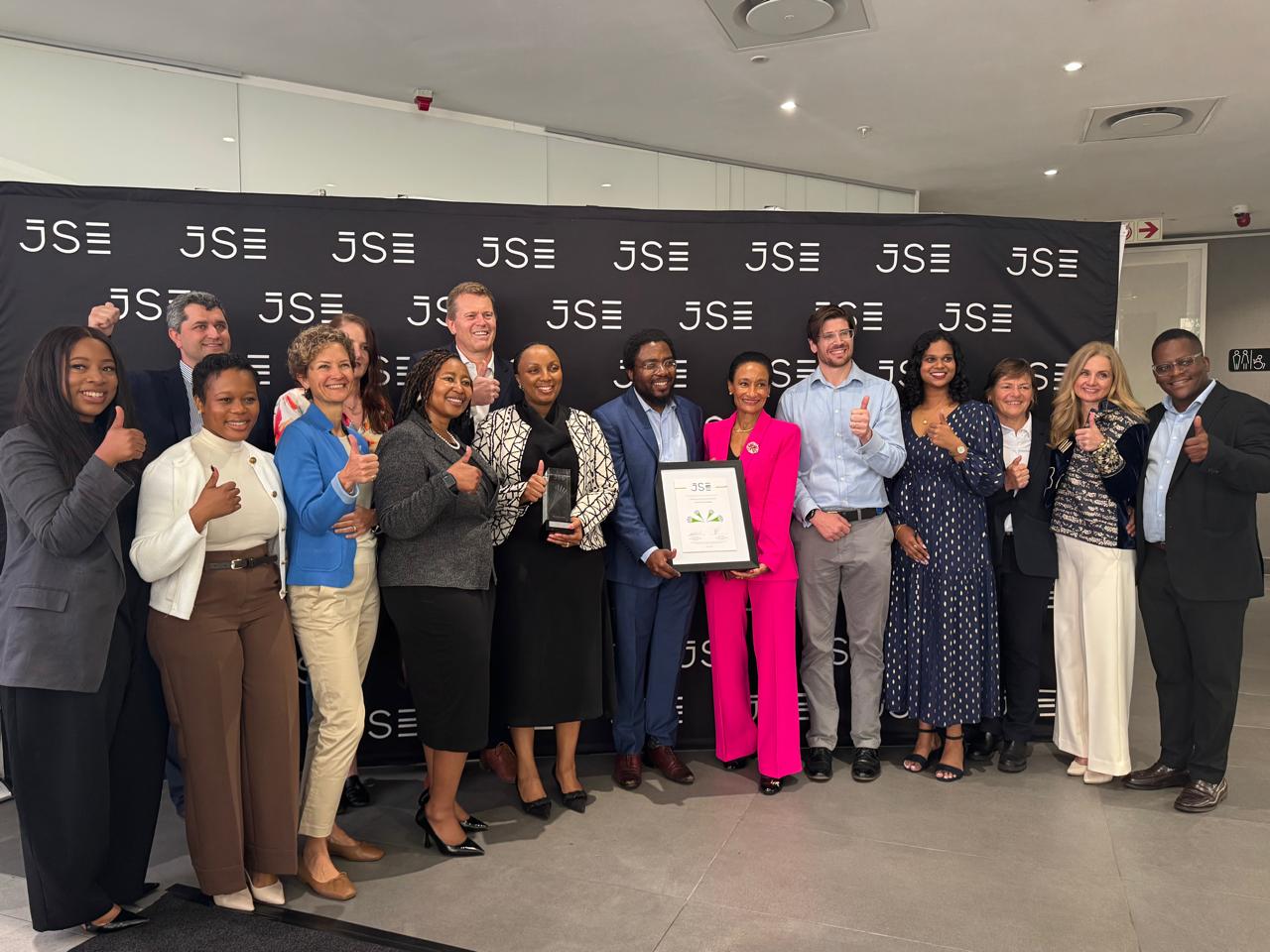
When Alessandro Scalco, blended finance lead at Rand Merchant Bank (RMB) in South Africa, first pitched his idea to finance a land restoration project by issuing a new type of bond, the response was not what he hoped for.
“We really love what you guys are trying to do, but there’s just no way we can get our heads around investing in nature,” one prospective financier told him.
Scalco was not alone. African banks have long struggled to convince domestic and continental investors to fund nature restoration. For most, the leap from interest to commitment is too great. Yet, after months of work, Scalco and his team at RMB and FirstRand Bank did manage to bring investors on board by translating nature into familiar concepts, building trust and delivering wins for all.
With that, they paved the way for the ZAR 2.5 billion Cape water performance-based bond, issued earlier this year.
The bond finances restoration of the mountainous catchment areas that supply water to one of South Africa’s biggest and most water-stressed urban centres, Cape Town. It uses an outcomes-based model, in which investors receive a guaranteed base return plus additional returns paid out only when restoration goals have been met.
Having taken part in the first African Natural Capital Alliance (ANCA) Nature Executive Fellowship, a programme aimed at developing a new generation of leaders in nature finance, Scalco was encouraged to push ahead with his project and able to draw on the support of peers across the financial sector. He also received support from ANCA’s host, FSD Africa, in the form of an early anchor investment, and a collaboration to assess nature-related risks. That support helped the RMB team establish a replicable road map for commercially attractive and ecologically sound nature finance projects in Africa.
Translating nature for capital markets
While investors were sceptical of the Cape water bond at first, Scalco found that most inherently cared about nature: “It is not difficult to explain why nature deserves funding. Nature is part of our heritage and an important part of who we are as South Africans.”
The real challenge turned out to be translating nature into the language of capital markets — a gap Dorothy Maseke, FSD Africa’s nature programme lead and head of the African Natural Capital Alliance (ANCA), knows well:
“We often see that the bridge between a conservation outcome and an investment case is missing. Once nature is expressed in terms capital markets already understand, the conversation changes completely.”
For the Cape water bond, restoration entails removing non-native, invasive trees that exacerbate the risk of wildfires and consume much of the rainfall that would otherwise supply water for Cape Town. Success is measured in hectares cleared.
“When we explain that progress is measured by the number of hectares cleared — and that we can clearly demonstrate the results with before-and-after images — the proposition becomes much easier for investors to understand,” said Scalco.
Comparing investing in restoring a water catchment to funding a wind farm — “from an investment perspective, the underlying principle is much the same” — also helped Scalco make the case to investors.
Credible partners helped earn investors’ trust
Winning over investors also came down to choosing a well-regarded implementer and design and verification partner, notably The Nature Conservancy (TNC) and Conservation Alpha.
“TNC has a strong track record in South Africa and has consistently demonstrated its ability to deliver on its commitments,” said Scalco. Conservation Alpha already has experience with verifying bond-linked restoration outcomes from its involvement in the World Bank’s rhino bond.
When it came to finding a highly rated credit institution to issue the bond, FirstRand Bank, RMB’s parent company, stepped in. Both had previously taken part in an FSD Africa-led pilot of the Taskforce on Nature-related Financial Disclosures, which demonstrated how nature-related risks could become opportunities, such as bonds for conservation.
Finally, an early ZAR 234 million investment from FSD Africa’s investment arm, FSD Africa Investments (FSDAi), gave credence to the proposition.
“Our early commitment showed that African capital would back this transaction,” said Nes Ruwo, investment principal, private capital mobilisation at FSDAi. “We work to mobilise private capital at scale — not fund one-off deals — and we see the Cape water bond as a model others can replicate.”
Network of peers reinforced conviction
Developing a first-of-its-kind deal in Africa was challenging, Scalco conceded. Taking part in the ANCA Nature Executive Fellowship, helped:
“During the fellowship, I was deeply involved in developing the Cape water bond and focused on getting the structure right. Connecting with other fellows who were working through similar challenges was both reassuring and extremely valuable.”
By bringing together senior leaders from African financial institutions, the fellowship programme helps to build the skills, knowledge and networks needed to bring nature finance deals to market.
“Nature finance is still a young market, and the people building it are often working with very few precedents,” said Maseke. “The fellowship gives them the technical grounding and, just as importantly, it gives them a group of peers to test ideas with when the work gets hard.”
Structuring the bond for multiple wins
Attracting African investors was particularly important. That meant issuing the bond in South African rand and setting a five-year duration, as is the norm in the South African capital market. The pay-off was immediate: on issuance, the Cape water bond was fully subscribed, predominantly by South African institutions.
“It showed the market that credible nature-finance solutions can be issued successfully in local currency; they do not all need to be in US dollars,” said Scalco.
“At the end of the day, it’s a double win,” added Ruwo. “Investors gain first-hand experience of the instrument, while preserving their capital. As they see the instrument working in practice, their confidence in and appetite for subsequent issuances grow.”
The five-year term also gives TNC the funding needed to complete the restoration of the water catchment, while the philanthropic and development funders are guaranteed that their scarce funds are deployed only if restoration goals are met; otherwise their capital is returned.
Replicate, adapt, improve
South Africa’s water catchment areas are under growing pressure, which puts at risk the water security that underpins economic activity. Protecting and restoring these catchments is therefore not a ‘nice to have’, but an economic necessity. Performance-based nature bonds offer a practical, investable solution.
The Cape water bond is a live case study, demonstrating that such transactions can be structured, governed and financed in Africa and by African institutions.
“This initiative has focused on building a sustainable business case for financing nature,” said Scalco. “From the outset, our ambition has been to create a model that can be replicated.”
“Our job now is to make sure that the Cape water bond isn’t the exception,” added Maseke. “That means backing the people and partnerships needed to build a real market. RMB’s willingness to test the waters, and most importantly to share its learnings, gives others a path to follow.”
Scalco is keen to emphasise that this is not a one-off and that the bank is already working on a second water bond with the aim of bringing in a broader pool of investors. His advice to others looking to follow his example? “Perseverance is essential. You need committed partners who are willing to work alongside you and see the process through. It is not easy, but the impact makes it worthwhile.”
Acknowledgments
Written by Marianne Gadeberg, with contributions from Alessandro Scalco, Nes Ruwo, Dorothy Maseke, Victoria Puxley, and Stephen Bevan. Photos provided by Roshni Lodhia/The Nature Conservancy.
Contact for more information: Dorothy Maseke, Lead, Nature Finance & TNFD, FSD Africa, dorothy@fsdafrica.org.