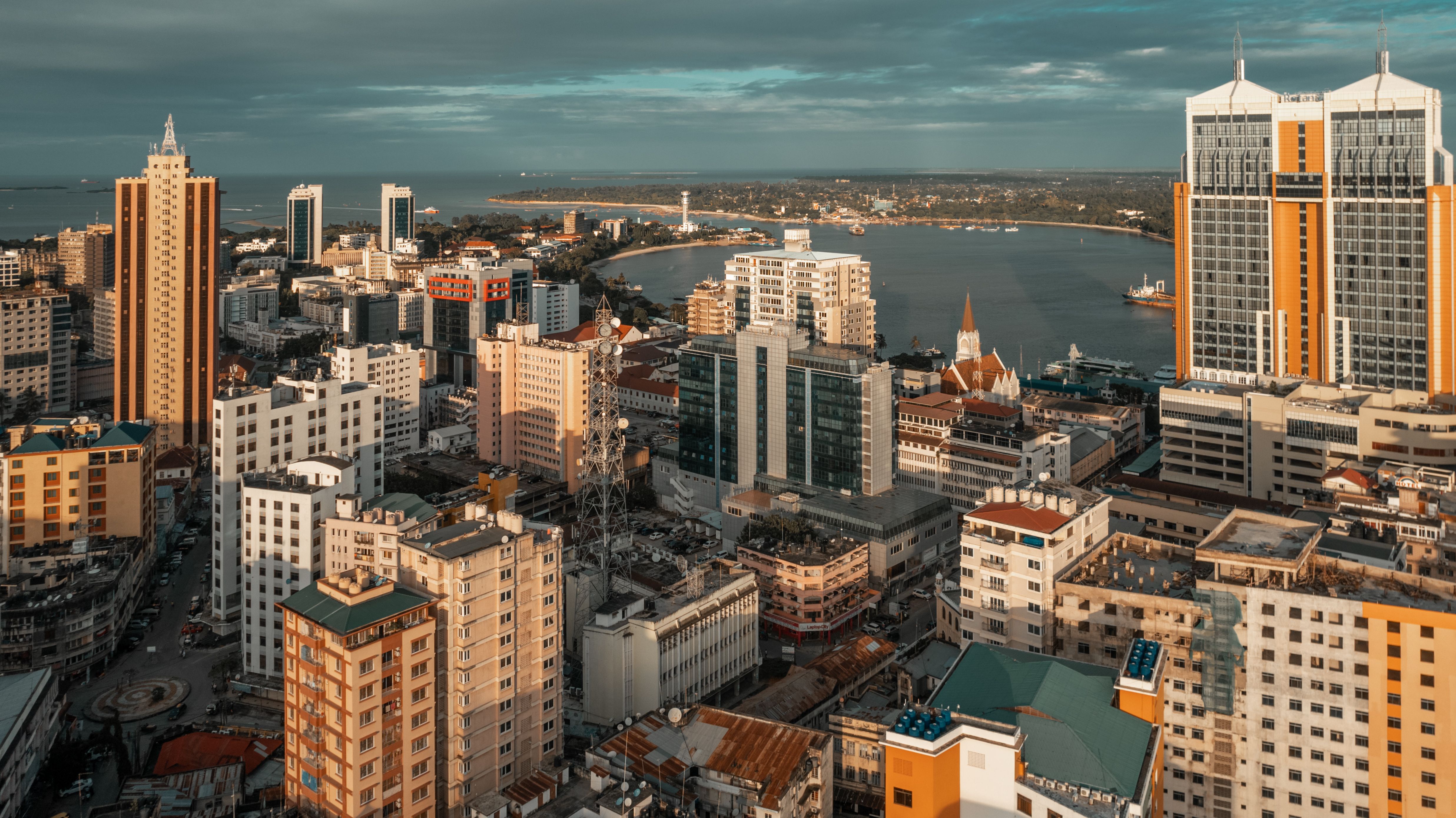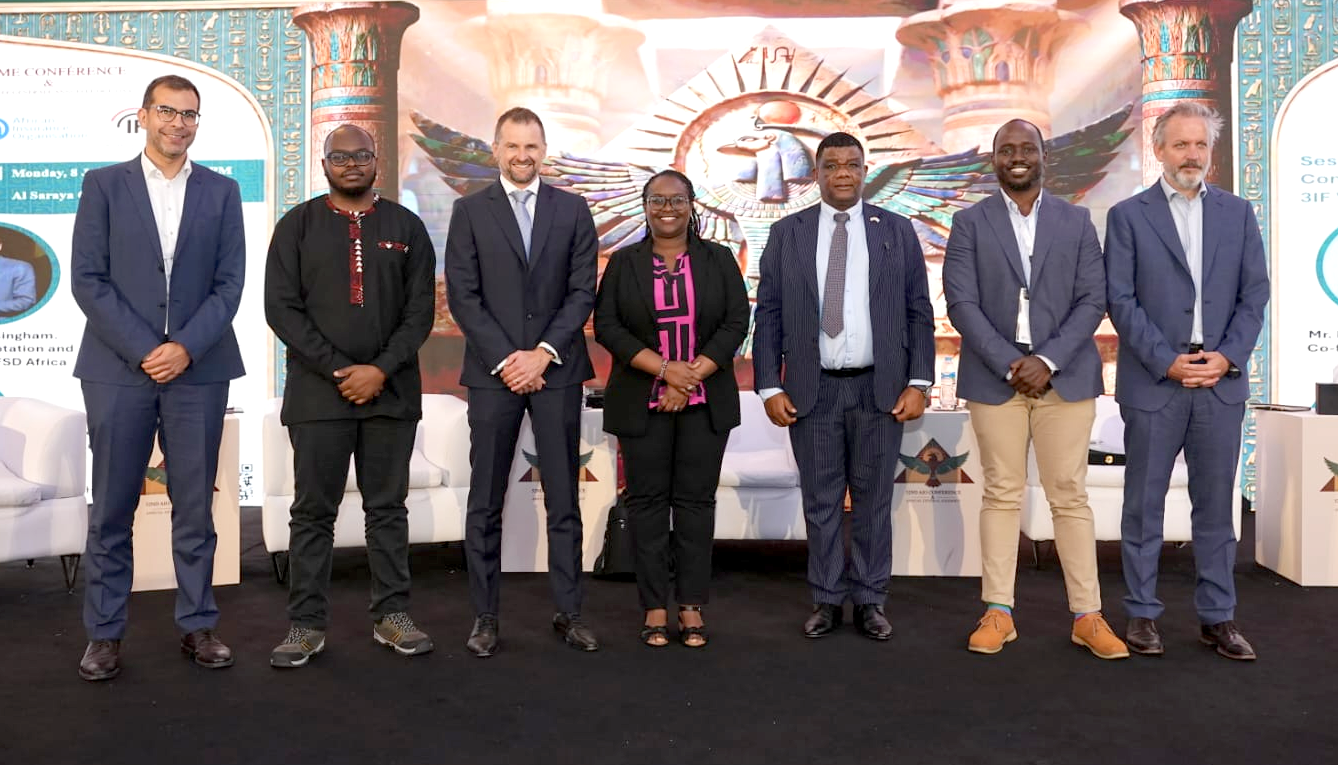
On 31 March 2026, FirstRand Bank Limited made history as the first commercial bank globally to issue an outcomes-based bond that directly links investor returns to verified ecological and environmental restoration outcomes. Listed on the Johannesburg Stock Exchange (JSE), and anchored by FSD Africa Investments (FSDAi) and the International Finance Corporation (IFC), the R2.5 billion bond will fund the large-scale removal of invasive alien plants (IAPs) that are quietly draining one of South Africa’s most critical water supply systems.
The market failure behind the bond
Two-thirds of the sub-catchments feeding the Western Cape Water Supply System are invaded by alien plant species that consume the equivalent of two months of Cape Town’s entire water supply each year. The most cost-effective solution — removing those plants — has been known for some time. What has been missing is the financing architecture to do it at scale. While ecological restoration delivers real, measurable value, those benefits accrue diffusely across households, municipalities, agriculture and industry, making them difficult to price, monetise or verify in ways that meet institutional investment standards. As a result, conservation has remained heavily dependent on fragmented public and philanthropic funding, while private capital stays largely on the sidelines unable to engage at the scale required.
What the bond does differently
The Cape Water Performance-Based Bond was designed to address this challenge by embedding conservation outcomes directly into a conventional fixed income security.
Investors receive a base return with an additional success premium linked to independently verified outcomes, specifically the number of hectares of invasive alien plants cleared from priority catchments. Philanthropic and development funders (outcome-based funders or OBFs) underwrite this premium but only pay when results are achieved. If the agreed outcomes are not delivered, the OBFs’ capital is returned for redeployment.
This pay-for-success model aligns all investors’ interests by not only ensuring that philanthropic funding is used efficiently, but also transferring performance risk to the market, and providing commercial investors with a clear and credible pathway into conservation finance.
The result is a R2.5 billion bond listed on the JSE, drawing in institutional investors including Aluwani Capital Partners, Ashburton Investments, and the Eskom Pension and Provident Fund.
Why FSDAi moved first
FSDAi committed R234 million to the bond as one of its anchor investors. Beyond our capital investment, our commitment served three purposes:
The first was validation. FSDAi’s participation in an instrument this novel signals to the market that the transaction’s structure, governance, risk and impact thesis have been rigorously assessed and that the model is credible.
The second was unlocking investment. FSDAi’s commitment alongside the IFC provided the foundation that drew in institutional investors including mainstream local asset managers and pension funds, proving the credibility and investability of the bond.
Africa is home to some of the world’s most important natural assets, yet it attracts only a small share of global finance for nature, while holding over two trillion dollars of local institutional capital seeking long‑term investment opportunities. Instruments like this demonstrate the value of partnership with market innovators to close that gap—offering institutional investors exposure to differentiated sources of return that can complement traditional credit risk. Our ambition is to deepen these partnerships to help channel domestic capital at scale, strengthen Africa’s capital markets, and finance the continent’s climate‑resilient future.
Nes Ruwo, Investment Principal, Private Capital Mobilisation at FSDAi.
The third purpose was replicability. The Cape Water Performance-Based Bond is not designed as a one-off but as a rigorous, transparent, scalable model for mobilising private capital into nature-positive outcomes – it created a template for future issuances. Each successive issuance will require less catalytic capital and attract greater commercial participation as the asset class matures and its track record strengthens.
What this opens ups
The projected impact is substantial: removal of IAPs could increase water availability by up to 55 million litres annually, create 1,500 jobs, restore biodiversity in key sub-catchment areas, and improve water access – reclaimed water could support approximately 800,000 people each year based on average household consumption. In addition, this nature-based solution is the most cost-effective option at approximately 8% of the cost to develop desalination infrastructure that would provide comparable quantities of water.
Nature has long been treated as a cost; this bond demonstrates it can be structured as an asset. What makes the Cape Water Bond significant is not just what it finances, but who it brings together — and FSDAi is proud to stand alongside partners united by the conviction that Africa’s markets are ready to price nature differently. That collective commitment turns reclaimed water into a verifiable, investable outcome and opens the door to an entirely new asset class in Africa’s capital markets.
Anne-Marie Chidzero, Chief Investment Officer at FSDAi
By embedding measurable environmental outcomes into a mainstream market instrument, the Cape Water Performance-Based Bond shows that Africa’s capital markets are capable of absorbing and scaling this kind of innovation.
The value of this bond lies not only in the water it will reclaim or the jobs it will create, but also in the template it leaves behind for conservation finance that can travel across geographies, ecosystems, and development challenges across the continent.
That is the investment FSDAi made. And that is why it was worth making.
Why FSDAi invested: summary
FSDAi invested in the Cape Water Performance-Based Bond to correct a clear market failure that has kept large-scale conservation locked out of mainstream finance, despite its measurable economic and social value. By anchoring Africa’s first nature-linked, outcomes-based bond, FSDAi validated a highly innovative structure that embeds verified ecological outcomes into a listed, senior unsecured instrument, giving institutional investors a credible way to deploy capital into nature. Our catalytic investment helped de-risk a first-of-its-kind transaction, unlock participation from local pension funds and asset managers, and lay the foundation for a new asset class that treats nature as a productive, investable asset rather than a philanthropic cause.
About this series
Behind the Investment is FSDAi’s series on the decisions, structures, and signals behind our capital. Each post takes a single investment and unpacks the market gap it addresses, the thesis we underwrote, the risks we accepted, and the change we expect it to catalyse across Africa’s financial markets.
Contact: Joyce Waihiga, Manager, FSD Africa Investments (FSDAi).