Tag: FSDAi

3IF Ventures Reaches USD 12 Million First Close to Scale Africa’s Inclusive Insurance Market

FSD Africa Investments and ZEP-RE co-anchor pioneering pan-African insurance impact fund; pathway to USD 30 million final close.


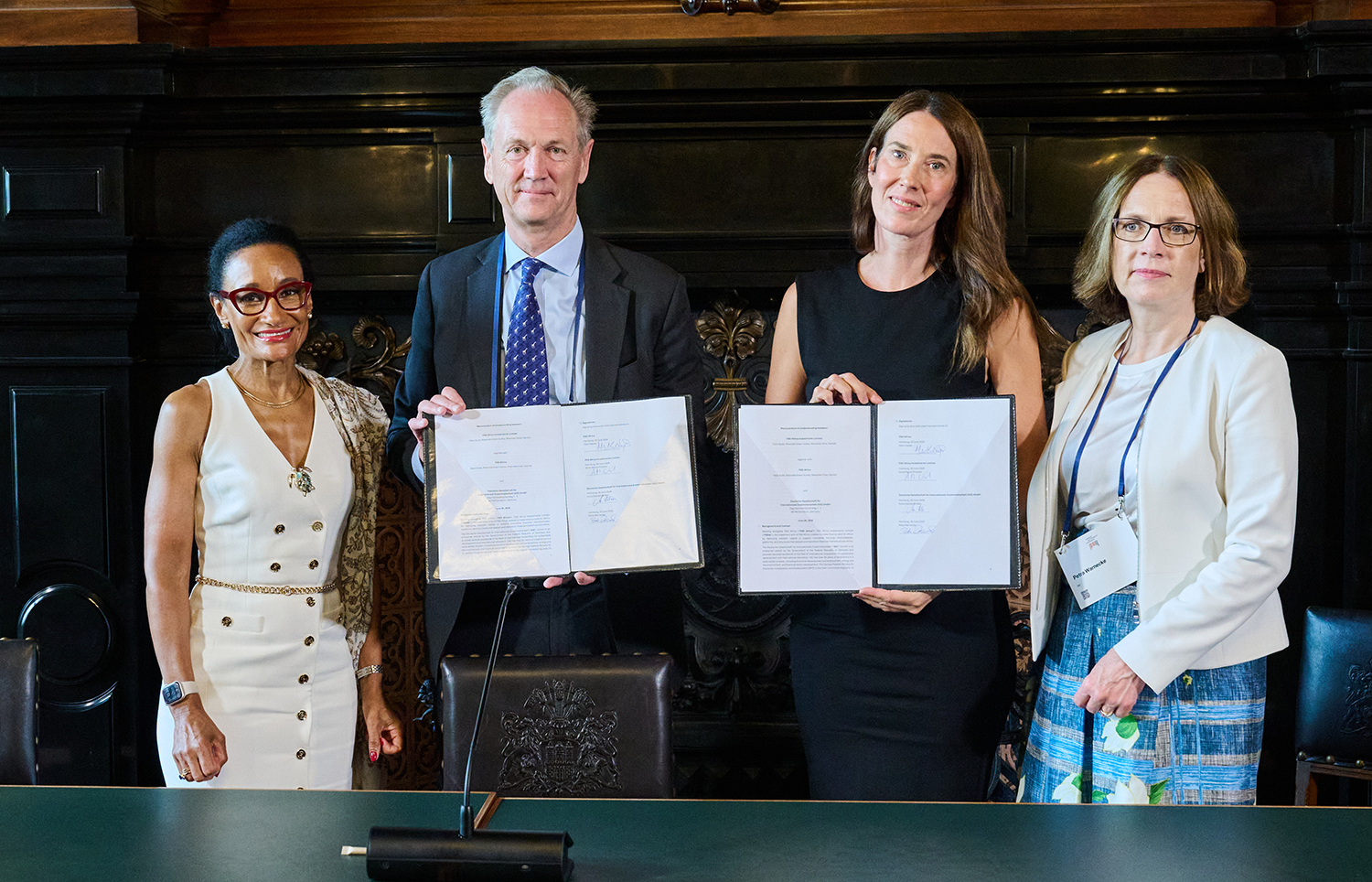
Mauritius – 5 June 2026 – 3IF Ventures (or the “Fund”), the first impact venture capital fund dedicated to Africa’s insurance start-up ecosystem, today announced the First Close of the Inclusive Insurance Investment Fund (3IF Ventures) at USD 12 million. The fund is co-anchored by FSD Africa Investments (FSDAi) and ZEP-RE (PTA Reinsurance Company), and will provide equity capital from pre-seed to Series B to early-stage businesses across Africa.

Africa’s insurance protection gap is one of the most underserved opportunities but also one of the most significant barriers to economic resilience on the continent. Uptake remains constrained by three persistent challenges: awareness, accessibility, and affordability resulting in over 1 billion people not having access to any form of insurance cover. 3IF Ventures is built to convert that untapped market into a commercial opportunity by backing technology-enabled insurance businesses across four thematic verticals: climate and disaster resilience, agriculture and rural livelihoods, digital health and wellbeing, SMEs and asset protection. The Fund, which targets a final close of USD 30 million, plans approximately 15-20 portfolio investments. 3IF Ventures will also operate a technical assistance facility sized at approximately 20 percent of total fund commitments.

3IF Ventures is structured as a blended investment vehicle including a catalytic capital junior tranche used to unlock private capital. The Fund intends to achieve substantial socio-economic impact and climate resilience in Africa over the Fund’s lifetime, targeting:

  • Over 5.9 million new insurance policies issued;
  • Over 3.5 million households and SMEs with improved financial resilience;
  • Over 1.7 million jobs created, sustained and retained.


“Reaching First Close with FSD Africa Investments and ZEP-RE on the same cap table is a market signal: impact and private capital are now investing in the same insurance technology pioneers. Africa’s protection gap is the most under-served commercial opportunity of the decade, closing it requires patient capital, local risk capacity and industry-grade portfolio support, working in concert. With a pre-qualified pipeline of fifteen insurance ventures across ten African markets, we are ready to deploy capital and look forward to engaging with strategic private and public partners as we enter the next stage of our growth.”

Anthony Chaillet and Dr. Mario Wilhelm, General Partners, 3IF Ventures said.


“FSDAi’s investment in 3IF Ventures reflects our conviction that the insurtech sector is ready to scale – built on a pipeline of 135 early-stage businesses supported through BimaLab. As the first investment vehicle dedicated to inclusive insurance in Africa, 3IF Ventures brings institutional rigour to a segment that has long lacked it. This first close proves that when sector expertise, the right capital structure and the right partners align, the protection gap becomes an investable proposition.”

Anne-Marie Chidzero, Chief Investment Officer, FSD Africa Investments said.


“The fund aligns with our mission to deliver sustainable and innovative (re)insurance solutions through collaboration with private, public and development sector partners to close the protection gap and promote economic growth. The Fund will assist in bringing together like-minded partners and capital providers to support technology enabled insurance businesses that help in closing the protection gap across Africa. Beyond the capital injection, ZEP-RE will offer further support to the investee companies through its technical experience in the (re)insurance ecosystem such as product design and leverage off its existing networks among primary insurers and regulators to provide underwriting capacity and an enabling regulatory environment for investees to achieve shared success across the continent.”

Hope Murera, Managing Director and Group CEO, ZEP-RE (PTA Reinsurance Company) said.


About 3IF Ventures

3IF Ventures is the General Partner and Investment Manager of the Inclusive Insurance Investment Fund – the first impact venture capital fund dedicated to Africa’s insurance start-up ecosystem. The fund invests from pre-seed to Series B businesses solving the “3A Challenge” (Access, Awareness, Affordability) across ODA-eligible African markets. The Fund is led by Anthony Chaillet and Mario Wilhelm, two seasoned re/insurance experts and investment professionals with over 40 years of combined industry experience globally. www.3if.ventures.


About FSD Africa Investments

FSD Africa Investments (FSDAi) is a specialist financial sector investor established by FSD Africa and the UK’s FCDO to strengthen and deepen Africa’s financial markets. We bridge critical funding gaps by investing patient, risk-bearing capital in novel financial instruments, facilities, and intermediaries. Our strategic investments take on early risk, test new models and catalyse capital from others to gradually transition the financial sector to finance Africa’s economic resilience and growth. To date, FSDAi has committed £127 million from its £309m capital commitment to 21 investments, and has successfully exited three investments, one at 2x money.


About ZEP-RE (PTA Reinsurance Company)

ZEP-RE is a leading pan-African reinsurer and specialised institution of COMESA established in 1990 with a mandate to develop the (re)insurance industry, build capacity, mobilize investments and deepen financial inclusion. It has operations in over 45 African countries with headquarters in Nairobi, Kenya and eight country/regional offices spread across Sub-Saharan Africa in Côte d’Ivoire, D.R. Congo, Ethiopia, Sudan, Uganda, Zambia, and Zimbabwe. ZEP-RE’s subsidiary ACRE Africa focuses on resilience and credit access for small-holder farmers through technology and insurance with 6 offices across Africa. It is the second best rated African reinsurer on the continent by A.M. Best with a credit rating of B++ (Financial Strength)/bbb+ (Issuer Credit). www.zep-re.com.


Media Contacts

3IF Ventures

Mario Wilhelm, General Partner (mario@3if.ventures)

Anthony Chaillet, General Partner (anthony@3if.ventures)


FSD Africa Investments

Joyce Waihiga, Manager Communications (joyce@fsdafrica.org)


ZEP-RE

Kasee Mbao, Head M&A and Advisory (kmbao@zep-re.com)

Behind the Investment: Africa’s First Nature-Linked Outcomes Bond

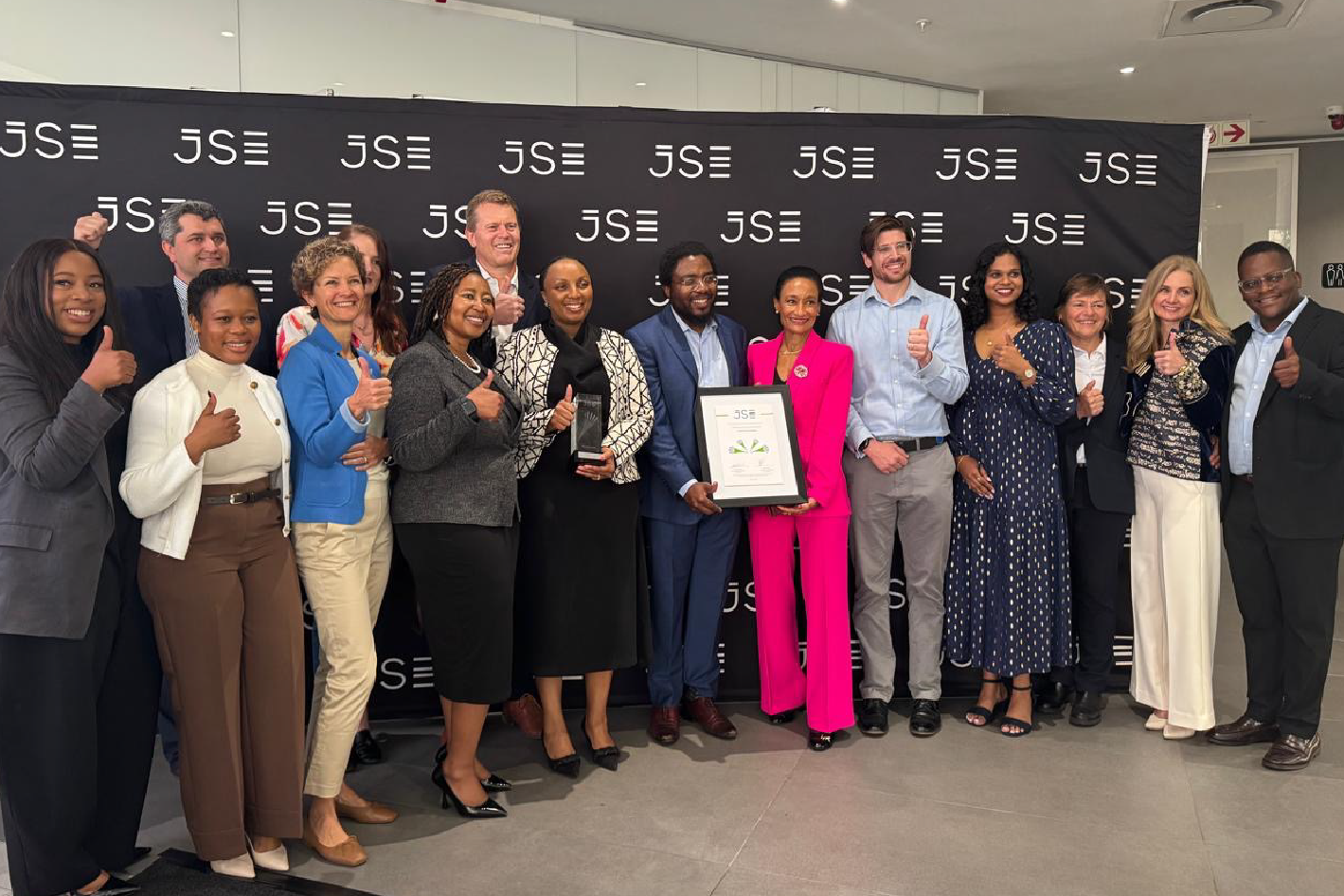
On 31 March 2026, FirstRand Bank Limited made history as the first commercial bank globally to issue an outcomes-based bond that directly links investor returns to verified ecological and environmental restoration outcomes. Listed on the Johannesburg Stock Exchange (JSE), and anchored by FSD Africa Investments (FSDAi) and the International Finance Corporation (IFC), the R2.5 billion bond will fund the large-scale removal of invasive alien plants (IAPs) that are quietly draining one of South Africa’s most critical water supply systems.


The market failure behind the bond

Two-thirds of the sub-catchments feeding the Western Cape Water Supply System are invaded by alien plant species that consume the equivalent of two months of Cape Town’s entire water supply each year. The most cost-effective solution — removing those plants — has been known for some time. What has been missing is the financing architecture to do it at scale. While ecological restoration delivers real, measurable value, those benefits accrue diffusely across households, municipalities, agriculture and industry, making them difficult to price, monetise or verify in ways that meet institutional investment standards. As a result, conservation has remained heavily dependent on fragmented public and philanthropic funding, while private capital stays largely on the sidelines unable to engage at the scale required.


What the bond does differently

The Cape Water Performance-Based Bond was designed to address this challenge by embedding conservation outcomes directly into a conventional fixed income security.

Investors receive a base return with an additional success premium linked to independently verified outcomes, specifically the number of hectares of invasive alien plants cleared from priority catchments. Philanthropic and development funders (outcome-based funders or OBFs) underwrite this premium but only pay when results are achieved. If the agreed outcomes are not delivered, the OBFs’ capital is returned for redeployment.

This pay-for-success model aligns all investors’ interests by not only ensuring that philanthropic funding is used efficiently, but also transferring performance risk to the market, and providing commercial investors with a clear and credible pathway into conservation finance.

The result is a R2.5 billion bond listed on the JSE, drawing in institutional investors including Aluwani Capital Partners, Ashburton Investments, and the Eskom Pension and Provident Fund.


Why FSDAi moved first

FSDAi committed R234 million to the bond as one of its anchor investors. Beyond our capital investment, our commitment served three purposes:

The first was validation. FSDAi’s participation in an instrument this novel signals to the market that the transaction’s structure, governance, risk and impact thesis have been rigorously assessed and that the model is credible.

The second was unlocking investment. FSDAi’s commitment alongside the IFC provided the foundation that drew in institutional investors including mainstream local asset managers and pension funds, proving the credibility and investability of the bond.

Africa is home to some of the world’s most important natural assets, yet it attracts only a small share of global finance for nature, while holding over two trillion dollars of local institutional capital seeking long‑term investment opportunities. Instruments like this demonstrate the value of partnership with market innovators to close that gap—offering institutional investors exposure to differentiated sources of return that can complement traditional credit risk. Our ambition is to deepen these partnerships to help channel domestic capital at scale, strengthen Africa’s capital markets, and finance the continent’s climate‑resilient future.

Nes Ruwo, Investment Principal, Private Capital Mobilisation at FSDAi.

The third purpose was replicability. The Cape Water Performance-Based Bond is not designed as a one-off but as a rigorous, transparent, scalable model for mobilising private capital into nature-positive outcomes – it created a template for future issuances. Each successive issuance will require less catalytic capital and attract greater commercial participation as the asset class matures and its track record strengthens.


What this opens ups

The projected impact is substantial: removal of IAPs could increase water availability by up to 55 million litres annually, create 1,500 jobs, restore biodiversity in key sub-catchment areas, and improve water access – reclaimed water could support approximately 800,000 people each year based on average household consumption. In addition, this nature-based solution is the most cost-effective option at approximately 8% of the cost to develop desalination infrastructure that would provide comparable quantities of water.

Nature has long been treated as a cost; this bond demonstrates it can be structured as an asset. What makes the Cape Water Bond significant is not just what it finances, but who it brings together — and FSDAi is proud to stand alongside partners united by the conviction that Africa’s markets are ready to price nature differently. That collective commitment turns reclaimed water into a verifiable, investable outcome and opens the door to an entirely new asset class in Africa’s capital markets.

Anne-Marie Chidzero, Chief Investment Officer at FSDAi

By embedding measurable environmental outcomes into a mainstream market instrument, the Cape Water Performance-Based Bond shows that Africa’s capital markets are capable of absorbing and scaling this kind of innovation.

The value of this bond lies not only in the water it will reclaim or the jobs it will create, but also in the template it leaves behind for conservation finance that can travel across geographies, ecosystems, and development challenges across the continent.

That is the investment FSDAi made. And that is why it was worth making.


Why FSDAi invested: summary

FSDAi invested in the Cape Water Performance-Based Bond to correct a clear market failure that has kept large-scale conservation locked out of mainstream finance, despite its measurable economic and social value. By anchoring Africa’s first nature-linked, outcomes-based bond, FSDAi validated a highly innovative structure that embeds verified ecological outcomes into a listed, senior unsecured instrument, giving institutional investors a credible way to deploy capital into nature. Our catalytic investment helped de-risk a first-of-its-kind transaction, unlock participation from local pension funds and asset managers, and lay the foundation for a new asset class that treats nature as a productive, investable asset rather than a philanthropic cause.


About this series

Behind the Investment is FSDAi’s series on the decisions, structures, and signals behind our capital. Each post takes a single investment and unpacks the market gap it addresses, the thesis we underwrote, the risks we accepted, and the change we expect it to catalyse across Africa’s financial markets.

Contact: Joyce Waihiga, Manager, FSD Africa Investments (FSDAi).


FirstRand Bank issues Inaugural Nature-Linked Outcomes-Based Bond

Johannesburg, 1 April 2026 — FirstRand Bank (FRB) has become the first commercial bank globally to issue an outcomes-based bond that directly links investor returns to verified ecological and environmental restoration outcomes.

The bond forms part of a broader transaction structure which raised funding from outcomes-based funders (OBFs) for a nature conservation project to remove invasive alien plant species from priority water catchment areas in the Western Cape to increase water flow into storage dams through water reclamation.

RMB acted as arranger, structurer and distributor for the R2.5 billion JSE-listed Cape water performance-based bond issuance. The bond was anchored by the International Finance Corporation (IFC) and FSD Africa Investments (FSDAi), a specialist financial sector investor established by FSD Africa and the UK’s Foreign Commonwealth and Development Office (FCDO). Their participation was instrumental in validating the transaction structure and catalysing broader institutional investor participation. The IFC subscribed for approximately R1.6 billion whilst FSDAi committed R234 million.

Aluwani Capital Partners led local institutional participation with a R350 million investment in the bond, with further support from Ashburton Investments, the Eskom Pension and Provident Fund, Optimum Investment Group and Sanlam Life.

The bond establishes a new asset class for nature-linked adaptation finance, whereby investor returns are contingent on the delivery of pre-defined and verified nature positive outcomes that are embedded directly into a listed senior unsecured bond structure. The transaction shares the risk of funding conservation activities between OBFs and bond investors who receive enhanced returns if pre-defined conservation outcomes are met. This enables a pay-for-success model for OBFs, based on measurable and independently verified outcomes. It presents a scalable, rigorous and transparent template for mobilising private capital and can be replicated for wider environmental, social or development projects in South Africa and elsewhere.

The group’s corporate and investment bank, RMB, was instrumental in the structuring and execution of this transaction, and the FirstRand Foundation also played a key role as an anchor outcomes-based funder and coordinator for other philanthropic partners.


“IFC is proud to be the lead investor in this ground-breaking and innovative transaction, which leverages the capital markets to enable and crowd in private sector capital toward conservation activities. The instrument links investor returns to measurable environmental outcomes in South Africa’s strategic water catchment areas and sets a replicable blueprint for nature finance across Africa and globally. The pay-for-success financial structure would help address water security in South Africa – a key development challenge in the country – and create jobs, including for women and youth.”

Kalina B. Miller, IFC Financial Institutions Group Regional Manager for Southern Africa, said.


“Nature has long been treated as a cost; this bond demonstrates it can be structured as an asset. What makes the Cape water performance-based bond significant is not just what it finances, but who it brings together —and FSDAi is proud to stand alongside partners united by the conviction that Africa’s markets are ready to price nature differently. That collective commitment turns reclaimed water into a verifiable, investable outcome and opens the door to an entirely new asset class in Africa’s capital markets.”

Anne-Marie Chidzero, Chief Investment Officer at FSDAi, said.


“Nature is critical infrastructure, and linking investment returns to verified environmental improvements shows how finance can drive real resilience. This bond demonstrates what is possible when partners unite behind a shared commitment to protect ecosystems and strengthen water security. It also reflects the deepening collaboration between the UK and South Africa to scale sustainable finance and unlock new opportunities for nature-positive growth.”

Antony Phillipson, British High Commissioner to South Africa, said.


“Water is an increasingly scarce and mispriced resource. Our investment in the Cape water performance-based bond reflects a deliberate commitment to investing in water—not only in infrastructure such as pipes and dams, but in the ecosystems that sustain supply. By unlocking additional water yield at a fraction of the cost of traditional infrastructure, we are delivering measurable environmental and social impact, in line with our responsibility as stewards of capital.”

Monica Jaglal, Co-Head of Credit at Aluwani Capital Partners, said:


About FirstRand Bank Limited FirstRand Bank Limited

(FRB or the bank) is a wholly owned subsidiary of FirstRand Limited (FirstRand or the group), which is listed on the Johannesburg Stock Exchange (JSE) and Namibian Stock Exchange (NSX). The bank provides a comprehensive range of retail, commercial, corporate and investment banking services in South Africa and oƯers niche products in certain international markets. The bank has three major divisions which are separately branded: First National Bank (FNB), WesBank and Rand Merchant Bank (RMB). For more information, visit www.firstrand.co.za.

Contact: Sam Moss, Head Group Corporate Communications (sam.moss@firstrand.co.za)


About IFC

IFC — a member of the World Bank Group — is the largest global development institution focused on the private sector in emerging markets. We work in more than 100 countries, using our capital, expertise, and influence to create markets and opportunities in developing countries. In fiscal year 2025, IFC committed a record $71.7 billion to private companies and financial institutions in developing countries, leveraging private sector solutions and mobilizing private capital to create a world free of poverty on a livable planet. For more information, visit www.ifc.org. Stay Connected with IFC on social media.

Contact: Nkatya Kabwe (nkabwe@ifc.org)


About FSD Africa Investments

FSD Africa Investments (FSDAi) is a specialist financial sector investor established by FSD Africa and the UK’s Foreign Commonwealth and Development Office (FCDO) to strengthen and deepen Africa’s financial markets. We bridge critical funding gaps by investing patient, risk-bearing capital in novel financial instruments, facilities, and intermediaries. Our strategic investments take on early risk, test new models and catalyse capital from others to gradually transition the financial sector to finance Africa’s economic resilience and growth. To date, FSDAi, backed by FCDO investment, has committed £150 million to 27 investments, and successfully exited two investments in the region, one at 2x money. For more information, visit https://fsdafrica.org/fsdai-investments/.

Contact: Joyce Waihiga, Manager, Communications (joyce@fsdafrica.org)

Persistent Launches US$70 million Persistent Africa Climate Venture Builder Fund and $5 million Venture Building Facility

First published on persistnent.energy website, this press release is republished here to share insights with our broader community.


Persistent has launched the US$70 million Persistent Africa Climate Venture Fund (“Persistent ACV Fund”) with a first close of US$52 million and an additional initial $5 million Venture Building Facility.

The Persistent ACV Fund is an early-stage climate investment vehicle domiciled in Mauritius, focused on backing Africa’s most innovative and high-impact climate ventures. Beyond capital, the Fund leverages Persistent’s tailored Venture Building platform to accelerate the growth, operational maturation, and scale of its portfolio companies. The Fund aims to catalyze Africa’s Energy, Agriculture, and Resource Transitions. While its core strategy targets investments from pre-seed through Series A, the Fund retains the flexibility to provide later-stage follow-on capital to high-performing portfolio companies.Structured with a blended finance model, the Fund offers private investors first-loss and priority return protection. Its investment approach is further strengthened by integrated, bespoke Venture Building support, underpinned by a $5 million contribution-based Venture Building Facility (VBF).

The Partners of Persistent stated: “Achieving the first close of the Persistent ACV Fund is a strong show of confidence in Persistent and the Fund’s strategy. The first close demonstrates that early-stage climate innovation in Africa is investable at scale and that it presents a compelling opportunity for investors. We are excited to move into the investment phase as we continue to back entrepreneurs building businesses across Africa’s Energy, Agriculture and Resource Transitions. We are thankful for the trust that all our LPs, the contributors to our Venture Building Facility, and especially the entrepreneurs we will invest in, are putting in us.  We believe that the growing alignment between catalytic and commercial capital is essential to closing Africa’s climate financing gap, and we look forward to translating that alignment into disciplined execution, impact and long-term value creation.”


Driving impact through early-stage climate investment

The launch of the Fund comes against the backdrop of Africa facing a disproportionate share of climate risk while receiving only a small fraction of global climate financing. Early-stage climate businesses, in particular, struggle to access capital and operational support needed to scale and have substantial impact. The Persistent ACV Fund is designed to address this gap by combining equity investment with custom Venture Building services to enable climate ventures to move from early traction to scalable, impactful businesses. The Fund intends to achieve substantial climate, socio-economic, and gender impact in Africa over the lifetime of the Fund, targeting:

  • Over 17 million tons of CO2/GHG mitigated
  • Over 7 million overall beneficiaries (of which half will be female)
  • Over 60,000 direct jobs created (of which half will be female)
  • Over 400,000 people are economically impacted
  • Over 420,000 households with new or improved electricity connections
  • Over $450 million additional investment catalysed


The Persistent ACV Fund is managed by its General Partner, Persistent ACV GP Ltd., and advised by Persistent Energy Capital LLC, a U.S. venture capital firm with offices across Africa and Europe. The Fund was conceived by Persistent in collaboration with FSD Africa Investments (FSDAi), a specialist financial sector investor established by FSD Africa and the UK’s FCDO, and an Anchor Investor in the Fund. FSDAi invested $3 million in Persistent in 2022 and made an early pledge of a $10million anchor commitment to the Fund.  FSDAi’s initial investment was used to make investments in climate businesses that have been warehoused by Persistent for transfer to the Fund now that it is closed.


“Closing Africa’s climate financing gap requires more than capital. It requires the right fund managers, supported at the right moment, through structures that give other investors the confidence to follow.Our anchor commitment to the Persistent Africa Climate Venture Builder Fund is built on that logic: identifying early-stage climate fund managers with genuine potential, providing the catalytic capital they need to establish a credible track record, and ensuring our investment is structured in a way that mobilises far greater resources into Africa’s energy and climate transition.”

Anne-Marie Chidzero, Chief Investment Officer of FSDAi said.


Other Anchor Investors of the Fund are the Nordic Development Fund (NDF) and the African Development Bank’s Sustainable Energy Fund for Africa (AfDB SEFA).Additional Investors include: the Japan International Cooperation Agency (JICA)the Soros Economic Development Fund (SEDF)Impact Fund Denmark (IFDK)the Schmidt Family Foundation and the Cottier Donzé Foundation.


“As a catalytic investor, NDF is pleased to support the Persistent ACV Fund, providing concessional capital to early-stage climate initiatives. NDF also supports the Persistent ACV Venture Building Facility in its work to expand the African start-up landscape and establish promising climate ventures with strong sustainability and impact potential. Persistent has a strong track record in supporting local innovation and ownership through their Venture Building model, which they are now scaling beyond energy into other climate-relevant sectors, bringing clear value to the market. The Persistent ACV Fund’s specific focus on gender equality and local innovation aligns closely with NDF’s mandate, while its ambition to drive decarbonisation, strengthen community resilience, and improve access to essential products and services for underserved and marginalised communities across Africa reflects the impact we seek to achieve.”

stated, Satu Santala, Managing Director of NDF said.


“Catalytic capital is essential to unlock Africa’s climate innovation potential. We are pleased to partner with Persistent to strengthen a growing ecosystem of early-stage African climate innovators—entrepreneurs who are expanding energy access and driving the clean energy transition.”Shohei Hara, Senior Vice President of JICA stated, “The Persistent ACV Fund is the very first investment under the JICA Blended Finance Window, which was launched during the Ninth Tokyo International Conference on African Development (TICAD 9) in August 2025. We hope that this investment will showcase the mobilization of private capital through catalytic investment. By investing into the Persistent ACV Fund and underlying climate entrepreneurs, we would like to show our commitment to support African development consistent with pathways towards a  low-carbon future as well our commitment to gender-lens investments as a 2x challenge member in accordance with our Sustainability Policy.”

João Duarte Cunha, Manager of AfDB’s Renewable Energy Funds Division, stated.


“SEDF is proud to invest in Persistent’s Africa Climate Venture Builder Fund, which will help to scale early-stage climate solutions, unlock private capital, and build a resilient, climate-positive future for communities across the continent.”

Georgia Levenson Keohane, CEO of the Soros Economic Development Fund said.


“At Impact Fund Denmark, we work to mobilise capital where it can make a meaningful difference. With this investment, we are supporting entrepreneurs who are building solutions with real potential for both climate impact and long-term economic development in Africa.”

Says CEO Lars Bo Bertram, Impact Fund Denmark.


Custom venture building for faster and more sustainable growth

The $5 million contribution based Venture Building Facility (VBF) is funded by NDF and FMO, the Dutch entrepreneurial development bank. Through the VBF, Fund pipeline and portfolio companies can qualify to receive tailored company-building support in one or more areas, including finance, fundraising, strategy, ESG, technology, legal, and marketing. This support can be financed, in whole or in part, through the VBF.  VBF-supported Venture Building services will accelerate the building of successful businesses in which the Fund invests, deepen impact outcomes as well as reduce early-stage execution risk for the Fund.


“At FMO, a core pillar of our market creation strategy is supporting pioneering fund managers who are expanding access to finance in underserved markets across Sub‑Saharan Africa. These managers are essential to building robust investment pipelines and strengthening the broader entrepreneurial ecosystem. Persistent exemplifies this approach. By pairing early‑stage capital with hands‑on Venture Building, Persistent equips CleanTech companies across Africa to grow at their most critical stages. Through our Market Creation program, we are proud to back initiatives like this that broaden financial inclusion, accelerate climate‑positive innovation, and unlock sustainable economic opportunities across the continent.”

Andrew Shaw, Manager, Market Creation – Financial Inclusion at FMO, the Dutch entrepreneurial development bank added.


For more information, contact: damilola@persistent.energy


From $3M to a $70M Climate Fund: What building Africa’s climate investment pipeline actually takes

Africa’s climate finance gap is often framed as a question of scale. Hundreds of billions of dollars are needed each year, yet only a fraction flows to the continent. But focusing only on the quantity of capital misses a quieter constraint upstream: the shortage of fund managers with the track record, institutional structure, and operational capacity to deploy early-stage climate capital effectively across African markets.

Capital cannot flow at scale if the managers capable of deploying it do not yet exist, or if they lack the credibility required to attract institutional investors. This is the challenge FSD Africa Investments (FSDAi) had in mind when we invested $3 million in Persistent Energy Capital in 2022.


Backing the team before the fund existed

Persistent had already spent more than 14 years building and investing in climate-focused businesses across Africa. Their portfolio companies had improved the lives of more than 10 million people, created over 20,000 jobs, and helped avoid more than 2 million tonnes of CO₂e emissions.

The team knew how to identify, build, and scale climate ventures. What they did not yet have was a formal fund structure capable of attracting institutional capital and scaling that model.

FSDAi’s $3 million commitment in 2022 came before the fund existed. The capital was deployed directly into climate businesses identified and supported by Persistent across sectors including solar energy, e-mobility, energy efficiency, and sustainable agriculture. But FSDAi’s role went beyond early capital, working closely with the Persistent team to establish the institutional infrastructure required to manage a larger, institutional-grade fund.

Those investments have now been warehoused and transferred into the newly launched Persistent Africa Climate Venture Builder Fund. The fund launches not with a blank slate, but with an existing portfolio already built, tested, and validated, and a team with the systems, structures, and capability required to absorb and deploy institutional capital at scale.

Most funds don’t begin this way. It reflects FSDAi’s integrated approach to investment, combining capital with manager capacity strengthening and ecosystem building to establish a track record and create the conditions for institutional investors to follow.

“For many emerging fund managers, the challenge isn’t just proving a strategy, but building the capacity to manage institutional capital at scale,” said May Yego, Investment Manager at FSDAi. “Our work with Persistent reflected FSDAi’s mandate to test, accelerate and mobilise —  combining early capital with hands-on support to strengthen investment processes, governance and readiness for larger capital. That integrated approach de-risked the opportunity and positioned the fund to attract follow-on investors.”


A fund designed to crowd in capital

The Persistent Africa Climate Venture Builder Fund has now reached a $52 million first close, against a $70 million target.

FSDAi’s $10 million anchor commitment sits alongside the Nordic Development Fund (NDF) and the African Development Bank’s Sustainable Energy Fund for Africa (SEFA) as co-anchor investors.

Additional investors include JICA, deploying capital under its new Blended Finance Window for the first time, alongside the Soros Economic Development Fund, Impact Fund Denmark, and the Schmidt Family Foundation.

This investor base is no coincidence. It reflects a fund structure intentionally designed by FSDAi and Persistent to give institutional and commercial investors the confidence to follow catalytic capital.

Through a blended finance architecture that provides first-loss protection and priority returns, the structure reduces the perceived risk of allocating to an early-stage African climate fund and opens the door for a broader set of investors to participate.

This first close demonstrates that early-stage climate funds in Africa can attract institutional capital when both the manager and the fund structure are intentionally built to meet investor expectations. The result is a vehicle designed not only to deploy catalytic capital, but to crowd in significantly larger pools of private investment.


A venture builder for climate businesses

The fund invests from pre-seed through Series A across three transition themes: energy, agriculture, and resources. It also retains the flexibility to deploy follow-on capital to support the growth of high-performing portfolio companies.

Alongside the investment fund sits a $5 million Venture Building Facility, funded by NDF and FMO, which provides operational support to portfolio companies. This combination of capital and hands-on venture support makes the model more than a fund. It is designed as a company-building engine for climate innovation in Africa.


The impact ambition

Over the life of the fund, the Persistent ACV Fund is targeting:

  • 17 million tonnes of GHG emissions mitigated
  • 7 million beneficiaries reached, with 50% women
  • 60,000 direct jobs created, with 50% women
  • 420,000 households gaining new or improved electricity connections
  • $450 million in downstream investment catalysed

These are ambitious targets. But they are grounded in a foundation many early-stage climate funds do not yet have: a proven team, an existing portfolio, and over a decade of operational experience building climate ventures across Africa.

Gender inclusion is also embedded in the design of the strategy. Persistent’s portfolio construction aligns with the 2X Challenge, ensuring that women are both beneficiaries and participants in the growth of climate enterprises.


What this proves

The $52 million first close answers a question FSDAi asked in 2022: Is there demand for a well-structured, manager-development-focused early-stage climate fund in Africa?

The participation of NDF, AfDB, JICA, SEDF, and others suggests the answer is yes. For FSDAi, the Persistent ACV Fund represents more than a single investment success. It is part of a broader effort to build the financial market infrastructure required for Africa’s climate transition.

Our portfolio includes InfraCredit Nigeria, Ci-Gaba, ATAF, the Acre Impact Fund, and ARM-Harith’s ACT Fund. These are not isolated investments. Together they strengthen the ecosystem that allows capital to flow at scale by supporting fund managers, financing structures, institutional track records and demonstration effects.

Backing Persistent before the fund existed was a bet on a team and a model. Its first close validates that bet. The bigger question for Africa’s climate finance ecosystem is how many other teams like Persistent’s are out there, building track records without the institutional backing required to scale them. Finding them earlier and supporting them sooner is the work we are in.


Read the original blog here.

FSDAi Invests in Ci-Gaba Fund, Supporting First Close of the USD 75 Million Fund to Unlock Ghanaian Pension Capital for Private Markets

Nairobi, 22 January 2026: FSD Africa Investments (FSDAi), a UK-backed specialist financial sector investor, has announced a USD 7.5 million investment in the Ci-Gaba (Progress) Fund, a Ghanaian-domiciled fund of funds designed to mobilise pension capital into private equity and private debt investments across Ghana and West Africa.

The investment supports Ci-Gaba’s first close of its USD 75 million fund and marks a major milestone for Ghana’s first private fund of funds focused on domestic capital mobilisation at scale. The first close attracted strong participation from Ghanaian pension funds, with commitments exceeding its USD 30 million target, demonstrating growing confidence in locally structured private market investment vehicles.


We’ve reached this first close in record time, with more than two-thirds anchored by local pension funds.

Drawing on FSD Africa’s market-building work in Ghana, we have co-created and underwritten an investment vehicle that aligns with regulatory requirements and governance standards, enabling pension funds to invest confidently in alternative assets.

AnneMarie Chidzero, Chief Investment Officer at FSDAi said.


Ci-Gaba’s fund will strengthen Ghana’s financial ecosystem by investing in both experienced and emerging fund managers operating across high-growth sectors including financial services, healthcare, agriculture, clean energy, education and technology. By channelling domestic institutional capital into small and growing businesses, Ci-Gaba is expected to support up to 25,000 jobs and contribute to enterprise growth, while helping diversify pension portfolios beyond traditional government securities.


This marks an important step forward for the PE/VC ecosystem in Ghana and Africa at large. FSDAi’s investment is a strong vote of confidence in Ci-Gaba’s role in unlocking local capital, mobilising pension funds, and building a stronger, more inclusive market.

The investment process has strengthened our structure, aligned us with key stakeholder interests, especially pension funds and positioned us for scale. This is true catalytic capital, and we are excited about the opportunities and impact this partnership will unlock across the region.

Hamdiya Ismaila, CEO of Savannah Impact Advisory said.


The UK is proud of our support to Ci-Gaba, which embodies a commitment to inclusive economic development that will drive private investment across West Africa. This is a clear example of putting the UK’s new Approach to Africa into action – one that moves the UK from donor to investor, built on respect, shared interests and equal partnership.

His Excellency, Dr Christian Rogg, British High Commissioner to Ghana said.


About FSDA Investments

FSD Africa Investments (FSDAi) is a specialist financial sector investor established by FSD Africa and the UK’s Foreign Commonwealth and Development Office (FCDO) to strengthen and deepen Africa’s financial markets. We bridge critical funding gaps by investing patient, risk-bearing capital in novel financial instruments, facilities, and intermediaries. Our strategic investments take on early risk, test new models and catalyse capital from others to gradually transition the financial sector to finance Africa’s economic resilience and growth. To date, FSDAi, backed by FCDO investment, has committed £150 million to 27 investments, and successfully exited two investments in the region, one at 2x money.

For more information, visit https://fsdafrica.org/fsdai-investments/


About Ci Gaba

Ci-Gaba (Progress) Fund of Funds, is a Ghana-based blended finance vehicle designed to mobilise domestic institutional capital—particularly pension funds—into SME and early- stage business finance. Ci-Gaba addresses key barriers that have historically limited local investor participation, including risk–return mismatches, currency risk, and governance constraints. The fund invests in a portfolio of experienced and emerging fund managers across priority sectors, while pairing capital with technical assistance to strengthen fund managers, SMEs, and pension trustees. By using catalytic capital to crowd in local investors, Ci-Gaba aims to demonstrate the viability of early-stage and SME finance as an investable asset class and to serve as a replicable model for domestic capital mobilisation in the region. The Fund is managed by Savannah Impact Advisory, a pan-African investment management firm specializing in fund structuring, VC/PE fund management, and impact investing. Ci-Gaba is sponsored by Impact Investing Ghana, the National Advisory Board (NAB) for the Global Steering Group for Impact Investment (GSG).


For more information/queries on FSD Africa Investments and Ci-Gaba please contact:

FSD Africa Investments

Joyce Waihiga, Manager, Communications, FSDAi
joyce@fsdafrica.org

Ci Gaba

Dinah Hammond-Afful, Investment Manager, Savannah Impact Advisory
dhammondafful@siaghana.com

Celebrating 10 Years of Frontclear: Unlocking Liquidity and Building Resilient Markets

Trust is the backbone of any banking system, and liquidity is what keeps it moving.

A decade ago, across much of Africa, those two forces were not aligned. Many money markets resembled roads filled with red lights: banks were reluctant to lend to one another, liquidity remained trapped, and smaller institutions, even those holding government securities, could not access interbank credit. With legal protections unclear and confidence in short supply, central banks became the only reliable counterparties. As a result, domestic financial markets struggled to grow. Uganda ranked near the bottom of the Absa Africa Financial Markets Index, Ethiopia had no securities exchange, and Kenya’s bond trading was thin and opaque.

The idea behind Frontclear was simple yet transformative: if banks could lend with the backing of a guarantee, they could rebuild trust, unlock liquidity and strengthen market confidence. Through credit guarantees, legal reform and consistent stakeholder engagement, Frontclear helped turn those red lights green, enabling financial markets to move, build trust, and grow stronger.

A decade of impact

Since its founding, Frontclear has helped reshape Africa’s financial landscape and demonstrate how catalytic interventions can unlock systemic change.

  • £2.1 billion mobilised for African obligors
  • 117 transactions closed and 45 market infrastructure solutions developed
  • More than 90 technical assistance programmes delivered
  • Over 2,500 market participants trained through the Frontclear Academy
  • Legal and regulatory reforms in Uganda, Tanzania, Zambia and Ethiopia.

Every dollar guaranteed by Frontclear has unlocked almost nine times more in private capital, underscoring its catalytic impact.

The launch of Tradeclear in 2022 – Frontclear’s guarantee platform that helps manage counterparty credit and settlement between banks – followed by the passage of netting laws in 2023, is transforming Uganda’s interbank market. In Ethiopia, the launch of a securities exchange and a central securities depository in 2025 has created the foundation for repo trading and capital market growth.

The continuing opportunity

While Frontclear’s footprint continues to expand across the globe, significant opportunities to unlock liquidity, build trust and strengthen the resilience of financial systems remain. Africa’s local-currency bond markets have doubled in the past decade, from US$ 350 billion in 2014 to nearly US$ 700 billion by 2023. However, funding remains tight, credit is costly and interbank trading is still concentrated among a few large players.  Legal certainty for repos and derivatives is uneven, and access to long-term local-currency hedges remain limited. This leaves both borrowers and lenders exposed to foreign exchange risk and volatility.

Progress will depend on continuous collaboration. Regulators need to pass and implement robust netting laws; treasuries must support active bond markets, broaden repo-eligible collateral; regulators should champion the adoption of global master agreements, while investors and development partners should find creative structures to catalyse capital, and support technical assistance initiatives. Together, these efforts paint a picture of Africa’s financial future where interbank repos form the backbone of liquidity management, reliable reference rates are built on real market activity, and small and growing businesses benefit from the efficiencies created when banks borrow more efficiently. It is a future where domestic bond markets provide the foundation for financing sustainable growth, reducing reliance on fragile external debt.

A partnership built on catalytic capital

For FSD Africa Investments (FSDAi), Frontclear’s story is a powerful example of how catalytic capital can transform financial systems. 

In 2015, FSD Africa made an early US$ 7.5 million investment in Frontclear, anchoring its subordinated capital and absorbing initial risk. This commitment supported the launch of the Frontclear Technical Assistance Programme (FTAP) and crowded in major development finance institution partners including FMO, Proparco, SIDA, EBRD, and BMZ , who provided additioinal funding to expand warehouse financing and local-collateral repo activity. In 2019, FSDAi made a further US$ 2 million investment to help restructure Frontclear’s capital base and enable it to operate at greater scale. By combining investment with technical assistance, FSDAi demonstrated how patient, catalytic capital can be leveraged to share the early risk, prove new models, and crowd in investors to build sustainable, resilient markets.

Looking ahead: Frontlear at 10 and beyond

Frontclear’s 10-year milestone is more than an anniversary. It is a reflection of what can be achieved through partnership, persistence and innovation. As Frontclear 2.0 takes shape, its ambition is  to establish a global platform for money markets that integrates and supports emerging and frontier economies. FSDAi is proud to have been part of this journey, helping turn a bold idea into a proven model for market transformation, and look forward to the next decade of innovation, growth and impact across Africa.