Category: Blog

Responsible investing turns 20. The next chapter must be written where the risks are sharpest, and the opportunity greatest.

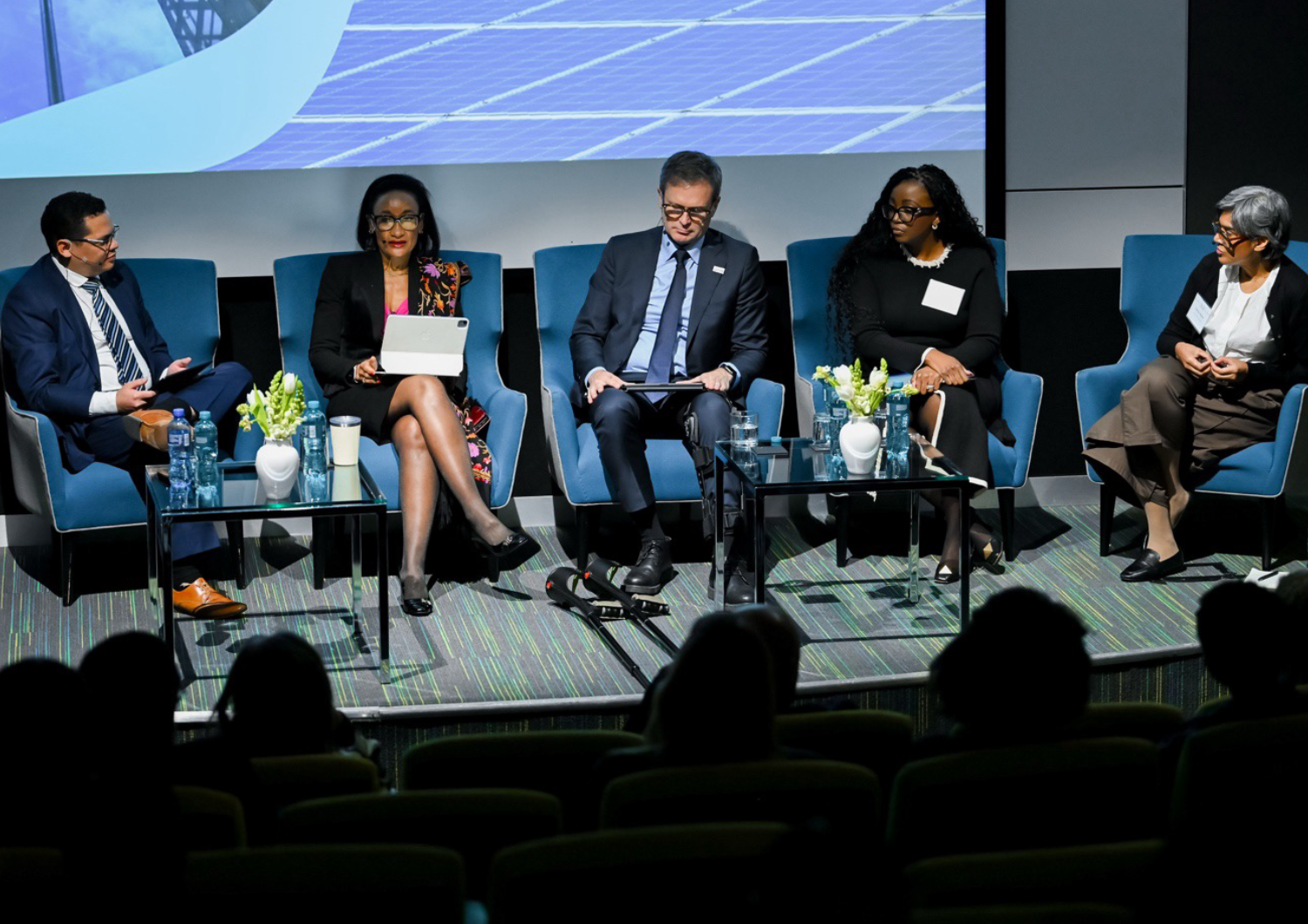
An FSDAi perspective on the PRI’s Future of Responsible Investing report, on the occasion of the PRI’s 20th anniversary panel held in Johannesburg on 14 May 2026.

Twenty years ago, a small group of asset owners signed the Principles for Responsible Investment and changed the language of finance. Today, the practices they helped codify are the operating vocabulary of a global industry. This year, the PRI marked that anniversary by asking a harder question: what does the next twenty years require? 

Its new report, The Future of Responsible Investing (FoRI), distils the views of 120 organisations into two clear ambitions. First, that responsible investing becomes all investing: a core discipline of every CIO and investment team, not a parallel track run by a sustainability unit. Second, that responsible investing evolves to confront the system-level risks, from climate and nature to demographics, geopolitics and the governance of new technologies, that now define the operating environment for long-term capital. 

Both ambitions matter to FSD Africa Investments (FSDAi). We operate where global capital meets African opportunity, and we believe that the next chapter of responsible investing will be written in the markets where the Principles have been hardest to apply. 

FSDAi’s CIO, Anne-Marie Chidzero, speaking on the panel at PRI’s 20th anniversary celebration.


FSDAi’s Chief Investment Officer, Anne-Marie Chidzero, joined panellists from 27Four, Old Mutual and Value Capital Partners, moderated by the PRI’s Nathan Fabian, to debate exactly that question. Her message was direct: 

“Responsible investing must become all investing, and Africa cannot be left out. Climate, nature, demographics, the governance of AI: these are not future risks on our continent. They are daily life. The real opportunity is to stop treating Africa as the hardest place to invest responsibly, and start treating it as the place where the next generation of responsible investing gets built.”

Anne-Marie Chidzero, Chief Investment Officer, FSD Africa Investments.

Where FSDAi’s work meets the FoRI agenda 

The report identifies five practical actions for asset owners who want to lead the next two decades: speaking out on shared interests, raising the visibility of CEOs and CIOs, being transparent with investment managers, engaging policymakers, and supporting innovation through capital allocation. The last of these lands closest to our mandate, and it works on two fronts.  

The first is the call to use innovative financing mechanisms, including blended finance, to channel more capital into emerging markets. At FSDAi we deploy catalytic capital to do exactly that, building investable opportunities in green finance, capital markets development and digital finance that institutional investors can credibly follow.  

The second is being one of the first to take risk early where commercial capital will not yet go. By backing novel instruments, early-stage funds and underserved markets, FSDAi creates the track record, structures and conditions that allow far larger pools of capital to follow. This is responsible investing as system-building. 

What we want from the next 20 years 

The FoRI report is candid about what asset owners need from the PRI: amplifying asset owner voices, including those beyond the largest northern institutions; convening with purpose; supporting investor education; and engaging policymakers while respecting regional context. 

From an African vantage point, those priorities are essential. The PRI’s “broad tent” only stays broad if it accommodates investors where regulatory frameworks are still maturing, data is patchy, and the trade-offs between development, decarbonisation and decent work are most acute. Africa is also home to a rapidly growing pool of pension and sovereign capital. The next two decades will determine whether it is mobilised for long-term, sustainable returns, or allocated to the same old playbook. 

We agree with the report’s central conclusion: the original six Principles remain fit for purpose. The task now is interpretation, application and discipline, and no asset owner can do it alone. FSDAi is committed to playing its part: as a development finance investor putting catalytic capital where the system needs it most, as a partner to African capital market builders, and as a PRI signatory that intends to be heard.  


Responsible investing is no longer a choice. It is the only investing that makes sense. 


The PRI report, “The Future of Responsible Investing” (April 2026), is available at unpri.org. 

Nature is Africa’s economic infrastructure; investment models need to catch up

Across Africa, conversations about nature are still too often framed as a trade-off. Conservation versus growth. Ecosystems versus jobs. Sustainability versus industrialisation.

But that framing misses something fundamental. For many African economies, nature is not separate from development. It is the infrastructure development depends on.

Agriculture, fisheries, forestry, tourism and mining all rely on functioning natural systems. So do energy production, water security and export supply chains. According to the African Development Bank, an estimated 62% of Africa’s GDP[1] is moderately or highly dependent on nature and the services ecosystems provide. In many countries, agriculture alone employs more than half the workforce and remains central to export earnings, food security and rural livelihoods.

The idea that Africa must choose between development and nature is therefore a false one. Development-first is nature-first. This matters because the economic consequences of environmental decline are no longer theoretical. They are already being felt across the continent’s real economy.

This is already visible across African supply chains. Coffee and cocoa producers are dealing with changing rainfall patterns and declining soil quality. Horticulture exporters face growing pressure on water systems. Fisheries and tourism economies depend on healthy ecosystems that are becoming increasingly stressed. Across sectors, environmental degradation is raising costs, weakening productivity and making supply chains less reliable meaning nature loss is now a commercial risk.

The World Bank estimates that climate change could push up to 86 million Africans into internal migration by 2050[2], driven in part by pressure on water systems, declining agricultural productivity and ecosystem stress. Meanwhile, AFDB estimates that over 45% of the world’s degraded land is located in Africa[3], which undoubtedly has significant consequences for food systems and economic resilience.

Yet finance has not fully caught up with this reality. Globally, billions of dollars continue to flow into activities linked to deforestation, land degradation and unsustainable extraction, while “nature-first” enterprises, those which are working to restore landscapes, strengthen soil health or build more resilient supply chains, often struggle to access capital.

Part of the problem is perception. Nature-first enterprises are still frequently seen as niche, high-risk or difficult to measure. Investors are often more comfortable financing extractive models with familiar returns than businesses whose value depends on long-term resilience and natural capital.

But this is beginning to change. Investors are increasingly recognising that natural systems underpin productivity, stability and long-term economic performance in much the same way as roads, ports or energy infrastructure do.

The challenge now is building investable models that connect environmental resilience to commercial value.

Across Africa, there is no shortage of enterprises already working in regenerative agriculture, sustainable forestry, ecosystem restoration and resilient supply chains, meaning that as well as generating revenues they are also delivering improvements to the health of the soil and water as well as increased biodiversity. The bigger problem is that many remain stuck in the “missing middle”: too advanced for grant funding, but not yet structured in ways that mainstream investors understand or feel comfortable backing.

This is part of what initiatives such as the Nature-First Innovation Lab (NFIL), launched by FSD Africa in partnership with the African Natural Capital Alliance (ANCA) and Systemiq, are trying to test. NFIL is a new accelerator programme designed to help projects from across Africa, including Tanzania, Ethiopia and Malawi, that have already moved beyond concept or feasibility stage, to become investable, scalable businesses through a tailored package of capital and hands-on support. The pilot will focus on enterprises which have embedded regenerative practices into agricultural, blue (ocean and coastal) economy and broader natural‑resource supply chains. This includes, for example, regenerative agriculture projects, seaweed and aquaculture businesses, sustainable forestry, and other nature-first production systems that generate both commercial returns and measurable environmental benefits.

Importantly, the programme is focused on business models where the primary revenue stream is not carbon finance but rather the underlying products, services and supply chains themselves – for instance from being able to charge a premium for produce grown according to regenerative agriculture principles. While carbon markets continue to play an important role, they are already supported through dedicated initiatives such as FSD Africa’s Carbon Accelerator Programme for the Environment (CAPE), which focuses on high-integrity nature-based carbon projects. NFIL aims to help demonstrate that a wider range of nature-first business models can also become commercially viable and attractive to mainstream investors through the strength of their underlying products, services and supply chains. The ultimate aim is to demonstrate how nature-first business models can support both commercial returns and long-term resilience.

That evidence matters. Markets move when they can see viable examples, functioning transactions and measurable outcomes. Nature-first enterprise cannot remain a theoretical conversation held only in climate forums or policy documents. It needs to become part of how African economies think about competitiveness, productivity and long-term growth.

Africa also has an opportunity many advanced economies no longer do: the chance to build differently before environmental damage becomes even more expensive to reverse. Many wealthier economies developed through models that treated natural systems as effectively unlimited. They are now spending heavily to restore degraded land, polluted waterways and weakened ecosystems after decades of over-extraction. African countries are not locked into the same legacy systems. That creates an opportunity to build growth models that recognise nature not as a constraint on development, but as one of its foundations.

Putting nature on the balance sheet means recognising that healthy soils, functioning water systems and resilient ecosystems support jobs, exports, productivity and economic stability. It means understanding that environmental resilience and economic resilience are increasingly the same conversation.

Development-first is nature-first. The countries and investors that understand this early will be better placed to build growth that lasts.


[1] https://africa.businessinsider.com/local/markets/report-reveals-62-of-african-gdp-reliant-on-nature-services/1t4slt5

[2] https://www.worldbank.org/en/news/press-release/2021/09/13/climate-change-could-force-216-million-people-to-migrate-within-their-own-countries-by-2050

[3] https://www.afdb.org/en/topics-and-sectors/topics/desertification-and-land-degradation

Nature-first enterprise could become Tanzania’s next investable growth story

Tanzania’s growth ambitions depend heavily on the health of its natural systems. Agriculture, rural livelihoods, water security, tourism and export competitiveness all rely on functioning soil, water and ecosystems. Yet nature is still too often treated as separate from economic development, rather than the infrastructure that makes development possible.

The idea that Tanzania must choose between development and nature is false. Development-first is nature-first.

The country’s economy is deeply tied to natural capital. Agriculture alone employs roughly two-thirds of the workforce and contributes around a quarter of GDP[1]. According to the Ministry of Agriculture, agricultural export earnings reached US$3.54 billion in 2023/24[2]. Behind those figures sits an enormous dependence on healthy land, reliable rainfall, water systems and productive ecosystems.

This is why nature should be understood as economic infrastructure, not simply an environmental concern. When soils degrade, productivity falls. When water systems come under stress, farming, processing and transport become more expensive and less reliable. The effects are felt across entire value chains, from smallholder farmers and rural communities to processors, exporters and buyers.

This is already visible in some of Tanzania’s most important agricultural industries. Coffee and horticulture, for example, depend heavily on soil health, water stewardship and stable growing conditions. When those systems weaken, yields suffer and supply chains become more vulnerable. But when farmers and businesses invest in more resilient production practices, the benefits are economic as well as environmental: stronger productivity, more reliable supply and better long-term competitiveness.

Tanzania also has an opportunity to avoid some of the costly mistakes made elsewhere. Many advanced economies built growth models that treated natural systems as unlimited resources. They are now spending heavily to restore degraded land, polluted water systems and damaged ecosystems. Tanzania is not locked into that path. It has the chance to build growth in a way that protects the natural systems its economy already depends on.

The challenge is that finance has not fully caught up with this reality. Globally, large amounts of capital still flow into activities that degrade forests, soils and water systems, while many “nature-first” businesses, which are working to protect and restore nature, struggle to attract investment. Part of the problem is perception. Nature-first enterprises are often seen as too risky, too difficult to measure or too slow to generate returns.

Yet the risks of ignoring nature are becoming harder to ignore. Businesses are already seeing the effects of declining soil quality, water stress and supply disruptions. Investors are beginning to recognise that natural systems affect productivity, resilience and long-term commercial performance just as much as roads, power or logistics do.

Many promising businesses remain stuck in the “missing middle”: too advanced for early grant funding, but not yet structured in ways commercial investors understand. The issue is often not a lack of potential, but a lack of proof points, financial support and investment models that connect environmental resilience to commercial value.

That is part of what we will be testing with the launch of the Nature-First Innovation Lab (NFIL) – a new accelerator programme designed to help projects that have already moved beyond concept or feasibility stage to become investable, scalable businesses through a tailored package of capital and hands-on support. The pilot is inviting applications from enterprises in Tanzania which have embedded regenerative practices into agricultural, blue (ocean and coastal) economy and broader natural‑

This matters because the conversation about nature should not sit outside Tanzania’s economic agenda. Agriculture that depletes soil weakens food security and future productivity. Supply chains that ignore water and biodiversity risks become less resilient over time. Businesses that improve land, strengthen productivity and support rural livelihoods should not remain invisible to finance simply because markets have not yet developed the right ways to assess them.

Putting nature on the balance sheet means recognising that healthy ecosystems support jobs, exports, productivity and economic stability. Tanzania has an opportunity to help prove that nature-first enterprise is not anti-growth, but part of building growth that lasts.


[1] https://www.tanzaniainvest.com/agriculture?utm_source=chatgpt.com

[2] https://www.thecitizen.co.tz/tanzania/news/national/tanzania-steps-up-drive-to-boost-farm-exports-eliminate-trade-barriers-5145820?utm_source=chatgpt.com


UK–Ghana Growth Partnership to drive jobs, investment and skills

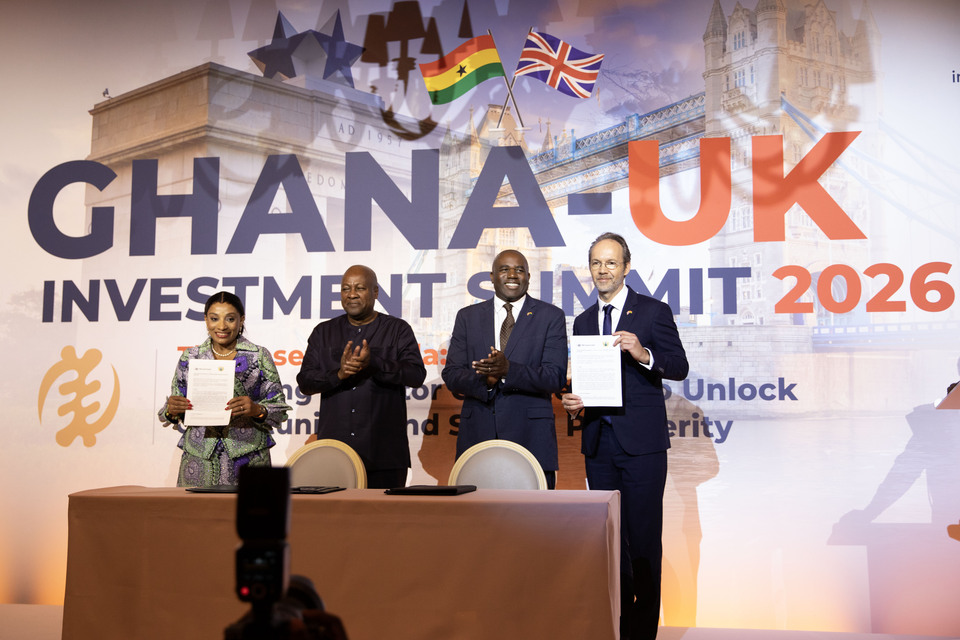
The UK and Ghana have signed a new Growth Partnership aimed at delivering tangible benefits for people and businesses in Ghana, including more jobs, stronger infrastructure and better access to skills and education. The Partnership will build on the up to £215 millions of deals signed as part of the Ghana Investment Summit in London.

Signed today during President John Dramani Mahama’s official visit to the United Kingdom, the Partnership sets out how the two countries will work together from 2026 to 2028 to support private‑sector‑led growth, boost trade and unlock new investment.

The Partnership focuses on four priority areas: attracting private investment and finance; making it easier for Ghanaian businesses to trade; supporting infrastructure and industrial growth; and expanding skills and education partnerships.

It is backed by a series of practical initiatives designed to deliver real results, including:

  • new jobs and a stronger maritime sector: a £101million ($137 million) UK-supported project, to develop the first commercial-scale ship repair and dry-docking facility in the Gulf of Guinea.  The Takoradi Floating Dock Project (ShipRite) is backed by a consortium of investors including UK co-owned Private Infrastructure Development Group (PIDG) and delivered in partnership with the Ghana Ports and Harbours Authority (GPHA)
  • it is expected to create up to 430 direct jobs, with around 30% taken up by women; while positioning Ghana as a regional maritime hub and reducing emissions by overall travel distances.  The project also pioneers the involvement of local pension funds in infrastructure finance in the region
  • climate‑aligned infrastructure: a £5 million UK-supported (ODA) Green Project Preparation Facility, hosted by Financial Sector Deepening Africa (FSD Africa) and in partnership with the Ghana Infrastructure Investment Fund, designed to help transform viable ideas from private and public sector developers into investable climate-focused  infrastructure projects, with the potential to unlock up to £180 million in deals over three years, supporting opportunities for UK firms, supporting the Government of Ghana’s priority infrastructure agenda
  • mobilising global capital for Ghana’s green economy: Mere Plantations has announced plans to scale up plantation and reforestation activities in Ghana, including the use of new technologies such as biochar to enhance environmental impact and sustainability. As a major milestone, the company will launch a £85 million reforestation investment fund listed in the UK, the first Article 9 “dark green” fund on the London Stock Exchange’s new Private Markets platform. Backed by the Ghana Forestry Commission, the fund will channel international capital into high‑integrity reforestation and carbon projects in Ghana, supporting jobs, restoring degraded land and positioning Ghana as a leading destination for nature‑based investment
  • new partnership to help implement the Ghana AI Strategy, as part of a wider set of new Science and Technology collaboration, backed by £6 million UK funding. During the Investment Summit, Minister for Communications, Digital Transformation and Innovation will discuss how UK expertise can help Ghanaian institutions unlock the benefits of AI. Ten new Physics Partnerships have been funded in partnership with UK Research and Innovation driving collaboration across universities
  • restoring forests and livelihoods: Rainforest Builder to inject £9 million in new investment in forest restoration in the Oti Region, supporting environmental protection and local jobs.
  • skills and education opportunities: the publication of Transnational Education guidelines, opening new partnerships between UK and Ghanaian institutions and supporting access to higher‑quality education and training
  • stronger healthcare skills: a £4 million, five‑year partnership between a UK training provider and Ghana‑based Mangel Klicks to deliver specialist clinical engineering training, strengthening healthcare systems in Ghana and supporting skills development across the wider region

The Partnership is signed as the UK and Ghana mark five years of the UK–Ghana Trade Partnership Agreement. Since the Agreement entered into force, bilateral trade has grown to around £1.6 billion, an increase of 12.5% since 2024. It also builds on the strong investment pipeline established by British International Investment (BII) whose development finance investment into Ghana stands at approximately £140 million, including Maa Grace, a UK-Ghanaian export-focused garments business backed through Growth Investment Partners (GIP) Ghana.

H.E Dr Christian Rogg, British High Commissioner to Ghana, said:

This Growth Partnership is about real change people can see and feel. It means more skilled jobs, stronger ports and transport links, better access to finance, and new opportunities for young people and women across Ghana.

By working with Ghanaian partners and backing private investment, we are supporting growth that is sustainable, inclusive and led by Ghana’s own priorities.

Together, these initiatives demonstrate a strengthened UK–Ghana Growth Partnership that is:

  • mobilising investment at scale
  • expanding and diversifying trade
  • supporting infrastructure for industrial transformation

This partnership underscores the UK’s commitment as a long-term partner in Ghana’s economic transformation, while unlocking new commercial opportunities across priority sectors.

Further information

  • Ghana is one of West Africa’s most stable democracies and plays a leading role in the region’s economy and building greater security
  • the UK–Ghana Growth Partnership complements existing trade arrangements and builds on long‑standing people‑to‑people and business links between the two countries
  • the Partnership is designed to support a predictable environment that encourages responsible, sustainable investment
  • about the Ghana Infrastructure Investment Fund (GIIF): GIIF is a Government of Ghana initiative designed to facilitate and manage infrastructure investments across key sectors of the Ghanaian economy
  • about the UK–Ghana Trade Partnership Agreement: The UK–Ghana Trade Partnership Agreement entered into force in 2021 and provides a framework for trade between the two countries following the UK’s departure from the European Union
  • about the Dry dock project, delivered in partnership with the Ghana Ports and Harbours Authority (GPHA): PIDG’s investment complements equity investments by ARM-Harith Infrastructure Fund and the project developer, Prime Meridian Docks Ghana Ltd, and unlocks senior and mezzanine financing from the African Export-Import Bank, the African Development Bank, the Eastern and Southern African Trade and Development Bank (TDB), Petra Pension Schemes, and Origen Private Debt Fund
  • about Mere Plantations: Mere Plantations is a UK-based forestry and investment company specialising in sustainable plantation development and reforestation projects, working in partnership with the Ghana Forestry Commission to restore degraded land, generate carbon credits and support local jobs. Mere Plantations is scaling reforestation in Ghana while preparing to list an Article 9 “dark green” fund on the London Stock Exchange, marking a significant step in mobilising international capital into the country’s green economy. The initiative is also a launch client for the LSE’s new Private Markets platform

Article Reposted from: gov.uk

Behind the Investment: Africa’s First Nature-Linked Outcomes Bond

On 31 March 2026, FirstRand Bank Limited made history as the first commercial bank globally to issue an outcomes-based bond that directly links investor returns to verified ecological and environmental restoration outcomes. Listed on the Johannesburg Stock Exchange (JSE), and anchored by FSD Africa Investments (FSDAi) and the International Finance Corporation (IFC), the R2.5 billion bond will fund the large-scale removal of invasive alien plants (IAPs) that are quietly draining one of South Africa’s most critical water supply systems.


The market failure behind the bond

Two-thirds of the sub-catchments feeding the Western Cape Water Supply System are invaded by alien plant species that consume the equivalent of two months of Cape Town’s entire water supply each year. The most cost-effective solution — removing those plants — has been known for some time. What has been missing is the financing architecture to do it at scale. While ecological restoration delivers real, measurable value, those benefits accrue diffusely across households, municipalities, agriculture and industry, making them difficult to price, monetise or verify in ways that meet institutional investment standards. As a result, conservation has remained heavily dependent on fragmented public and philanthropic funding, while private capital stays largely on the sidelines unable to engage at the scale required.


What the bond does differently

The Cape Water Performance-Based Bond was designed to address this challenge by embedding conservation outcomes directly into a conventional fixed income security.

Investors receive a base return with an additional success premium linked to independently verified outcomes, specifically the number of hectares of invasive alien plants cleared from priority catchments. Philanthropic and development funders (outcome-based funders or OBFs) underwrite this premium but only pay when results are achieved. If the agreed outcomes are not delivered, the OBFs’ capital is returned for redeployment.

This pay-for-success model aligns all investors’ interests by not only ensuring that philanthropic funding is used efficiently, but also transferring performance risk to the market, and providing commercial investors with a clear and credible pathway into conservation finance.

The result is a R2.5 billion bond listed on the JSE, drawing in institutional investors including Aluwani Capital Partners, Ashburton Investments, and the Eskom Pension and Provident Fund.


Why FSDAi moved first

FSDAi committed R234 million to the bond as one of its anchor investors. Beyond our capital investment, our commitment served three purposes:

The first was validation. FSDAi’s participation in an instrument this novel signals to the market that the transaction’s structure, governance, risk and impact thesis have been rigorously assessed and that the model is credible.

The second was unlocking investment. FSDAi’s commitment alongside the IFC provided the foundation that drew in institutional investors including mainstream local asset managers and pension funds, proving the credibility and investability of the bond.

Africa is home to some of the world’s most important natural assets, yet it attracts only a small share of global finance for nature, while holding over two trillion dollars of local institutional capital seeking long‑term investment opportunities. Instruments like this demonstrate the value of partnership with market innovators to close that gap—offering institutional investors exposure to differentiated sources of return that can complement traditional credit risk. Our ambition is to deepen these partnerships to help channel domestic capital at scale, strengthen Africa’s capital markets, and finance the continent’s climate‑resilient future.

Nes Ruwo, Investment Principal, Private Capital Mobilisation at FSDAi.

The third purpose was replicability. The Cape Water Performance-Based Bond is not designed as a one-off but as a rigorous, transparent, scalable model for mobilising private capital into nature-positive outcomes – it created a template for future issuances. Each successive issuance will require less catalytic capital and attract greater commercial participation as the asset class matures and its track record strengthens.


What this opens ups

The projected impact is substantial: removal of IAPs could increase water availability by up to 55 million litres annually, create 1,500 jobs, restore biodiversity in key sub-catchment areas, and improve water access – reclaimed water could support approximately 800,000 people each year based on average household consumption. In addition, this nature-based solution is the most cost-effective option at approximately 8% of the cost to develop desalination infrastructure that would provide comparable quantities of water.

Nature has long been treated as a cost; this bond demonstrates it can be structured as an asset. What makes the Cape Water Bond significant is not just what it finances, but who it brings together — and FSDAi is proud to stand alongside partners united by the conviction that Africa’s markets are ready to price nature differently. That collective commitment turns reclaimed water into a verifiable, investable outcome and opens the door to an entirely new asset class in Africa’s capital markets.

Anne-Marie Chidzero, Chief Investment Officer at FSDAi

By embedding measurable environmental outcomes into a mainstream market instrument, the Cape Water Performance-Based Bond shows that Africa’s capital markets are capable of absorbing and scaling this kind of innovation.

The value of this bond lies not only in the water it will reclaim or the jobs it will create, but also in the template it leaves behind for conservation finance that can travel across geographies, ecosystems, and development challenges across the continent.

That is the investment FSDAi made. And that is why it was worth making.


Why FSDAi invested: summary

FSDAi invested in the Cape Water Performance-Based Bond to correct a clear market failure that has kept large-scale conservation locked out of mainstream finance, despite its measurable economic and social value. By anchoring Africa’s first nature-linked, outcomes-based bond, FSDAi validated a highly innovative structure that embeds verified ecological outcomes into a listed, senior unsecured instrument, giving institutional investors a credible way to deploy capital into nature. Our catalytic investment helped de-risk a first-of-its-kind transaction, unlock participation from local pension funds and asset managers, and lay the foundation for a new asset class that treats nature as a productive, investable asset rather than a philanthropic cause.


About this series

Behind the Investment is FSDAi’s series on the decisions, structures, and signals behind our capital. Each post takes a single investment and unpacks the market gap it addresses, the thesis we underwrote, the risks we accepted, and the change we expect it to catalyse across Africa’s financial markets.

Contact: Joyce Waihiga, Manager, FSD Africa Investments (FSDAi).


From $3M to a $70M Climate Fund: What building Africa’s climate investment pipeline actually takes

Africa’s climate finance gap is often framed as a question of scale. Hundreds of billions of dollars are needed each year, yet only a fraction flows to the continent. But focusing only on the quantity of capital misses a quieter constraint upstream: the shortage of fund managers with the track record, institutional structure, and operational capacity to deploy early-stage climate capital effectively across African markets.

Capital cannot flow at scale if the managers capable of deploying it do not yet exist, or if they lack the credibility required to attract institutional investors. This is the challenge FSD Africa Investments (FSDAi) had in mind when we invested $3 million in Persistent Energy Capital in 2022.


Backing the team before the fund existed

Persistent had already spent more than 14 years building and investing in climate-focused businesses across Africa. Their portfolio companies had improved the lives of more than 10 million people, created over 20,000 jobs, and helped avoid more than 2 million tonnes of CO₂e emissions.

The team knew how to identify, build, and scale climate ventures. What they did not yet have was a formal fund structure capable of attracting institutional capital and scaling that model.

FSDAi’s $3 million commitment in 2022 came before the fund existed. The capital was deployed directly into climate businesses identified and supported by Persistent across sectors including solar energy, e-mobility, energy efficiency, and sustainable agriculture. But FSDAi’s role went beyond early capital, working closely with the Persistent team to establish the institutional infrastructure required to manage a larger, institutional-grade fund.

Those investments have now been warehoused and transferred into the newly launched Persistent Africa Climate Venture Builder Fund. The fund launches not with a blank slate, but with an existing portfolio already built, tested, and validated, and a team with the systems, structures, and capability required to absorb and deploy institutional capital at scale.

Most funds don’t begin this way. It reflects FSDAi’s integrated approach to investment, combining capital with manager capacity strengthening and ecosystem building to establish a track record and create the conditions for institutional investors to follow.

“For many emerging fund managers, the challenge isn’t just proving a strategy, but building the capacity to manage institutional capital at scale,” said May Yego, Investment Manager at FSDAi. “Our work with Persistent reflected FSDAi’s mandate to test, accelerate and mobilise —  combining early capital with hands-on support to strengthen investment processes, governance and readiness for larger capital. That integrated approach de-risked the opportunity and positioned the fund to attract follow-on investors.”


A fund designed to crowd in capital

The Persistent Africa Climate Venture Builder Fund has now reached a $52 million first close, against a $70 million target.

FSDAi’s $10 million anchor commitment sits alongside the Nordic Development Fund (NDF) and the African Development Bank’s Sustainable Energy Fund for Africa (SEFA) as co-anchor investors.

Additional investors include JICA, deploying capital under its new Blended Finance Window for the first time, alongside the Soros Economic Development Fund, Impact Fund Denmark, and the Schmidt Family Foundation.

This investor base is no coincidence. It reflects a fund structure intentionally designed by FSDAi and Persistent to give institutional and commercial investors the confidence to follow catalytic capital.

Through a blended finance architecture that provides first-loss protection and priority returns, the structure reduces the perceived risk of allocating to an early-stage African climate fund and opens the door for a broader set of investors to participate.

This first close demonstrates that early-stage climate funds in Africa can attract institutional capital when both the manager and the fund structure are intentionally built to meet investor expectations. The result is a vehicle designed not only to deploy catalytic capital, but to crowd in significantly larger pools of private investment.


A venture builder for climate businesses

The fund invests from pre-seed through Series A across three transition themes: energy, agriculture, and resources. It also retains the flexibility to deploy follow-on capital to support the growth of high-performing portfolio companies.

Alongside the investment fund sits a $5 million Venture Building Facility, funded by NDF and FMO, which provides operational support to portfolio companies. This combination of capital and hands-on venture support makes the model more than a fund. It is designed as a company-building engine for climate innovation in Africa.


The impact ambition

Over the life of the fund, the Persistent ACV Fund is targeting:

  • 17 million tonnes of GHG emissions mitigated
  • 7 million beneficiaries reached, with 50% women
  • 60,000 direct jobs created, with 50% women
  • 420,000 households gaining new or improved electricity connections
  • $450 million in downstream investment catalysed

These are ambitious targets. But they are grounded in a foundation many early-stage climate funds do not yet have: a proven team, an existing portfolio, and over a decade of operational experience building climate ventures across Africa.

Gender inclusion is also embedded in the design of the strategy. Persistent’s portfolio construction aligns with the 2X Challenge, ensuring that women are both beneficiaries and participants in the growth of climate enterprises.


What this proves

The $52 million first close answers a question FSDAi asked in 2022: Is there demand for a well-structured, manager-development-focused early-stage climate fund in Africa?

The participation of NDF, AfDB, JICA, SEDF, and others suggests the answer is yes. For FSDAi, the Persistent ACV Fund represents more than a single investment success. It is part of a broader effort to build the financial market infrastructure required for Africa’s climate transition.

Our portfolio includes InfraCredit Nigeria, Ci-Gaba, ATAF, the Acre Impact Fund, and ARM-Harith’s ACT Fund. These are not isolated investments. Together they strengthen the ecosystem that allows capital to flow at scale by supporting fund managers, financing structures, institutional track records and demonstration effects.

Backing Persistent before the fund existed was a bet on a team and a model. Its first close validates that bet. The bigger question for Africa’s climate finance ecosystem is how many other teams like Persistent’s are out there, building track records without the institutional backing required to scale them. Finding them earlier and supporting them sooner is the work we are in.


Read the original blog here.

Africa’s green growth needs skills: Where and how can finance help?

Next week, FSD Africa will participate in Africa’s Green Economy Summit (AGES). Our presence reflects a clear strategic view: Africa’s green transition will only succeed if investments in climate-aligned sectors are matched with investments into building the  workforce required to deliver them. Financial markets cannot deepen around green growth without trained and skilled workers capable of sustaining it.

Across the continent, momentum is building. Countries like Kenya, Ghana, South Africa and Morocco have recognised the green jobs skills gap and have developed country strategies to this . The African Development Bank and African Union are also pushing for green skills as part of their commitment to driving green and inclusive growth across the continent.

Tackling Africa’s green skills gap will require cross-sector collaboration and coordination among stakeholders, including skilling and training partners; employers and industry associations; government regulators and policymakers; and funders and investors. All this effort will be happening against a backdrop of dwindling public finance and development funding.

In light of this, FSD Africa has begun exploring innovative and sustainable financing mechanisms that could enhance Africa’s green workforce development. The green jobs financing imperative is what underpins our participation at this year’s Africa Green Economy Summit, between 24 – 27 February in Cape Town, South Africa

Why financial markets matter for green skills

Our mandate is to strengthen financial markets so they can mobilise domestic capital, crowd in private investment, and support sustainable economic growth. Financial sector deepening depends not only on liquidity and regulation, but on productive enterprises and stable income generation. Green sectors such as renewable energy, electric mobility, and climate-smart agriculture are not only capital-intensive, they are also labour-dependent. The quality and availability of skills affect productivity, cost structures, and long-term viability.

Recent analysis in our 2024 Forecasting Green Jobs in Africa report estimates that more than three million direct green jobs could be created across key value chains by 2030. This presents a significant opportunity to address vast swathes of unemployment across Africa, particularly the youth. However, without deliberate investment in vocational training systems, certification pathways, and workforce planning, many roles will remain difficult to fill, and project pipelines will face constraints.

At AGES, we hope to engage partners on several critical questions:

  • How can workforce planning be embedded into climate infrastructure financing from the outset?
  • What financing mechanisms can support large-scale skills development linked to green sectors?
  • How can domestic institutional capital, including pension funds and insurance assets, align with long-term human capital investment strategies?
  • And where are the most pressing labour bottlenecks already emerging across markets?

FSD Africa will be aggregating these perspectives and partnerships into a Green Jobs Innovation Hub that aims to translate research insights into investable, demonstrable green workforce solutions. Our approach focuses on strengthening labour market data to inform capital allocation, convening stakeholders across finance and workforce ecosystems, and designing demonstration models that treat skills as an investable component of green growth rather than a standalone social expenditure. We believe that integrating human capital considerations into financial structuring will be key to improving project outcomes and strengthening market resilience.

As a Silver Sponsor at AGES, we see the Summit as more than a platform for dialogue — it’s an opportunity to shape the evolution of green finance. We are keen to connect with investors, development finance institutions, governments, asset managers, and workforce actors who recognise that green growth development is embedded into investment strategies — not treated as an afterthought. We are particularly interested in building partnerships that will enable us to pilot innovative financing approaches that can link capital deployment with measurable employment outcomes.

Africa’s green transition offers an opportunity to decarbonise economies while deepening financial markets and expanding domestic capital mobilisation. Realising that opportunity requires aligning capital with capability. We look forward to engaging in Cape Town on how to ensure that financial flows translate into productive, inclusive growth supported by the right skills at scale.


Celebrating 10 Years of Frontclear: Unlocking Liquidity and Building Resilient Markets

Trust is the backbone of any banking system, and liquidity is what keeps it moving.

A decade ago, across much of Africa, those two forces were not aligned. Many money markets resembled roads filled with red lights: banks were reluctant to lend to one another, liquidity remained trapped, and smaller institutions, even those holding government securities, could not access interbank credit. With legal protections unclear and confidence in short supply, central banks became the only reliable counterparties. As a result, domestic financial markets struggled to grow. Uganda ranked near the bottom of the Absa Africa Financial Markets Index, Ethiopia had no securities exchange, and Kenya’s bond trading was thin and opaque.

The idea behind Frontclear was simple yet transformative: if banks could lend with the backing of a guarantee, they could rebuild trust, unlock liquidity and strengthen market confidence. Through credit guarantees, legal reform and consistent stakeholder engagement, Frontclear helped turn those red lights green, enabling financial markets to move, build trust, and grow stronger.

A decade of impact

Since its founding, Frontclear has helped reshape Africa’s financial landscape and demonstrate how catalytic interventions can unlock systemic change.

  • £2.1 billion mobilised for African obligors
  • 117 transactions closed and 45 market infrastructure solutions developed
  • More than 90 technical assistance programmes delivered
  • Over 2,500 market participants trained through the Frontclear Academy
  • Legal and regulatory reforms in Uganda, Tanzania, Zambia and Ethiopia.

Every dollar guaranteed by Frontclear has unlocked almost nine times more in private capital, underscoring its catalytic impact.

The launch of Tradeclear in 2022 – Frontclear’s guarantee platform that helps manage counterparty credit and settlement between banks – followed by the passage of netting laws in 2023, is transforming Uganda’s interbank market. In Ethiopia, the launch of a securities exchange and a central securities depository in 2025 has created the foundation for repo trading and capital market growth.

The continuing opportunity

While Frontclear’s footprint continues to expand across the globe, significant opportunities to unlock liquidity, build trust and strengthen the resilience of financial systems remain. Africa’s local-currency bond markets have doubled in the past decade, from US$ 350 billion in 2014 to nearly US$ 700 billion by 2023. However, funding remains tight, credit is costly and interbank trading is still concentrated among a few large players.  Legal certainty for repos and derivatives is uneven, and access to long-term local-currency hedges remain limited. This leaves both borrowers and lenders exposed to foreign exchange risk and volatility.

Progress will depend on continuous collaboration. Regulators need to pass and implement robust netting laws; treasuries must support active bond markets, broaden repo-eligible collateral; regulators should champion the adoption of global master agreements, while investors and development partners should find creative structures to catalyse capital, and support technical assistance initiatives. Together, these efforts paint a picture of Africa’s financial future where interbank repos form the backbone of liquidity management, reliable reference rates are built on real market activity, and small and growing businesses benefit from the efficiencies created when banks borrow more efficiently. It is a future where domestic bond markets provide the foundation for financing sustainable growth, reducing reliance on fragile external debt.

A partnership built on catalytic capital

For FSD Africa Investments (FSDAi), Frontclear’s story is a powerful example of how catalytic capital can transform financial systems. 

In 2015, FSD Africa made an early US$ 7.5 million investment in Frontclear, anchoring its subordinated capital and absorbing initial risk. This commitment supported the launch of the Frontclear Technical Assistance Programme (FTAP) and crowded in major development finance institution partners including FMO, Proparco, SIDA, EBRD, and BMZ , who provided additioinal funding to expand warehouse financing and local-collateral repo activity. In 2019, FSDAi made a further US$ 2 million investment to help restructure Frontclear’s capital base and enable it to operate at greater scale. By combining investment with technical assistance, FSDAi demonstrated how patient, catalytic capital can be leveraged to share the early risk, prove new models, and crowd in investors to build sustainable, resilient markets.

Looking ahead: Frontlear at 10 and beyond

Frontclear’s 10-year milestone is more than an anniversary. It is a reflection of what can be achieved through partnership, persistence and innovation. As Frontclear 2.0 takes shape, its ambition is  to establish a global platform for money markets that integrates and supports emerging and frontier economies. FSDAi is proud to have been part of this journey, helping turn a bold idea into a proven model for market transformation, and look forward to the next decade of innovation, growth and impact across Africa.

Catalytic Capital in Action: FSDAi’s Role in Shaping Kenya’s Affordable Green Housing Market

Unlocking finance for affordable, sustainable homes

In 2021, FSD Africa Investments (FSDAi) joined a consortium of leading investors including UK Climate Investments (UKCI, now under British International Investment management), the European Investment Bank (EIB), and the County Pension Fund (CPF) to launch the International Housing Solutions (IHS) Kenya Affordable Green Housing Fund. The Fund was established to tackle Kenya’s pressing urban housing deficit by financing developments certified through the EDGE green building standard, targeting low- and middle-income households.

By providing catalytic equity capital, FSDAi aims to demonstrate the commercial viability of green affordable housing. The Fund aims to deliver up to 4,000 green-certified homes by 2030, improving living standards, reducing utility costs, and contributing to Kenya’s climate resilience and inclusive urban growth.

Turning investment into market insight

Beyond financial returns, FSDAi’s investment sought to create lasting market impact. Through a side letter agreement, FSDAi required IHS to adopt an Open Source Policy, ensuring that data and insights generated from the investment would be publicly shared. To embed this principle, FSDAi provided the Centre for Affordable Housing Finance in Africa (CAHF) with a grant for a four-year Open Access Initiative (OAI) to collect, analyse, and disseminate data from IHS and other housing developments in Kenya.

This initiative is now generating vital, publicly available market intelligence and helping new investors understand the economics of affordable housing, guiding policymakers, and strengthening the capacity of housing practitioners across the region. By doing so, FSDAi’s catalytic investment continues to multiply its impact far beyond a single project, driving systemic change in Africa’s housing finance ecosystem. Various outputs have been published on CAHF’s Open Access website, benchmarking construction costs in Kenya, reviewing reasons for rejection, promoting ESG standards, and now, as the housing developments that IHS is funding start to unfold, tracking the steps, time and costs involved in the delivery of affordable housing in Kenya.  With the support of FSD Kenya, CAHF has also secured the agreement of the Kenyan State Department for Housing and Urban Development to track six Affordable Housing Programme (AHP) projects, documenting and comparing their costs, while also considering the impact of the AHP on the economy and on job creation.  A further initiative has been the Nairobi Metropolitan Area Dashboard which collects and maps all housing developments in the Nairobi Metropolitan Area, giving an indication of market activity and targeting.  CAHF is currently in discussion with partners in Abuja, Nigeria, to replicate this model there.

It is still early days, but the delivery of these outputs is having two broad impacts – first, the content is being incorporated in strategic decision making by the parties, as developers and investors, as well as the Kenyan government, consider the data.  Second, the sensitivities around data sharing are slowly being overcome, and more developers are expressing an interest in participating in the OAI, both to better understand their own businesses, but also to showcase their track records and experience in the wider sector and to investors in particular.  CAHF hopes that the OAI will continue to be supported by funders so that it can grow into a sustainable offering not only in Kenya but across the continent.

Catalytic capital for systemic change

The IHS Kenya case demonstrates FSDAi’s unique approach as:

  • A catalyst for innovation — testing and scaling new investment structures that blend impact and commercial sustainability.
  • An enabler of market development — providing insights that attract institutional capital and build investor confidence.
  • A partner committed to impact — improving access to affordable housing while advancing climate resilience and social inclusion.

Through strategic, insight-driven investments like this, FSDAi is helping reshape Africa’s housing finance landscape — proving that catalytic capital can unlock lasting, large-scale transformation for people and planet.


See a short case study of the IHS Investment and the Open Access Initiative in the recently published Playbook for Blended Finance in Affordable Housing in Africa.

Ethiopia’s new securities exchange aims to unlock interbank liquidity

By Michael Habte is ESX’s chief operating officer and Victor Nkiiri is a senior specialist – capital markets at FSD Africa

Ethiopia, Africa’s second most populous country, is among the fastest-growing economies in the world, with GDP growth projected at 6.5 per cent in 2025. The country has adopted a bold vision to achieve lower-middle-income country status by 2030, underpinned by sweeping economic reforms to transition from a state-controlled to a market-driven economy. 

Among the new economic initiatives recently rolled out is a new securities exchange, the Ethiopian Securities Exchange, or ESX, planned for launch on January 10. For decades, Ethiopia’s financial an interbank trading platform. Simply put, banks could not effectively lend to one another, resulting in high interest rates to borrowers and significant inefficiencies in bank liquidity management. Such inefficiencies have constrained businesses, particularly the small and medium-sized enterprises which are the backbone of Ethiopia’s economy. 

The new exchange is already addressing this challenge. An interbank trading platform which is part of the exchange is optimising liquidity and improving credit flow in the banking system. Since its pilot in late October, the platform has facilitated trades exceeding 135bn birr($1.1bn), demonstrating robust uptake by the banking sector. 

Regulatory reforms

This milestone reflects the effectiveness of reforms such as the Interbank Money Market Directive issued by the National Bank of Ethiopia, which created the necessary regulatory framework. By enhancing price transparency and reducing transaction costs, the platform is already improving credit accessibility for businesses, enabling them to grow, innovate and drive economic activity.

The impact of the ESX extends far beyond the banking sector. A functional interbank market itself is the foundation for developing critical financial instruments such as treasury bills, corporate bonds and commercial papers. These instruments rely on liquid money markets for effective pricing and execution. With its state-of-the-art electronic trading platform that is integrated with the central securities depository, the ESX is well-positioned to facilitate the efficient issuance and trading of these instruments.

The exchange is also a critical enabler of economic diversification. By reducing borrowing costs and expanding access to finance, it empowers businesses to invest in new projects, expand operations and create jobs. These outcomes align with Ethiopia’s ambitions to achieve middle-income status and build a globally competitive economy. 

Establishing the new securities exchange has been a challenging yet rewarding endeavour. To succeed it needed support from a wide spectrum of actors. The public-private partnership model facilitated this, tapping the power of collaboration to drive financial innovation. Ethiopian Investment Holdings, in partnership with FSDAfrica and the Ministry of Finance, worked hand in hand to develop the exchange, in an approach that prioritised market development initiatives that addressed local challenges while adopting global best practices. This ensures that the ESX is not only tailored to Ethiopia’sunique needs but also equipped to compete on the global stage.

Blueprint for innovation
As Ethiopia integrates into global financial markets, the ESX has the potential to position the country as a regional hub for capital market activity. This integration will strengthen Ethiopia’s appeal to foreign investors, unlocking new opportunities for economic growth. Beyond its immediate economic impact, the ESX also serves as a powerful symbol of Ethiopia’s ambition and potential. It exemplifies the transformative role that well-structured capital markets can play in fostering inclusive growth and economic resilience.

The new bourse is also anticipated to inspire other African nations to pursue similar reforms, unlocking the continent’s immense economic potential. Institutions like FSD Africa, which has been instrumental in supporting the ESX, are poised to replicate these lessons in countries that lack functional capital markets. Such efforts are vital for modernising Africa’s financial systems and driving sustainable development.

The launch of the ESX is not just a win for Ethiopia but a blueprint for capital market innovation across the continent.