Tag: FSD Africa Investments

Behind the Investment: Africa’s first dedicated inclusive insurance venture fund

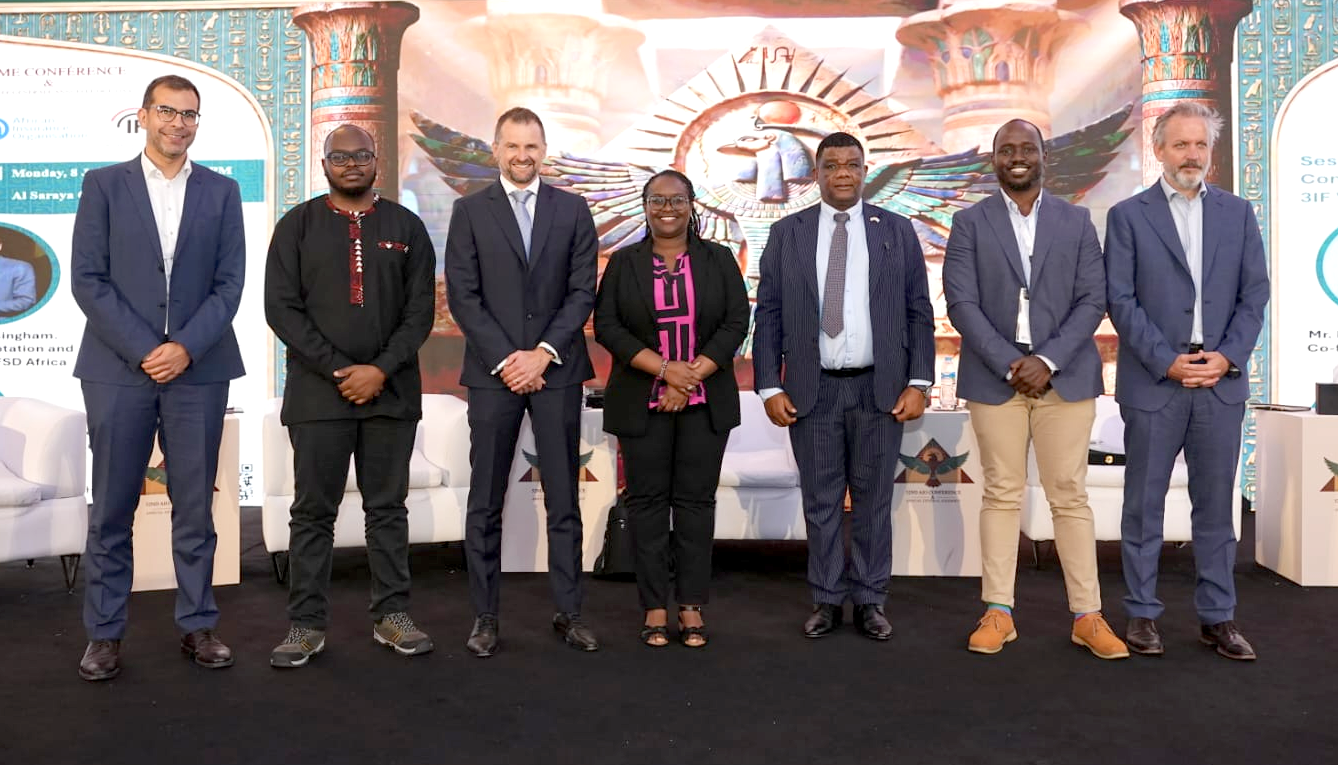
3iF Ventures is the first dedicated inclusive insurance venture fund set up for Africa’s insurance start-up ecosystem. On 5 June 2026 3iF Ventures announced a first close of USD 12 million, co-anchored by FSD Africa Investments (FSDAi) and ZEP-Re (PTA Reinsurance Company), deploying equity from pre-seed to Series B into technology-enabled businesses solving the continent’s insurance protection gap, with a pathway to a USD 30 million final close.


The market failure

Africa has a protection gap of staggering proportions. Over one billion people on the continent have no access to any form of insurance cover. The challenge is not simply one of low incomes. Three persistent structural barriers have long blocked uptake: awareness, accessibility, and affordability. Potential customers do not know insurance exists for their needs, cannot access it through familiar channels, and often cannot afford the products that are available.

The result is that large numbers of African households and small businesses remain entirely exposed to shocks such as illness, crop failure, asset loss and extreme weather that keep them locked in poverty or prevent them from investing and growing.

The insurtech sector has the potential to solve this at scale. However, it has attracted only fragmented capital: grants and early-stage philanthropic funding, with little institutional-grade venture investment. The infrastructure needed to back insurance innovators from inception through to Series B simply did not exist. That is the market failure 3iF Ventures was designed to correct.


What 3iF Ventures does differently

3iF Ventures is structured as a blended investment vehicle. It includes a catalytic capital junior tranche designed to absorb early risk and unlock participation from commercial investors who require a more conventional risk-return profile. Alongside its investment activity, the fund will operate a technical assistance facility sized at approximately 20 percent of total commitments — a deliberate recognition that early-stage insurance businesses need more than capital: they need product design support, regulatory navigation, and access to networks of primary insurers and reinsurers.

The fund’s investment thesis is organised around four thematic verticals: climate and disaster resilience; agriculture and rural livelihoods; digital health and wellbeing; and SMEs and asset protection. These categories correspond directly to the types of shock from which African households and businesses are most exposed and for which conventional insurance markets have offered the least.

3iF Ventures targets approximately 15 to 20 portfolio investments across African markets. It enters the market with a pre-qualified pipeline of 15 insurance ventures from 10 African countries that have already been assessed and are ready for capital deployment. That pipeline has been built, in significant part, through FSD Africa’s BimaLab Accelerator, which has supported 135 early-stage insurance businesses across the continent. 3iF Ventures, in this sense, is not starting from scratch. It is the institutional vehicle that turns years of market-building into deployable capital.


“3iF Ventures was conceived around the observation that scaling an insurtech takes capital plus operational support in equal measure. The junior tranche absorbs the early risk that has historically kept commercial investors out, and the technical assistance facility gives founders product design, regulatory navigation, and distribution reach alongside their equity. Just as important is the potential for partnerships with established insurers and reinsurers, which bring underwriting rigour and balance-sheet capacity to ventures building for scale, while those ventures give incumbents a route into new markets. That exchange is what lets a business move from inception through to Series B.”  Kweku Anyane-Lah, Investments Associate, FSDAi


Why FSDAi moved first

FSDAi committed to 3iF Ventures as one of its co-anchoring investors. That commitment served three distinct purposes.

The first was validation. Co-anchoring a first-of-its-kind fund signals to the broader market that the fund’s structure, governance, investment thesis, and management team have been assessed. That signal matters enormously in a first close, where the absence of a track record means that anchor investors are, in effect, lending credibility as much as capital.

The second was continuity. FSD Africa’s BimaLab Accelerator has built a strong pipeline of early-stage insurance businesses. Without a dedicated venture fund to receive those companies as they graduate from acceleration and need equity capital, much of that pipeline would remain commercially stranded. FSDAi’s investment in 3iF Ventures closes that loop.

The third was replicability. By co-anchoring alongside ZEP-Re, a leading reinsurer with operations in 45 African countries, FSDAi is demonstrating that a credible, commercially structured vehicle for inclusive insurance investment is achievable. Each successive close and successful portfolio company builds the evidence base that makes the asset class easier for other investors to enter.


” We anchored 3iF Ventures to prove the market while solving for the three barriers that have long defined Africa’s protection gap: awareness, accessibility, and affordability. The fund is a continuation of BimaLab, which has built a pipeline of innovative insurtechs addressing exactly those problems. 3iF Ventures bridges the critical early-stage funding gap these ventures face. Anchoring alongside ZEP-Re allows us to partner with an experienced incumbent and together support a manager to prove out the market. ” May Yego, Investment Manager, FSDAi


What this opens up

Over its lifetime, 3iF Ventures targets the issuance of over 5.9 million new insurance policies, improved financial resilience for over 3.5 million households and SMEs, and the creation, sustaining, or retention of over 1.7 million jobs. For a first fund of USD 30 million, these are significant outcomes and reflect the leverage that well-structured insurtech investments can generate.

What 3iF Ventures ultimately opens up is a new asset class. There is no comparable vehicle on the continent today. Its existence makes the next one easier to build, and the one after that easier still.

About this series

Behind the Investment is FSDAi’s series on the decisions, structures, and signals behind our capital. Each post takes a single investment and unpacks the market gap it addresses, the thesis we underwrote, the risks we accepted, and the change we expect it to catalyse across Africa’s financial markets.

Contact: Joyce Waihiga, Manager, FSD Africa Investments (FSDAi).

Behind the Investment: Unlocking the low-income affordable rental housing market

South Africa’s national housing gap is currently estimated at over 2[1]. The blueprint for closing this gap is not entirely missing. It is already being executed by a network of micro-developers and landowners in townships (dense urban communities where affordable rental housing is in short supply) who are actively building and managing housing for a massive, underserved segment of the population. While these builders hold the potential to solve the crisis, a disconnect between the informal housing market and traditional financial systems prevents them from scaling.

The market failure

Township landowners regularly generate stable, consistent cash flows from their rental properties, yet traditional lenders rarely recognise these cash flows as bankable. Because income is frequently informal, non-salaried, or supported by non-traditional documentation, commercial banks tend to assess these borrowers as non-creditworthy. The result is a structural financing gap: entrepreneurs who are already supplying affordable housing are unable to access the type of patient, fit-for-purpose capital needed to build safely, formalise their assets, and grow.

This constraint mirrors a broader hesitation at the institutional level. The perception of township housing as a high-risk, low-yield segment, combined with the structural exclusion of micro-developers from formal credit, has left a significant segment of the country’s housing sector chronically undercapitalised.

For FSD Africa Investments (FSDAi), this is precisely the kind of market failure our catalytic capital is designed to address: a real economy opportunity with proven demand, visible impact, and commercial potential, but without the financial infrastructure needed to attract institutional capital at scale.

What IndluLiving does differently

Founded in 2017, IndluLiving is a South African housing finance and development company that empowers township landowners and micro-developers to build, manage and earn from high-quality rental housing. The company achieves this through a tech-enabled, vertically integrated model that combines property finance, construction oversight, and property management. This end-to-end approach allows township rental assets to be originated, monitored, and managed with the transparency required to make them truly investable.

To date, the company has financed R311 million in housing projects, delivered more than 2,200 high-quality rental units in areas including Tembisa, Mamelodi, and Cosmo City. These developments have, in turn, supported over 1,000 short-term construction jobs and nearly 400 permanent roles through local SMEs. Crucially, IndluLiving’s portfolio challenges traditional risk perceptions: since inception, the company has recorded zero write-offs, a vacancy rate of 3.55%, and rental arrears of 1.41%.

This strong commercial track record is underpinned by two structural safeguards:

  • Controlled disbursement: Funds are disbursed directly through Imbha Construction, IndluLiving’s affiliated construction management firm. This ensures capital is used strictly for development purposes while guaranteeing that every unit is fully integrated into formal municipal water, electricity, and sanitation infrastructure.
  • Closed-loop technology: Rental collections and loan servicing are managed through a proprietary digital ecosystem. This automates payments, providing investors with complete transparency and property owners with a steady, predictable income stream.

The ZAR1 billion Indlu Blended Finance Programme, structured and arranged by Rand Merchant Bank (RMB), is designed to formalise and scale this market. By utilising a construction warehousing facility, the programme originates and seasons development loans before securitising them into a structured bond, creating a clear pathway for mainstream institutional capital to flow into the township economy.

Why FSDAi invested

Through an aggregate investment of ZAR 151m (£6.9m), FSDAi is anchoring both the warehouse facility and the social bond. These commitments are deliberately highly additional: they absorb risk at different stages of the financing structure so that commercial investors can participate with greater confidence as the portfolio seasons and scales.

During the high-risk, early-stage construction phase, FSDAi’s patient capital finances projects before properties are stabilised and income-generating – a stage most commercial investors avoid. This helps create a pipeline of seasoned assets and associated cashflows for securitisation.  In the social bond, FSDAi’s co-investment takes on initial financial risk, giving mainstream commercial investors greater confidence to participate.

The signalling effect was immediate. FSDAi’s early-stage presence helped draw in First National Bank (FNB), which committed R400 million in long-term financing, and the FirstRand Foundation, which provided a R30 million concessional loan to establish the warehousing facility.  This is the market-development role in practice: catalytic capital reducing perceived risk, validating a new structure, and helping convert an overlooked market into one that mainstream finance can begin to underwrite.

“What makes this transaction compelling is that it takes mainstream capital markets tools — construction warehousing, loan seasoning, and securitisation — and engineers them to work in one of the most underserved segments of the economy. By anchoring the warehouse facility and the mezzanine risk, we are building an originate-and-distribute pipeline that converts fragmented rental cash flows into an institutional-grade, asset-backed instrument. Get the structuring right here, and affordable township housing stops being a niche impact allocation and becomes a repeatable, investable asset class across the continent. Nes Ruwo, Principal, Private Capital Mobilisation

What this opens up

The establishment of this facility unlocks immediate, measurable scale. IndluLiving has already identified a project pipeline exceeding R915 million over the next 12 to 24 months, with a specific target to mobilise R500 million for township property entrepreneurs within the first year alone. This warehousing mechanism is projected to support the construction of 1,000 to 1,200 new rental units, providing safe, regulated, and well-located homes for an estimated 3,000 to 4,000 low- to-medium-income tenants.

The investment also carries significant potential for transformative gender outcomes. Currently, 64% of IndluLiving’s landowners are women, and 55% of its property partners are young women under the age of 35. By investing at the structural level of the warehousing facility, FSDAi gains the strategic leverage to help shape more progressive gender standards for inclusive housing finance. This partnership will elevate gender outcome metrics beyond simply tracking the number of female borrowers. Instead, the focus will expand to monitoring sophisticated indicators such as long-term repayment patterns, asset growth, tenant profiles, and the overall trajectory of improved livelihoods across South Africa’s townships.

This growth is also designed to be sustainable. Looking forward, IndluLiving is actively pursuing IFC EDGE certification to integrate green building standards across its portfolio, creating a pathway to attract dedicated climate and green finance into township developments.

Far beyond financing individual housing projects, the Indlu Blended Finance Programme marks an important market-building milestone. It shows how structured finance can connect informal real-estate cash flows with formal capital markets, while preserving the social purpose of affordable rental housing. By bridging the gap between institutional liquidity and undercapitalised township economies, this investment offers a replicable blueprint for how commercial viability and deep social impact can reinforce each other across Africa.

—-

Behind the Investment is FSDAi’s series on the decisions, structures, and signals behind our capital. Each post takes a single investment and unpacks the market gap it addresses, the thesis we underwrote, the risks we accepted, and the change we expect it to catalyse across Africa’s financial markets.

[1] Department of Human Settlements, response to Parliamentary Question NW535, Parliamentary Monitoring Group, 20 March 2023

FSD Africa Investments and Allied Climate Partners commit $50 million in catalytic capital to anchor the African Transition Acceleration Fund (ATAF)

March 12, 2026 | Nairobi, KenyaFSD Africa Investments (FSDAi) and Allied Climate Partners (ACP) have jointly announced their combined anchor commitment of $50 million in catalytic capital to the first close of the African Transition Acceleration Fund (ATAF), a catalytic vehicle managed by African Infrastructure Investment Managers (AIIM). The fund, which is targeting $200 million, is designed to accelerate investment in Africa’s energy transition, vitalise economies, and create sustainable jobs. ACP and FSDAi are joined by the International Finance Corporation’s (IFC) Frontier Opportunities Fund; and several senior equity co-investors including the IFC, KfW, Proparco, and other private investors.

“Africa’s energy transition will not be financed by waiting for projects to become safe enough for conventional capital,” said Anne-Marie Chidzero, FSDAi’s Chief Investment Officer. “Someone has to go first. This partnership with ACP – and our anchor commitment to ATAF – is us going first.”

Across Africa, most infrastructure funds are not structured to commit significant capital to early-stage project development. As a result, promising opportunities stall before they can launch, scale, and reach bankability. ATAF was purposefully created through a structured market assessment and selection process to focus capital on this gap, and provide support to economically viable platforms and companies at the earliest and most critical stages of project development and company growth.

By anchoring the fund with catalytic capital, FSDAi and ACP aim to help close this gap, alongside partners. The fund seeks to invest in early-stage developers and companies looking to advance climate infrastructure projects toward bankability and scale across three core energy transition themes:

  • Clean electrons such as on-grid and off-grid renewables, energy efficiency, and transmission
  • Sustainable transport such as electric vehicles and low-carbon transport systems
  • Clean molecules such as green ammonia, fertilizers, and biofuels

With its pan-African strategy, ATAF will invest with a focus on accelerating projects, attracting and strengthening management teams, and building platforms capable of scaling and attracting commercial capital. The fund intends to generate meaningful environmental, economic, and social benefits, including tens of thousands of green jobs, emissions reductions, and expanded access to clean power, green fuels, and low-carbon transport.

This investment builds upon the partnership established in 2024 between FSDAi and ACP which brings together two mission-aligned and complementary investment organisations. FSDAi, backed by the UK’s Foreign Commonwealth and Development Office (FCDO), provides patient, risk-bearing capital and deep expertise in African financial market development. ACP, utilizing philanthropic capital, brings experience in architecting and anchoring catalytic climate investment funds with junior equity across emerging markets to promote sustainable development and positive climate outcomes. Together, FSDAi and ACP are backing ATAF to accelerate Africa’s energy transition, send a market signal, and help prove the model so more investors follow.

“ATAF is a testament to the power of purposeful partnership,” said Ahmed Saeed, CEO of Allied Climate Partners. “Together with FSDAi and others, we will empower ATAF to catalyse new markets and accelerate transformative infrastructure platforms and companies – creating jobs, powering economies, and strengthening communities across Africa at risk of the devastating impacts of a changing planet.”

ATAF will be managed by AIIM, one of Africa’s most experienced infrastructure investment managers with more than two decades’ experience investing across renewables, transport, and digital infrastructure on the continent. AIIM’s team of more than 40 locally-based investment professionals brings the execution capability and sectoral depth that early-stage energy transition investment demands. ATAF will be led by Lisa Pinsley, a seasoned investor with 18+ years’ experience investing in energy across Africa.

ATAF is the first investment of the FSDAi-ACP strategic partnership, and complements FSDAi’s wider portfolio of investments in African green growth, including InfraCredit Nigeria, the Acre Impact Fund, the Africa Local Currency Bond Fund (ALCB Fund), and ARM-Harith’s Africa Climate Transformation (ACT) Fund. Across these commitments, FSDAi’s consistent aim is to crowd in private capital and establish new financing channels for Africa’s energy and climate transition.

ATAF is ACP’s first catalytic investment in Africa. ACP has also supported SEACEF II (managed by Clime Capital) and the Green Investments Partnership (managed by Pentagreen) in Southeast Asia, and the Caribbean Community Resilience Fund (managed by Sygnus Capital) in the Caribbean.