Author: Kihingu Inc

Nature is Africa’s economic infrastructure; investment models need to catch up

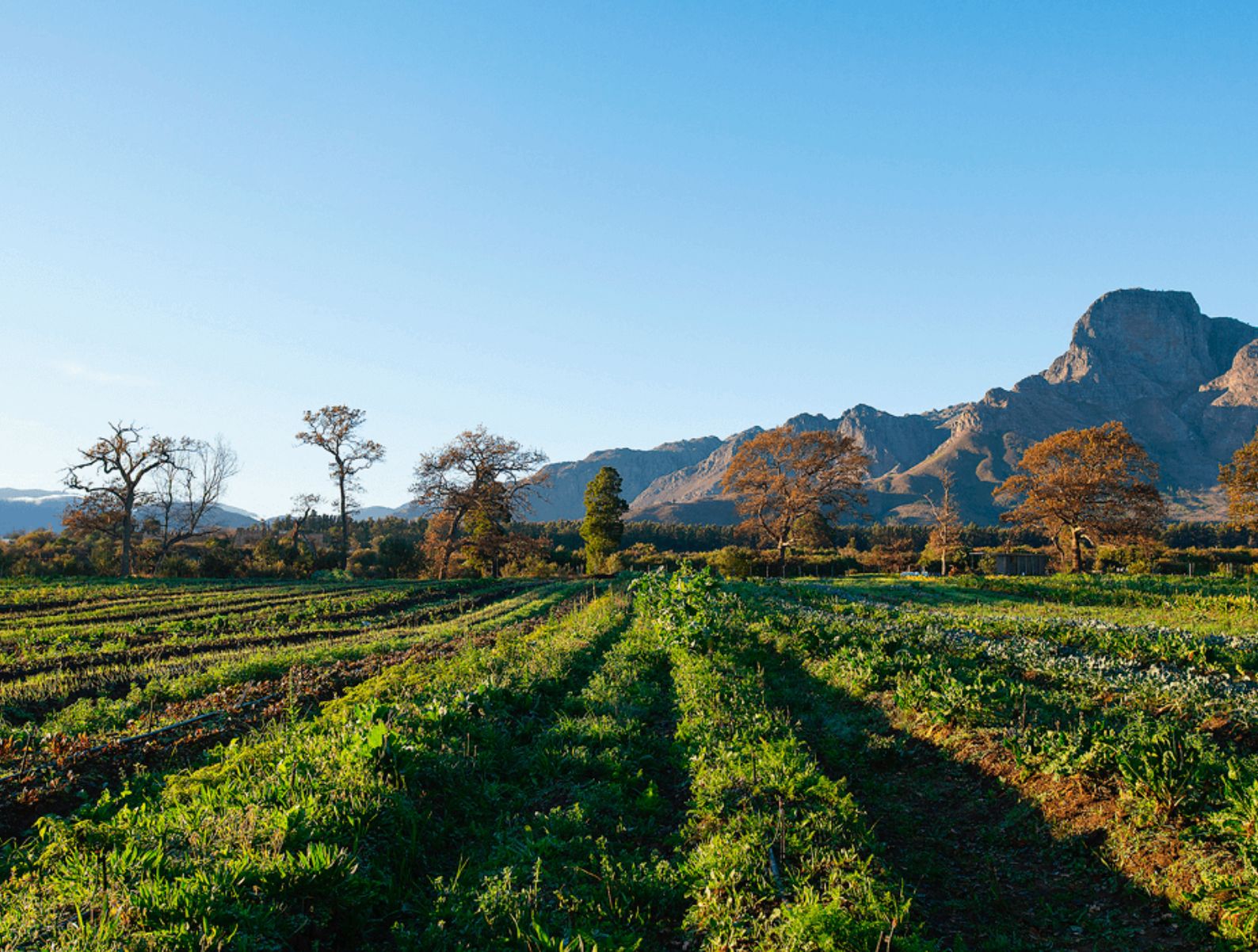
Across Africa, conversations about nature are still too often framed as a trade-off. Conservation versus growth. Ecosystems versus jobs. Sustainability versus industrialisation.

But that framing misses something fundamental. For many African economies, nature is not separate from development. It is the infrastructure development depends on.

Agriculture, fisheries, forestry, tourism and mining all rely on functioning natural systems. So do energy production, water security and export supply chains. According to the African Development Bank, an estimated 62% of Africa’s GDP[1] is moderately or highly dependent on nature and the services ecosystems provide. In many countries, agriculture alone employs more than half the workforce and remains central to export earnings, food security and rural livelihoods.

The idea that Africa must choose between development and nature is therefore a false one. Development-first is nature-first. This matters because the economic consequences of environmental decline are no longer theoretical. They are already being felt across the continent’s real economy.

This is already visible across African supply chains. Coffee and cocoa producers are dealing with changing rainfall patterns and declining soil quality. Horticulture exporters face growing pressure on water systems. Fisheries and tourism economies depend on healthy ecosystems that are becoming increasingly stressed. Across sectors, environmental degradation is raising costs, weakening productivity and making supply chains less reliable meaning nature loss is now a commercial risk.

The World Bank estimates that climate change could push up to 86 million Africans into internal migration by 2050[2], driven in part by pressure on water systems, declining agricultural productivity and ecosystem stress. Meanwhile, AFDB estimates that over 45% of the world’s degraded land is located in Africa[3], which undoubtedly has significant consequences for food systems and economic resilience.

Yet finance has not fully caught up with this reality. Globally, billions of dollars continue to flow into activities linked to deforestation, land degradation and unsustainable extraction, while “nature-first” enterprises, those which are working to restore landscapes, strengthen soil health or build more resilient supply chains, often struggle to access capital.

Part of the problem is perception. Nature-first enterprises are still frequently seen as niche, high-risk or difficult to measure. Investors are often more comfortable financing extractive models with familiar returns than businesses whose value depends on long-term resilience and natural capital.

But this is beginning to change. Investors are increasingly recognising that natural systems underpin productivity, stability and long-term economic performance in much the same way as roads, ports or energy infrastructure do.

The challenge now is building investable models that connect environmental resilience to commercial value.

Across Africa, there is no shortage of enterprises already working in regenerative agriculture, sustainable forestry, ecosystem restoration and resilient supply chains, meaning that as well as generating revenues they are also delivering improvements to the health of the soil and water as well as increased biodiversity. The bigger problem is that many remain stuck in the “missing middle”: too advanced for grant funding, but not yet structured in ways that mainstream investors understand or feel comfortable backing.

This is part of what initiatives such as the Nature-First Innovation Lab (NFIL), launched by FSD Africa in partnership with the African Natural Capital Alliance (ANCA) and Systemiq, are trying to test. NFIL is a new accelerator programme designed to help projects from across Africa, including Tanzania, Ethiopia and Malawi, that have already moved beyond concept or feasibility stage, to become investable, scalable businesses through a tailored package of capital and hands-on support. The pilot will focus on enterprises which have embedded regenerative practices into agricultural, blue (ocean and coastal) economy and broader natural‑resource supply chains. This includes, for example, regenerative agriculture projects, seaweed and aquaculture businesses, sustainable forestry, and other nature-first production systems that generate both commercial returns and measurable environmental benefits.

Importantly, the programme is focused on business models where the primary revenue stream is not carbon finance but rather the underlying products, services and supply chains themselves – for instance from being able to charge a premium for produce grown according to regenerative agriculture principles. While carbon markets continue to play an important role, they are already supported through dedicated initiatives such as FSD Africa’s Carbon Accelerator Programme for the Environment (CAPE), which focuses on high-integrity nature-based carbon projects. NFIL aims to help demonstrate that a wider range of nature-first business models can also become commercially viable and attractive to mainstream investors through the strength of their underlying products, services and supply chains. The ultimate aim is to demonstrate how nature-first business models can support both commercial returns and long-term resilience.

That evidence matters. Markets move when they can see viable examples, functioning transactions and measurable outcomes. Nature-first enterprise cannot remain a theoretical conversation held only in climate forums or policy documents. It needs to become part of how African economies think about competitiveness, productivity and long-term growth.

Africa also has an opportunity many advanced economies no longer do: the chance to build differently before environmental damage becomes even more expensive to reverse. Many wealthier economies developed through models that treated natural systems as effectively unlimited. They are now spending heavily to restore degraded land, polluted waterways and weakened ecosystems after decades of over-extraction. African countries are not locked into the same legacy systems. That creates an opportunity to build growth models that recognise nature not as a constraint on development, but as one of its foundations.

Putting nature on the balance sheet means recognising that healthy soils, functioning water systems and resilient ecosystems support jobs, exports, productivity and economic stability. It means understanding that environmental resilience and economic resilience are increasingly the same conversation.

Development-first is nature-first. The countries and investors that understand this early will be better placed to build growth that lasts.


[1] https://africa.businessinsider.com/local/markets/report-reveals-62-of-african-gdp-reliant-on-nature-services/1t4slt5

[2] https://www.worldbank.org/en/news/press-release/2021/09/13/climate-change-could-force-216-million-people-to-migrate-within-their-own-countries-by-2050

[3] https://www.afdb.org/en/topics-and-sectors/topics/desertification-and-land-degradation

Nature-first enterprise could become Tanzania’s next investable growth story

Tanzania’s growth ambitions depend heavily on the health of its natural systems. Agriculture, rural livelihoods, water security, tourism and export competitiveness all rely on functioning soil, water and ecosystems. Yet nature is still too often treated as separate from economic development, rather than the infrastructure that makes development possible.

The idea that Tanzania must choose between development and nature is false. Development-first is nature-first.

The country’s economy is deeply tied to natural capital. Agriculture alone employs roughly two-thirds of the workforce and contributes around a quarter of GDP[1]. According to the Ministry of Agriculture, agricultural export earnings reached US$3.54 billion in 2023/24[2]. Behind those figures sits an enormous dependence on healthy land, reliable rainfall, water systems and productive ecosystems.

This is why nature should be understood as economic infrastructure, not simply an environmental concern. When soils degrade, productivity falls. When water systems come under stress, farming, processing and transport become more expensive and less reliable. The effects are felt across entire value chains, from smallholder farmers and rural communities to processors, exporters and buyers.

This is already visible in some of Tanzania’s most important agricultural industries. Coffee and horticulture, for example, depend heavily on soil health, water stewardship and stable growing conditions. When those systems weaken, yields suffer and supply chains become more vulnerable. But when farmers and businesses invest in more resilient production practices, the benefits are economic as well as environmental: stronger productivity, more reliable supply and better long-term competitiveness.

Tanzania also has an opportunity to avoid some of the costly mistakes made elsewhere. Many advanced economies built growth models that treated natural systems as unlimited resources. They are now spending heavily to restore degraded land, polluted water systems and damaged ecosystems. Tanzania is not locked into that path. It has the chance to build growth in a way that protects the natural systems its economy already depends on.

The challenge is that finance has not fully caught up with this reality. Globally, large amounts of capital still flow into activities that degrade forests, soils and water systems, while many “nature-first” businesses, which are working to protect and restore nature, struggle to attract investment. Part of the problem is perception. Nature-first enterprises are often seen as too risky, too difficult to measure or too slow to generate returns.

Yet the risks of ignoring nature are becoming harder to ignore. Businesses are already seeing the effects of declining soil quality, water stress and supply disruptions. Investors are beginning to recognise that natural systems affect productivity, resilience and long-term commercial performance just as much as roads, power or logistics do.

Many promising businesses remain stuck in the “missing middle”: too advanced for early grant funding, but not yet structured in ways commercial investors understand. The issue is often not a lack of potential, but a lack of proof points, financial support and investment models that connect environmental resilience to commercial value.

That is part of what we will be testing with the launch of the Nature-First Innovation Lab (NFIL) – a new accelerator programme designed to help projects that have already moved beyond concept or feasibility stage to become investable, scalable businesses through a tailored package of capital and hands-on support. The pilot is inviting applications from enterprises in Tanzania which have embedded regenerative practices into agricultural, blue (ocean and coastal) economy and broader natural‑

This matters because the conversation about nature should not sit outside Tanzania’s economic agenda. Agriculture that depletes soil weakens food security and future productivity. Supply chains that ignore water and biodiversity risks become less resilient over time. Businesses that improve land, strengthen productivity and support rural livelihoods should not remain invisible to finance simply because markets have not yet developed the right ways to assess them.

Putting nature on the balance sheet means recognising that healthy ecosystems support jobs, exports, productivity and economic stability. Tanzania has an opportunity to help prove that nature-first enterprise is not anti-growth, but part of building growth that lasts.


[1] https://www.tanzaniainvest.com/agriculture?utm_source=chatgpt.com

[2] https://www.thecitizen.co.tz/tanzania/news/national/tanzania-steps-up-drive-to-boost-farm-exports-eliminate-trade-barriers-5145820?utm_source=chatgpt.com


UK–Ghana Growth Partnership to drive jobs, investment and skills

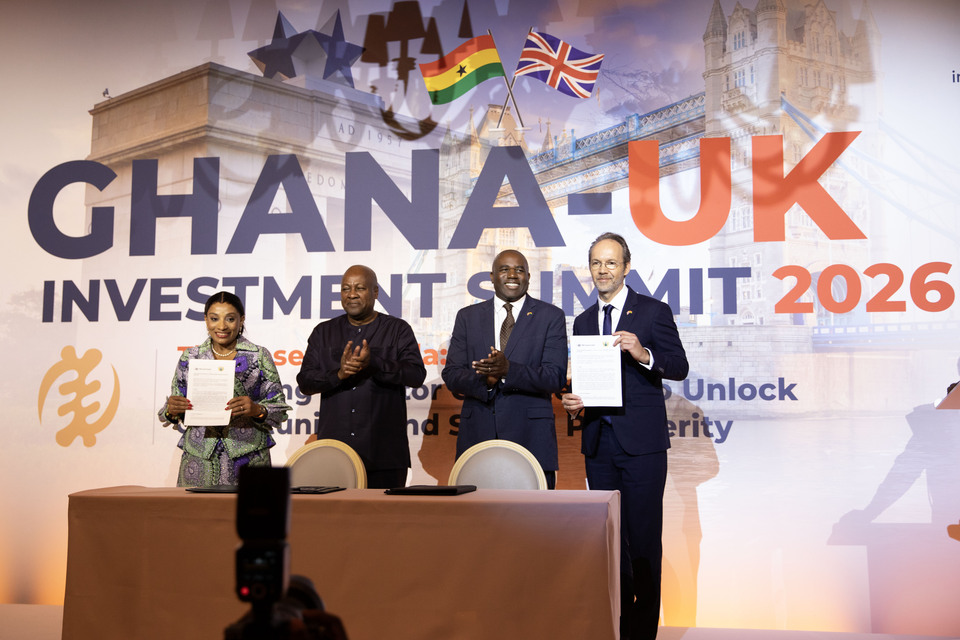
The UK and Ghana have signed a new Growth Partnership aimed at delivering tangible benefits for people and businesses in Ghana, including more jobs, stronger infrastructure and better access to skills and education. The Partnership will build on the up to £215 millions of deals signed as part of the Ghana Investment Summit in London.

Signed today during President John Dramani Mahama’s official visit to the United Kingdom, the Partnership sets out how the two countries will work together from 2026 to 2028 to support private‑sector‑led growth, boost trade and unlock new investment.

The Partnership focuses on four priority areas: attracting private investment and finance; making it easier for Ghanaian businesses to trade; supporting infrastructure and industrial growth; and expanding skills and education partnerships.

It is backed by a series of practical initiatives designed to deliver real results, including:

  • new jobs and a stronger maritime sector: a £101million ($137 million) UK-supported project, to develop the first commercial-scale ship repair and dry-docking facility in the Gulf of Guinea.  The Takoradi Floating Dock Project (ShipRite) is backed by a consortium of investors including UK co-owned Private Infrastructure Development Group (PIDG) and delivered in partnership with the Ghana Ports and Harbours Authority (GPHA)
  • it is expected to create up to 430 direct jobs, with around 30% taken up by women; while positioning Ghana as a regional maritime hub and reducing emissions by overall travel distances.  The project also pioneers the involvement of local pension funds in infrastructure finance in the region
  • climate‑aligned infrastructure: a £5 million UK-supported (ODA) Green Project Preparation Facility, hosted by Financial Sector Deepening Africa (FSD Africa) and in partnership with the Ghana Infrastructure Investment Fund, designed to help transform viable ideas from private and public sector developers into investable climate-focused  infrastructure projects, with the potential to unlock up to £180 million in deals over three years, supporting opportunities for UK firms, supporting the Government of Ghana’s priority infrastructure agenda
  • mobilising global capital for Ghana’s green economy: Mere Plantations has announced plans to scale up plantation and reforestation activities in Ghana, including the use of new technologies such as biochar to enhance environmental impact and sustainability. As a major milestone, the company will launch a £85 million reforestation investment fund listed in the UK, the first Article 9 “dark green” fund on the London Stock Exchange’s new Private Markets platform. Backed by the Ghana Forestry Commission, the fund will channel international capital into high‑integrity reforestation and carbon projects in Ghana, supporting jobs, restoring degraded land and positioning Ghana as a leading destination for nature‑based investment
  • new partnership to help implement the Ghana AI Strategy, as part of a wider set of new Science and Technology collaboration, backed by £6 million UK funding. During the Investment Summit, Minister for Communications, Digital Transformation and Innovation will discuss how UK expertise can help Ghanaian institutions unlock the benefits of AI. Ten new Physics Partnerships have been funded in partnership with UK Research and Innovation driving collaboration across universities
  • restoring forests and livelihoods: Rainforest Builder to inject £9 million in new investment in forest restoration in the Oti Region, supporting environmental protection and local jobs.
  • skills and education opportunities: the publication of Transnational Education guidelines, opening new partnerships between UK and Ghanaian institutions and supporting access to higher‑quality education and training
  • stronger healthcare skills: a £4 million, five‑year partnership between a UK training provider and Ghana‑based Mangel Klicks to deliver specialist clinical engineering training, strengthening healthcare systems in Ghana and supporting skills development across the wider region

The Partnership is signed as the UK and Ghana mark five years of the UK–Ghana Trade Partnership Agreement. Since the Agreement entered into force, bilateral trade has grown to around £1.6 billion, an increase of 12.5% since 2024. It also builds on the strong investment pipeline established by British International Investment (BII) whose development finance investment into Ghana stands at approximately £140 million, including Maa Grace, a UK-Ghanaian export-focused garments business backed through Growth Investment Partners (GIP) Ghana.

H.E Dr Christian Rogg, British High Commissioner to Ghana, said:

This Growth Partnership is about real change people can see and feel. It means more skilled jobs, stronger ports and transport links, better access to finance, and new opportunities for young people and women across Ghana.

By working with Ghanaian partners and backing private investment, we are supporting growth that is sustainable, inclusive and led by Ghana’s own priorities.

Together, these initiatives demonstrate a strengthened UK–Ghana Growth Partnership that is:

  • mobilising investment at scale
  • expanding and diversifying trade
  • supporting infrastructure for industrial transformation

This partnership underscores the UK’s commitment as a long-term partner in Ghana’s economic transformation, while unlocking new commercial opportunities across priority sectors.

Further information

  • Ghana is one of West Africa’s most stable democracies and plays a leading role in the region’s economy and building greater security
  • the UK–Ghana Growth Partnership complements existing trade arrangements and builds on long‑standing people‑to‑people and business links between the two countries
  • the Partnership is designed to support a predictable environment that encourages responsible, sustainable investment
  • about the Ghana Infrastructure Investment Fund (GIIF): GIIF is a Government of Ghana initiative designed to facilitate and manage infrastructure investments across key sectors of the Ghanaian economy
  • about the UK–Ghana Trade Partnership Agreement: The UK–Ghana Trade Partnership Agreement entered into force in 2021 and provides a framework for trade between the two countries following the UK’s departure from the European Union
  • about the Dry dock project, delivered in partnership with the Ghana Ports and Harbours Authority (GPHA): PIDG’s investment complements equity investments by ARM-Harith Infrastructure Fund and the project developer, Prime Meridian Docks Ghana Ltd, and unlocks senior and mezzanine financing from the African Export-Import Bank, the African Development Bank, the Eastern and Southern African Trade and Development Bank (TDB), Petra Pension Schemes, and Origen Private Debt Fund
  • about Mere Plantations: Mere Plantations is a UK-based forestry and investment company specialising in sustainable plantation development and reforestation projects, working in partnership with the Ghana Forestry Commission to restore degraded land, generate carbon credits and support local jobs. Mere Plantations is scaling reforestation in Ghana while preparing to list an Article 9 “dark green” fund on the London Stock Exchange, marking a significant step in mobilising international capital into the country’s green economy. The initiative is also a launch client for the LSE’s new Private Markets platform

Article Reposted from: gov.uk

From $3M to a $70M Climate Fund: What building Africa’s climate investment pipeline actually takes

Africa’s climate finance gap is often framed as a question of scale. Hundreds of billions of dollars are needed each year, yet only a fraction flows to the continent. But focusing only on the quantity of capital misses a quieter constraint upstream: the shortage of fund managers with the track record, institutional structure, and operational capacity to deploy early-stage climate capital effectively across African markets.

Capital cannot flow at scale if the managers capable of deploying it do not yet exist, or if they lack the credibility required to attract institutional investors. This is the challenge FSD Africa Investments (FSDAi) had in mind when we invested $3 million in Persistent Energy Capital in 2022.


Backing the team before the fund existed

Persistent had already spent more than 14 years building and investing in climate-focused businesses across Africa. Their portfolio companies had improved the lives of more than 10 million people, created over 20,000 jobs, and helped avoid more than 2 million tonnes of CO₂e emissions.

The team knew how to identify, build, and scale climate ventures. What they did not yet have was a formal fund structure capable of attracting institutional capital and scaling that model.

FSDAi’s $3 million commitment in 2022 came before the fund existed. The capital was deployed directly into climate businesses identified and supported by Persistent across sectors including solar energy, e-mobility, energy efficiency, and sustainable agriculture. But FSDAi’s role went beyond early capital, working closely with the Persistent team to establish the institutional infrastructure required to manage a larger, institutional-grade fund.

Those investments have now been warehoused and transferred into the newly launched Persistent Africa Climate Venture Builder Fund. The fund launches not with a blank slate, but with an existing portfolio already built, tested, and validated, and a team with the systems, structures, and capability required to absorb and deploy institutional capital at scale.

Most funds don’t begin this way. It reflects FSDAi’s integrated approach to investment, combining capital with manager capacity strengthening and ecosystem building to establish a track record and create the conditions for institutional investors to follow.

“For many emerging fund managers, the challenge isn’t just proving a strategy, but building the capacity to manage institutional capital at scale,” said May Yego, Investment Manager at FSDAi. “Our work with Persistent reflected FSDAi’s mandate to test, accelerate and mobilise —  combining early capital with hands-on support to strengthen investment processes, governance and readiness for larger capital. That integrated approach de-risked the opportunity and positioned the fund to attract follow-on investors.”


A fund designed to crowd in capital

The Persistent Africa Climate Venture Builder Fund has now reached a $52 million first close, against a $70 million target.

FSDAi’s $10 million anchor commitment sits alongside the Nordic Development Fund (NDF) and the African Development Bank’s Sustainable Energy Fund for Africa (SEFA) as co-anchor investors.

Additional investors include JICA, deploying capital under its new Blended Finance Window for the first time, alongside the Soros Economic Development Fund, Impact Fund Denmark, and the Schmidt Family Foundation.

This investor base is no coincidence. It reflects a fund structure intentionally designed by FSDAi and Persistent to give institutional and commercial investors the confidence to follow catalytic capital.

Through a blended finance architecture that provides first-loss protection and priority returns, the structure reduces the perceived risk of allocating to an early-stage African climate fund and opens the door for a broader set of investors to participate.

This first close demonstrates that early-stage climate funds in Africa can attract institutional capital when both the manager and the fund structure are intentionally built to meet investor expectations. The result is a vehicle designed not only to deploy catalytic capital, but to crowd in significantly larger pools of private investment.


A venture builder for climate businesses

The fund invests from pre-seed through Series A across three transition themes: energy, agriculture, and resources. It also retains the flexibility to deploy follow-on capital to support the growth of high-performing portfolio companies.

Alongside the investment fund sits a $5 million Venture Building Facility, funded by NDF and FMO, which provides operational support to portfolio companies. This combination of capital and hands-on venture support makes the model more than a fund. It is designed as a company-building engine for climate innovation in Africa.


The impact ambition

Over the life of the fund, the Persistent ACV Fund is targeting:

  • 17 million tonnes of GHG emissions mitigated
  • 7 million beneficiaries reached, with 50% women
  • 60,000 direct jobs created, with 50% women
  • 420,000 households gaining new or improved electricity connections
  • $450 million in downstream investment catalysed

These are ambitious targets. But they are grounded in a foundation many early-stage climate funds do not yet have: a proven team, an existing portfolio, and over a decade of operational experience building climate ventures across Africa.

Gender inclusion is also embedded in the design of the strategy. Persistent’s portfolio construction aligns with the 2X Challenge, ensuring that women are both beneficiaries and participants in the growth of climate enterprises.


What this proves

The $52 million first close answers a question FSDAi asked in 2022: Is there demand for a well-structured, manager-development-focused early-stage climate fund in Africa?

The participation of NDF, AfDB, JICA, SEDF, and others suggests the answer is yes. For FSDAi, the Persistent ACV Fund represents more than a single investment success. It is part of a broader effort to build the financial market infrastructure required for Africa’s climate transition.

Our portfolio includes InfraCredit Nigeria, Ci-Gaba, ATAF, the Acre Impact Fund, and ARM-Harith’s ACT Fund. These are not isolated investments. Together they strengthen the ecosystem that allows capital to flow at scale by supporting fund managers, financing structures, institutional track records and demonstration effects.

Backing Persistent before the fund existed was a bet on a team and a model. Its first close validates that bet. The bigger question for Africa’s climate finance ecosystem is how many other teams like Persistent’s are out there, building track records without the institutional backing required to scale them. Finding them earlier and supporting them sooner is the work we are in.


Read the original blog here.

Africa’s Asset Management Sector Hits US$ 600 Billion, New Industry Data Shows Investment Remains Conservative

Closing the gap between the scale and impact of long-term savings is critical to Africa’s ability to mobilize domestic capital

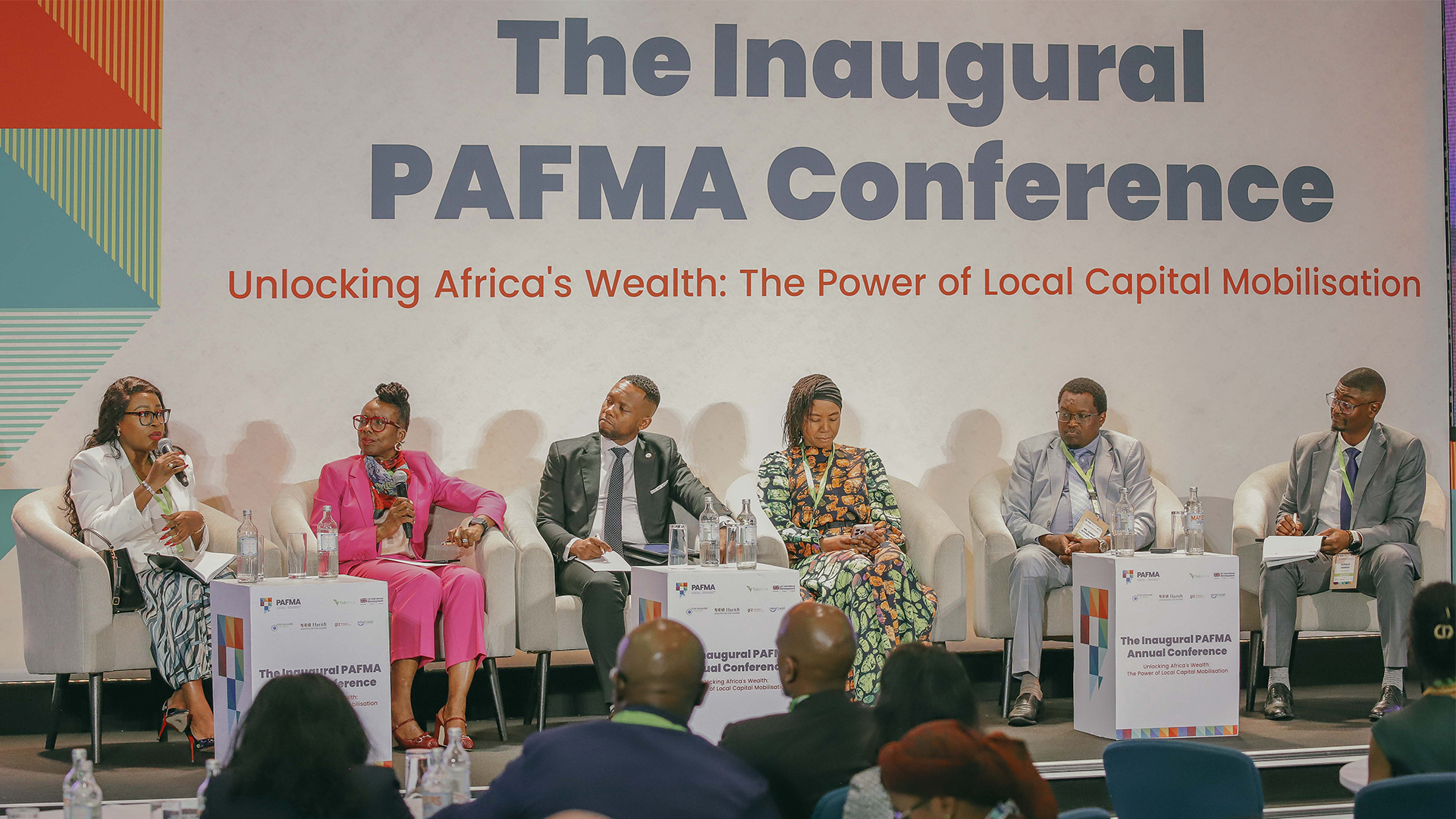
9am, Nairobi, Kenya, 27 January 2026: Africa’s pension funds and other collective investment schemes other institutional now hold over USD 600 billion, substantial long- term capital, ranging from USD 17 billion in Nigeria to USD 390 billion in South Africa to USD 20 billion in Kenya, yet most remains concentrated in government securities rather than productive sectors such as infrastructure, housing and SMEs, according to a new Landscape Report on Africa’s Institutional Capital Markets.

The report, which was released at the continent’s first Pan-African Fund Manager’s Alliance (PAFMA) Conference in Nairobi, examines why this persists and what could change. It concludes that closing the gap between the scale and impact of long-term savings is critical to financing Agenda 20631 – The African Union’s 50-year blueprint for transforming Africa into a global powerhouse – and the continent’s ability to mobilise and deploy its own domestic capital.

Commissioned by FSD Africa, in partnership with the African Pension Supervisors Association (APSA) and the Pan-African Fund Managers’ Alliance (PAFMA), the report highlights that in many markets, less than 10% of pension assets are allocated to productive sectors such as infrastructure, housing, private credit or small and medium- sized enterprises. It calls for increased coordination, market infrastructure and scalable investment pathways that allow long-term capital to be deployed productively.

The report, which draws on data compiled from pension funds and asset managers across multiple African markets, offers a rare snapshot of how long-term domestic savings are currently allocated and provides actionable insights and recommendations to help unlock the full potential of African pension and asset management systems.

It was launched in tandem with a new interactive database, the APAM Data Hub, containing up-to-date information on Africa’s pension systems and asset management industry along with analytical tools, providing a valuable resource for policymakers, regulators, industry practitioners, and researchers.

Key findings of the Report include:

  • Institutional savings are larger than often assumed, with assets under management in Collective Investment Schemes (CIS) ranging from USD 3 billion in Nigeria to USD 200 billion in South
  • Asset allocation remains highly conservative, with government bonds accounting for approximately 60–70% of pension fund portfolios in many countries. 90% in Ghana, 60% in Nigeria and 50% in
  • Pension funds now form the backbone of domestic sovereign debt markets, supporting short-term stability but increasing long-term exposure to fiscal and inflation
  • Shallow capital markets and limited investable pipelines continue to constrain diversification, even where institutional appetite

Commenting on the findings, Evans Osano, Chief Financial Markets O`icer at FSD Africa, said: “This new report shows how unevenly pension and asset management markets have evolved across the continent, but it also indicates how significantly Africa’s institutional savings have grown overall as a pool of largely untapped long-term capital. Mobilising domestic institutional pools of capital for Africa’s development priorities will require a concerted ‘business unusual’ approach. We need new asset classes, new partnerships, and new enablers.”

Tapologo Motshubi, Chair of PAFMA, added: “Progress will depend on sustained collaboration between fund managers, regulators, project sponsors and policymakers. PAFMA’s role is to provide a platform for that collaboration, helping align market practice, regulatory thinking and investment opportunities so that domestic institutional capital can play a larger role in Africa’s long-term development.”

Since its introduction by FSD Africa at the Africa Climate Summit in 2023 as part of its mission to build deeper, more coordinated capital markets, PAFMA membership has grown to 11 members representing 23 countries with a market size exceeding US$200 billion in AUM. The PAFMA Conference brings together senior industry leaders, regulators and policymakers to discuss the report’s findings and explore practical steps to strengthen capital market infrastructure, expand investable pipelines and improve regional coordination.

ENDS

For more information, please contact:

 Kaara Wainana,

Senior Manager, Advocacy, Campaigns and Partnerships FSD Africa Kaara@fsdafrica.org

About Pan African Fund Managers Association (PAFMA)

 PAFMA is a pioneering trade association uniting fund managers from across the African continent. Established in 2023 by five founding members – Pension Fund Operators Association of Nigeria (PENOP), the Fund Managers Association (FMA) in Kenya, the Botswana Investment Professionals Society (BIPS), the Ghana Securities Industry Association (GSIA) and the Investment Management Association of Uganda (IMAU), PAFMA is dedicated to bridging the climate finance gap through private sector initiatives, with a strategic focus on alternative investments and green finance.

Since its introduction by FSD Africa at the Africa Climate Summit in 2023, PAFMA membership has grown to 11 members representing 23 countries with a market size exceeding US$200 billion in AUM; building a strong network of African fund managers, PAFMA seeks to unlock the potential of Africa’s domestic capital pools, ensuring that African savings finance African development.

About FSD Africa

FSD Africa is a specialist development agency funded through UK International Development operating in more than 30 countries working to help make finance work for Africa’s future. Based in Nairobi, FSD Africa’s team of financial sector experts work alongside governments, business leaders, regulators, and policymakers to achieve policy and regulatory reform, capacity strengthening, and improving financial infrastructure, to address systemic challenges in Africa’s financial markets. Since 2017, the organisation’s strategy has evolved to prioritise solutions to Africa’s most critical challenges: economic, social, and environmental. The organisation has worked to promote investment into the continent’s green economy, as well as its rates of financial inclusion and gender equality. FSD Africa – previously known as Financial Sector Deepening Africa – was founded in 2012 and is based in Nairobi, Kenya.

For more information, please visit: https://www.fsdafrica.org

Celebrating 10 Years of Frontclear: Unlocking Liquidity and Building Resilient Markets

Trust is the backbone of any banking system, and liquidity is what keeps it moving.

A decade ago, across much of Africa, those two forces were not aligned. Many money markets resembled roads filled with red lights: banks were reluctant to lend to one another, liquidity remained trapped, and smaller institutions, even those holding government securities, could not access interbank credit. With legal protections unclear and confidence in short supply, central banks became the only reliable counterparties. As a result, domestic financial markets struggled to grow. Uganda ranked near the bottom of the Absa Africa Financial Markets Index, Ethiopia had no securities exchange, and Kenya’s bond trading was thin and opaque.

The idea behind Frontclear was simple yet transformative: if banks could lend with the backing of a guarantee, they could rebuild trust, unlock liquidity and strengthen market confidence. Through credit guarantees, legal reform and consistent stakeholder engagement, Frontclear helped turn those red lights green, enabling financial markets to move, build trust, and grow stronger.

A decade of impact

Since its founding, Frontclear has helped reshape Africa’s financial landscape and demonstrate how catalytic interventions can unlock systemic change.

  • £2.1 billion mobilised for African obligors
  • 117 transactions closed and 45 market infrastructure solutions developed
  • More than 90 technical assistance programmes delivered
  • Over 2,500 market participants trained through the Frontclear Academy
  • Legal and regulatory reforms in Uganda, Tanzania, Zambia and Ethiopia.

Every dollar guaranteed by Frontclear has unlocked almost nine times more in private capital, underscoring its catalytic impact.

The launch of Tradeclear in 2022 – Frontclear’s guarantee platform that helps manage counterparty credit and settlement between banks – followed by the passage of netting laws in 2023, is transforming Uganda’s interbank market. In Ethiopia, the launch of a securities exchange and a central securities depository in 2025 has created the foundation for repo trading and capital market growth.

The continuing opportunity

While Frontclear’s footprint continues to expand across the globe, significant opportunities to unlock liquidity, build trust and strengthen the resilience of financial systems remain. Africa’s local-currency bond markets have doubled in the past decade, from US$ 350 billion in 2014 to nearly US$ 700 billion by 2023. However, funding remains tight, credit is costly and interbank trading is still concentrated among a few large players.  Legal certainty for repos and derivatives is uneven, and access to long-term local-currency hedges remain limited. This leaves both borrowers and lenders exposed to foreign exchange risk and volatility.

Progress will depend on continuous collaboration. Regulators need to pass and implement robust netting laws; treasuries must support active bond markets, broaden repo-eligible collateral; regulators should champion the adoption of global master agreements, while investors and development partners should find creative structures to catalyse capital, and support technical assistance initiatives. Together, these efforts paint a picture of Africa’s financial future where interbank repos form the backbone of liquidity management, reliable reference rates are built on real market activity, and small and growing businesses benefit from the efficiencies created when banks borrow more efficiently. It is a future where domestic bond markets provide the foundation for financing sustainable growth, reducing reliance on fragile external debt.

A partnership built on catalytic capital

For FSD Africa Investments (FSDAi), Frontclear’s story is a powerful example of how catalytic capital can transform financial systems. 

In 2015, FSD Africa made an early US$ 7.5 million investment in Frontclear, anchoring its subordinated capital and absorbing initial risk. This commitment supported the launch of the Frontclear Technical Assistance Programme (FTAP) and crowded in major development finance institution partners including FMO, Proparco, SIDA, EBRD, and BMZ , who provided additioinal funding to expand warehouse financing and local-collateral repo activity. In 2019, FSDAi made a further US$ 2 million investment to help restructure Frontclear’s capital base and enable it to operate at greater scale. By combining investment with technical assistance, FSDAi demonstrated how patient, catalytic capital can be leveraged to share the early risk, prove new models, and crowd in investors to build sustainable, resilient markets.

Looking ahead: Frontlear at 10 and beyond

Frontclear’s 10-year milestone is more than an anniversary. It is a reflection of what can be achieved through partnership, persistence and innovation. As Frontclear 2.0 takes shape, its ambition is  to establish a global platform for money markets that integrates and supports emerging and frontier economies. FSDAi is proud to have been part of this journey, helping turn a bold idea into a proven model for market transformation, and look forward to the next decade of innovation, growth and impact across Africa.

Catalytic Capital in Action: FSDAi’s Role in Shaping Kenya’s Affordable Green Housing Market

Unlocking finance for affordable, sustainable homes

In 2021, FSD Africa Investments (FSDAi) joined a consortium of leading investors including UK Climate Investments (UKCI, now under British International Investment management), the European Investment Bank (EIB), and the County Pension Fund (CPF) to launch the International Housing Solutions (IHS) Kenya Affordable Green Housing Fund. The Fund was established to tackle Kenya’s pressing urban housing deficit by financing developments certified through the EDGE green building standard, targeting low- and middle-income households.

By providing catalytic equity capital, FSDAi aims to demonstrate the commercial viability of green affordable housing. The Fund aims to deliver up to 4,000 green-certified homes by 2030, improving living standards, reducing utility costs, and contributing to Kenya’s climate resilience and inclusive urban growth.

Turning investment into market insight

Beyond financial returns, FSDAi’s investment sought to create lasting market impact. Through a side letter agreement, FSDAi required IHS to adopt an Open Source Policy, ensuring that data and insights generated from the investment would be publicly shared. To embed this principle, FSDAi provided the Centre for Affordable Housing Finance in Africa (CAHF) with a grant for a four-year Open Access Initiative (OAI) to collect, analyse, and disseminate data from IHS and other housing developments in Kenya.

This initiative is now generating vital, publicly available market intelligence and helping new investors understand the economics of affordable housing, guiding policymakers, and strengthening the capacity of housing practitioners across the region. By doing so, FSDAi’s catalytic investment continues to multiply its impact far beyond a single project, driving systemic change in Africa’s housing finance ecosystem. Various outputs have been published on CAHF’s Open Access website, benchmarking construction costs in Kenya, reviewing reasons for rejection, promoting ESG standards, and now, as the housing developments that IHS is funding start to unfold, tracking the steps, time and costs involved in the delivery of affordable housing in Kenya.  With the support of FSD Kenya, CAHF has also secured the agreement of the Kenyan State Department for Housing and Urban Development to track six Affordable Housing Programme (AHP) projects, documenting and comparing their costs, while also considering the impact of the AHP on the economy and on job creation.  A further initiative has been the Nairobi Metropolitan Area Dashboard which collects and maps all housing developments in the Nairobi Metropolitan Area, giving an indication of market activity and targeting.  CAHF is currently in discussion with partners in Abuja, Nigeria, to replicate this model there.

It is still early days, but the delivery of these outputs is having two broad impacts – first, the content is being incorporated in strategic decision making by the parties, as developers and investors, as well as the Kenyan government, consider the data.  Second, the sensitivities around data sharing are slowly being overcome, and more developers are expressing an interest in participating in the OAI, both to better understand their own businesses, but also to showcase their track records and experience in the wider sector and to investors in particular.  CAHF hopes that the OAI will continue to be supported by funders so that it can grow into a sustainable offering not only in Kenya but across the continent.

Catalytic capital for systemic change

The IHS Kenya case demonstrates FSDAi’s unique approach as:

  • A catalyst for innovation — testing and scaling new investment structures that blend impact and commercial sustainability.
  • An enabler of market development — providing insights that attract institutional capital and build investor confidence.
  • A partner committed to impact — improving access to affordable housing while advancing climate resilience and social inclusion.

Through strategic, insight-driven investments like this, FSDAi is helping reshape Africa’s housing finance landscape — proving that catalytic capital can unlock lasting, large-scale transformation for people and planet.


See a short case study of the IHS Investment and the Open Access Initiative in the recently published Playbook for Blended Finance in Affordable Housing in Africa.

Commentary: Beyond Mobile Money, Mobilising Africa’s $2.4tn in Domestic Capital

Patrick Njoroge (“A financial meltdown in Africa will affect everyone”, Opinion, September 4) is correct in highlighting improved financial inclusion and growth in remittances as reasons to be cautiously optimistic about Africa’s long-term future. Business leaders in retail finance must surely be looking forward with great confidence to the economies of scale that will eventually come from serving a tech-savvy population whose median age is 19 and growing almost three times faster than that of the EU.

But he overlooks another reason for optimism — the growth in domestic institutional assets under management, which FSD Africa estimates now stand at well over $2.4tn across Africa, 50 times greater than annual aid flows to the continent. Growth in Kenyan pension assets in 2024 was up 14 per cent in Kenyan shilling terms and 40 per cent higher in dollars, but could have been even faster, according to the regulator, had there been a more supportive policy and regulatory environment.

As Njoroge rightly says, Africa needs stronger domestic financial markets. Rebalancing long-term financing towards local currency would make growth less reliant on international finance, including aid, and more resilient to shocks, not least those resulting from climate change.

As an innovation in African financial markets, mobile money was staggeringly successful. We now need breakthrough innovation in African capital markets to draw private institutional capital away from defaulting to funding government debt so that potentially very large volumes of capital can be put to work funding the projects that will give Africans the jobs and basic services they want.

Mark Napier

Chief Executive Officer, FSD Africa, Nairobi, Kenya

FSD Africa London Climate Action Week in review

We are just back from the London Climate Action Week (LCAW) which happened against a backdrop of increasing geopolitical and economic uncertainty as well as growing evidence of the developmental and financial challenges facing Africa as a result of climate change and biodiversity loss.

Africa’s financing needs are particularly stark. Africa needs about $190bn per annum for climate and yet is only attracting $44 billion. Adaptation financing is a particular concern – in Africa, finance for adaptation is less than a third of the total and is not increasing to any material extent, despite global attention being paid to the need to invest in adaptation, especially in Africa. With public funds in short supply as a result of cuts to international aid programmes and domestic government finances constrained by the cost of servicing high levels of debt, the role of private capital will be crucially important.

At the same time, African institutional investors control over $2.4 trillion in assets (expected to grow to at least $6.4 trillion by 2040). This capital is conservatively invested, with little allocation to alternatives, infrastructure and climate-aligned investments. Mobilising this private capital, which is mainly in local currency, could make a major contribution to filling Africa’s development financing gap.

Across more than five events at LCAW which FSD Africa will be hosting or participating in, our team will be discussing these issues and highlighting both the financing challenges facing Africa and the huge opportunities a locally financed, green economic pathway to growth offers. They will make the case that if we are to mobilise the capital Africa requires, we need a more resilient and innovative financial system. But we will only be able to achieve this through collaboration between international development finance, investors and the African private financial sector.

Speaking ahead of LCAW, Mark Napier, CEO of FSD Africa said: “We are in a moment of major change. On the one hand, the turbulence in the aid (and development finance) world is a threat. On the other, we are seeing the emergence of a consensus that developing countries need to strengthen their own economic resilience and self-reliance – and domestic financial market development is going to be an important part of this.”

We are glad that our sessions enhanced understanding of both the challenges and the solutions to Africa’s development finance and hear inspiring examples of the huge progress already being made – in capital markets infrastructure, new financial solutions, in nature finance and carbon markets – and in measures to redirect available finance towards climate adaptation and resilience.

If you are keen to continue conversations on these critical topics of our time, please contact our Ag. Strategic Communications Director Kaara Wainaina kaara@fsdafrica.org

Sessions we curated/participated in at the London Climate Action Week 2025 can be viewed here.

ARM-Harith and FSD Africa Investments Announce GBP 10m Commitment to Unlock Nigerian Pension Funds and Catalyse Local Capital for Infrastructure

FSD Africa Investments (FSDAi), the UK-backed specialist development finance investor, is investing GBP 10 million into ARM-Harith’s Climate and Transition Infrastructure Fund (ACT Fund) to unlock local institutional capital for climate infrastructure. ARM-Harith Infrastructure Investment Limited is a leading African private equity firm committed to catalysing economic growth through sustainable infrastructure.

ARM-Harith and FSDAi’s investment introduces an innovative solution to allow Nigerian pension funds to address a longstanding challenge in infrastructure equity finance: the ability to invest while receiving early liquidity. By enabling predictable interim distributions during the early phases of investment, this innovative facility directly addresses a key barrier that has historically deterred domestic institutional capital from entering the asset class.

In addition, 75% of the FSDAi facility will be provided in local currency — a first-of-its-kind approach specifically designed to mitigate the impact of foreign exchange volatility for pension funds. This structure is expected to unlock an additional GBP 31 million in pension fund contributions — nearly five times the participation achieved in ARM-Harith’s first fund.

FSDAi’s investment aligns with its broader mission to deepen African financial markets towards accelerating the financing of Africa’s green economic transformation and will support the Fund’s investments in climate-resilient infrastructure including energy, transport, water, and digital connectivity. In alignment with at least four of the UN’s Sustainable Development Goals, the initiative is projected to create or support approximately 3,000 green jobs.

The British Deputy High Commissioner in Lagos, Mr. Jonny Baxter said,

“The UK government, through its bilateral and investment vehicles is committed to continue to support the country’s financial sector — developing domestic capital markets as a means of financing priority sectors and driving economic development. Local currency capital helps mitigate the impact of foreign exchange volatility, narrows the financing gap, supports diversification into new asset classes and into climate-related projects and social sectors – while providing long-term funds to growing businesses.”

Announcing FSDAi’s investment, FSDAi’s Chief Investment Officer, Anne-Marie Chidzero said:

“We are thrilled to collaborate with ARM-Harith to showcase how risk-bearing capital from a market-building investor like FSDAi can be strategically structured to unlock domestic institutional capital. This approach strengthens Africa’s financial markets and facilitates capital allocation towards sustainable, green economic growth across the continent.”

ARM-Harith CEO Rachel Moré-Oshodi emphasized the significance of this investment:

“For too long, domestic pension funds have remained on the sidelines of infrastructure equity due to liquidity constraints and heightened perception of risk. We are proud to have collaborated with FSDAi to design a pioneering solution that reduces risk for pension funds while delivering both early liquidity and long-term capital growth. This is a global first—a groundbreaking private sector-led solution that could fundamentally change how infrastructure equity is financed—not just in Nigeria, but across Africa.”