Author: Kihingu Inc

Financing the frontier: risk, reward, and reality in Africa’s fragile stat

Like most bankers, Patrick Kiiru did not imagine Congolese refugees as his ideal clients, seen by most as simply hungry, homeless, and transient. But after three days with FSD Africa in Gihembe Refugee Settlement—a bumpy one-hour journey north of Rwanda’s capital Kigali—the head of diaspora banking at Kenya’s Equity Bank Group began to change his mind.

After having experienced the refugee-finance business case firsthand, Kiiru describes reaching an “aha” moment: “I can solve this problem. It is possible to serve… refugees profitably.” Refugees need more than food and shelter; they, too, can benefit from financial services.

With targeted financial and technical support from two United Kingdom aid-supported agencies—FSD Africa and Access to Finance Rwanda—Kiiru’s bank is preparing to offer its Eazzy Banking mobile money product to Rwanda’s adult refugee population of more than 89,000, with plans to expand in other countries. With a footprint in Kenya, Uganda, Rwanda, and the DemocratDRC), this may be the early days of a region-wide approach by Kiiru and his team.

This risk perception versus reality gap is not distinct to banking refugees. The theme persists across all 26 fragile and conflict-affected states in sub-Saharan Africa, as defined by U.K. aid. There are two big picture consequences.

First, development agencies and their partners with a focus on private sector development can neglect to deliver services where they are needed most. According to a 2016 CGAP survey of 19 financial inclusion donors in sub-Saharan Africa, the highly fragile states of Chad, Central African Republic, and Somalia had only one active donor each. This means some countries, regions, and communities remain trapped within a humanitarian crisis paradigm.

As the world grows more prosperous, international development practices will only increase in concentration in the left-behind nations, regions, and communities.

Second, development financiers, commercial investors, and business leaders can misprice risk—adding a premium based on perception rather than the reality. This means capital is not being efficiently allocated. According to World Bank figures in 2017, excluding Ethiopia, Kenya, and Nigeria, just 3.23 percent of all foreign direct investment in sub-Saharan Africa reached fragile states.

This mean that, in fragile states, many investment-ready firms are left without the long-term finance they need to survive and grow. This is not to say fragile states are not difficult places to invest and do business. Since 2016, FSD Africa’s own increasing fragile states footprint in the DRC, Sierra Leone, Zimbabwe, and for forcibly displaced people has had to weather a cycle of instability: political (e.g., military coups, new central bank governors), environmental (e.g., Ebola outbreaks, mudslides), and economic (e.g., currency depreciation, inflation).

But the people, entrepreneurs, and investors in Africa’s fragile states are resilient and resourceful. The FSD Africa team has witnessed numerous examples of smart practices which help to mitigate risk.

On the investor side, locally born nationals, who are better able to price risk accurately, are particularly active; many accept that there will be arid periods when deployapital is too risky, and so switch to running their own enterprises; and many deals rely on financial innovation to hedge against risks.

On the donor side, some build a presence—people and platforms—which lays dormant when things are difficult, but which springs into action when pockets of opportunity present themselves. Others complement their fly-in, fly-out model with a permanent local lead, who provides a depth of relationships and market intelligence to build and maintain momentum in good times and b

Lessons from the field: twelve months of refugee finance in East Africa

Setting the scene…

Blink and you might have missed it. But as dusk gave way to darkness on a sunny afternoon in Kigali, UNHCR LivelihoodsAccess to Finance Rwanda (AFR) and FSD Africa received a brief but deeply significant email from Equity Bank Rwanda

“This is to confirm that Equity Bank Rwanda will honor either proof of registration or refugee IDs as valid identification documents [to open a bank account]. We will issue a memo to all our branches to this effect before the end of the week”

18:18, Thursday 22 February, 2018

Kigali, Rwanda

Equity Bank Rwanda

This email marked another milestone for FSD Africa (UK aid’s Nairobi-based platform for inclusive financial sector work in sub-Saharan Africa) almost exactly 12 months of work in a new and important area: the financial inclusion of refugees and other forcibly displaced populations (FDPs).

The recent, rapid growth of FDPs in sub-Saharan Africa has created an urgent need to respond quickly to a complex and dynamic challenge. Through this blog, we wanted to capture what we’ve learned so far so…

Demand-signals: a new way to deliver humanitarian assistance…

Perhaps our most important realisation/conclusion is that refugee settlements are not only hubs for humanitarian assistance. They’re markets, too…

There are buyers and sellers supported by rules and institutions (both formal and informal), especially in larger, older refugee settlements such as Gihembe in Rwanda. And like most markets – these places have failures and pinch-points which inhibit the ability of FDPs to access and use, for example, financial services to help manage their lives.

And while the need for food, shelter and other safety net-type activities will remain, there is now good evidence (from our work and beyond e.g. this study by the IFC, which was featured in The Financial Times) that market-shaping and building has the potential to crowd-in the private sector to profitably deliver some of the goods and services that refugees need and can pay for themselves.

As a quick data point or two from Rwanda,  primary FSD Africa and BFA research showed that 90% of refugee households earn $29+/month (the same as the median value of Rwandan bank account holders), while 43% have a secondary school education or more. Globally, 42% of all FDPs have been displaced for 5 years or more.

Identify and experience the market opportunity…

We’ve found that a lack of information is a major challenge. First, refugees are typically viewed by financial service providers as high risk (and low return) clients. Second, they are too often treated as a homogeneous, unsegmented group, dependent on humanitarian hand-outs.

This stereotyping is a tough nut to crack. It involves bridging knowledge gaps, but also long-held attitudes and behaviors. We quickly realised that market intelligence alone – on the financial lives of FDPs and business case for providing FDPs with financial access – just wasn’t enough. Financial services providers needed to see and feel the refugee market for themselves.

In November 2017, FSD Africa, AFR and UNHCR took bank decision-makers out of their offices in Kigali and into a refugee settlement for two nights to develop and test new/existing products, an approach which was replicated by colleagues at FSD Uganda in June 2018.

The transformation was remarkable, and something we started to document, in order to share with other banking decision makers in Kigali, East Africa and beyond.

“It is possible to serve the base of the pyramid, especially refugees, profitably; …I think I may have not necessarily seen the opportunity before I got here”

Patrice Kiiru, Equity Bank Kenya

The power of partnerships…

FSD Africa knew little about this space when we started out. We had theories to test, but little practical experience of accessing camps, refugee politics nor humanitarian assistance more broadly.

The only way we have been able to learn quickly is through the quality of our partners. For UNHCR Rwanda to speak with authority about the power of markets to deliver welfare enhancing outcomes to FDPs was refreshing and impressive in a space historically dominated by charitable giving and direct delivery.

“The way I see it, financial inclusion is really the key to unlocking the economic inclusion”

Jakob Oster, Livelihoods Officer, UNHCR Rwanda

We have built useful partnerships with a wide range of institutions, from commercial banks to charities, and from UN agencies to fintechs. Amongst them, UNHCR is our key humanitarian partner and, through our Innovation Competition FSD Africa and AFR are providing x5 £10,000 accelerator grants to CARE Rwanda, Equity Bank Rwanda, Tigo/Airtel RwandaUmutanguha and MFS Africa to develop new solutions to particular challenges faced by refugees. This commitment may be followed to larger investments (up to £150,000) to allow ideas to reach real scale. Beyond this competition, we’re continually looking for opportunities to engage interested, impactful private sector partners.

We have also built partnerships to maximise our local understanding and influence. AFR – a UK Aid, US Aid, Swedish Sida and MasterCard Foundation-funded ‘FSD’ programme for Rwanda – has been an invaluable support. Located in Kigali, with deep connections to the local banking system and regulators, the whole process has been made more effective. Within three months of beginning our work, AFR had successfully lobbied the Central Bank and MIDIMAR to add refugees to the Rwandan Financial Inclusion Strategy.

FSD Africa and AFR have also worked closely with DFID Rwanda.

“Market participation triggers wins for refugees, host communities and hosting governments. This new initiative has been a great demonstration of how to incentivise a market-driven response to a humanitarian challenge.”

Viola Dub, Private Sector Development Advisor, DFID Rwanda

This work falls within the context of a broader Government of Rwanda and DFID Rwanda approach to FDPs. In 2016, Rwanda – as an FDP host nation – signed up to the UN’s Comprehensive Refugee Response Framework, and with DFID Rwanda support is designing a plan for refugee integration.

The host community challenge/opportunity…

A crucial issue that we have struggled to grip is how to integrate host communities – ‘native’ settlements, often poor, rural and located nearby/adjacent to refugee settlements – into our programming. There are a number of stories about host community residents feeling that refugees benefit disproportionately from international aid and government agency support.

This is a difficult balance to strike. It is encouraging to see evidence that local communities benefit from hosting refugee communities, due to higher agricultural opportunities and incomes, but trickle down forces alone seem inadequate. Ensuring we work for host communities as well as FDPs means investing as much in understanding and responding to their specific needs as we do to the FDP. After all, their inclusion in our approach can only bolster the business case adding hundreds of thousands of potential clients.

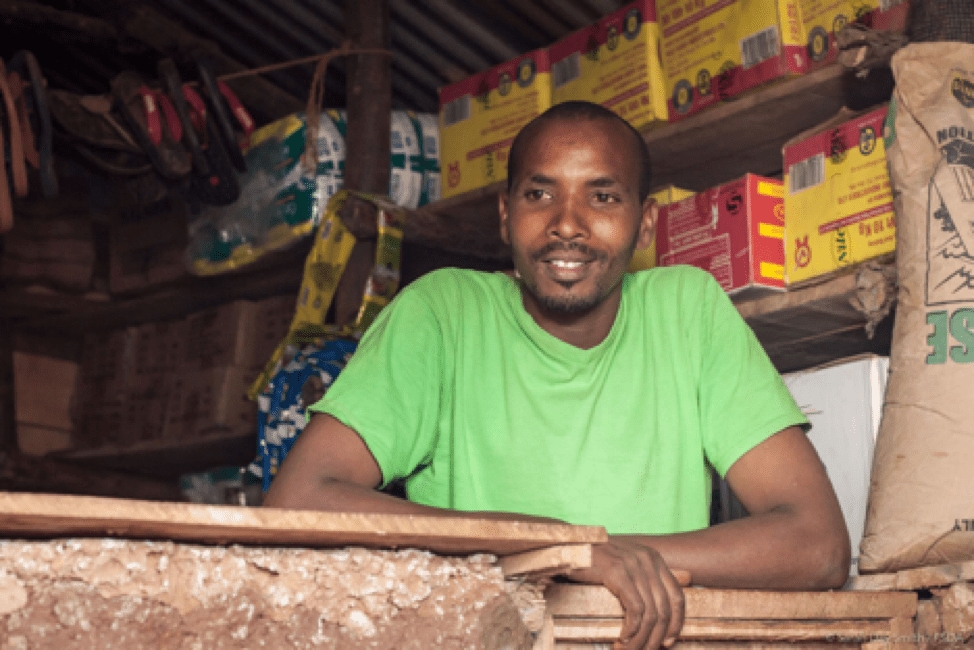
“I was very surprised, because before arriving in the camps I was not expecting to find some real businesses in the camps; I was surprised to see someone with a business like other Rwandese outside of the camps.”

Theophile Nsabimana, Vision Fund Rwanda

Twelve month conclusions…

One year on, our successes (and failures) may lack the ‘flash-bang’ of a large DFI investment or a VIP launch, but we really can see the emergence of new markets.

FSD Africa and AFR are now seeding product/solution prototypes by more than five financial service providers in Rwanda. Refugees – young and old, male and female, short-term and long-term displaced – have expressed their demand for financial services to help manage their lives. The National Bank of Rwanda has incorporated refugee finance into its financial inclusion strategy, and banks now better understand that refugee IDs are eligible banking IDs (as per the introduction to this blog).

More broadly, we believe that we’re at the tipping point of genuine behaviour change within the private sector towards this group. FSD Africa and AFR received 23 applications to our refugee finance competition in December 2017, while only last week FSD Uganda and FSD Africa received more than 20 applications by MFIs, banks and fintechs just to visit camps to see the opportunity for themselves. FSD Africa is also about to start work replicating this approach in DRC, through our sister organisation ELAN RDC.

The proof is in the pudding. And we’ll be watching carefully to see: whether refugees can become long-term, profitable clients for the financial sector, but also whether finance can be genuinely useful to forcibly displaced people. But, for now at least, the market is on the move…

M-akiba post issuance survey

FSD Africa recently commissioned BFA to undertake an in-dept post-issuance survey of the first government bond sold exclusively via mobile based which provided key insights and recommendations.

This National Treasury led market development initiative to distribute government securities through mobile phones is one of the most innovative globally. Although the first pilot and launch did not achieve the desired outcome, the survey aims to enhance and guide the subsequent issuances of M-Akiba.

FSD Africa identified M-Akiba as an opportunity to learn about an innovative tool which could enable the broadening and deepening of inclusive ­ financial markets. The study identified successes and challenges that M-Akiba experienced.

This innovative bond aims to broaden the sources of borrowing beyond banks and other ­ financial institutions to retail investors. The minimum subscription is less than $30 with an interest rate of 10% disbursed every six months over mobile money, at a three-year tenor.

The survey highlights the possibility folication of this pilot issuance and explores other possible approaches for the mass distribution of securities.

The product was developed by the government in collaboration with Nairobi Securities Exchange (NSE), the Central Depository Settlement Corporation (CDSC), Mobile Network Operators (MNO), and the Kenya Association of Stockbrokers & Investment Banks (KASIB).

To access the full report, click here,

Are refugees viable customers for banks?

Refugees are not an obvious customer segment for financial service providers (FSPs). It is not hard to see why: in a world where refugees are too often portrayed as very poor, vulnerable, with few tangible assets and little stability, where are the incentives to enter such a challenging market?

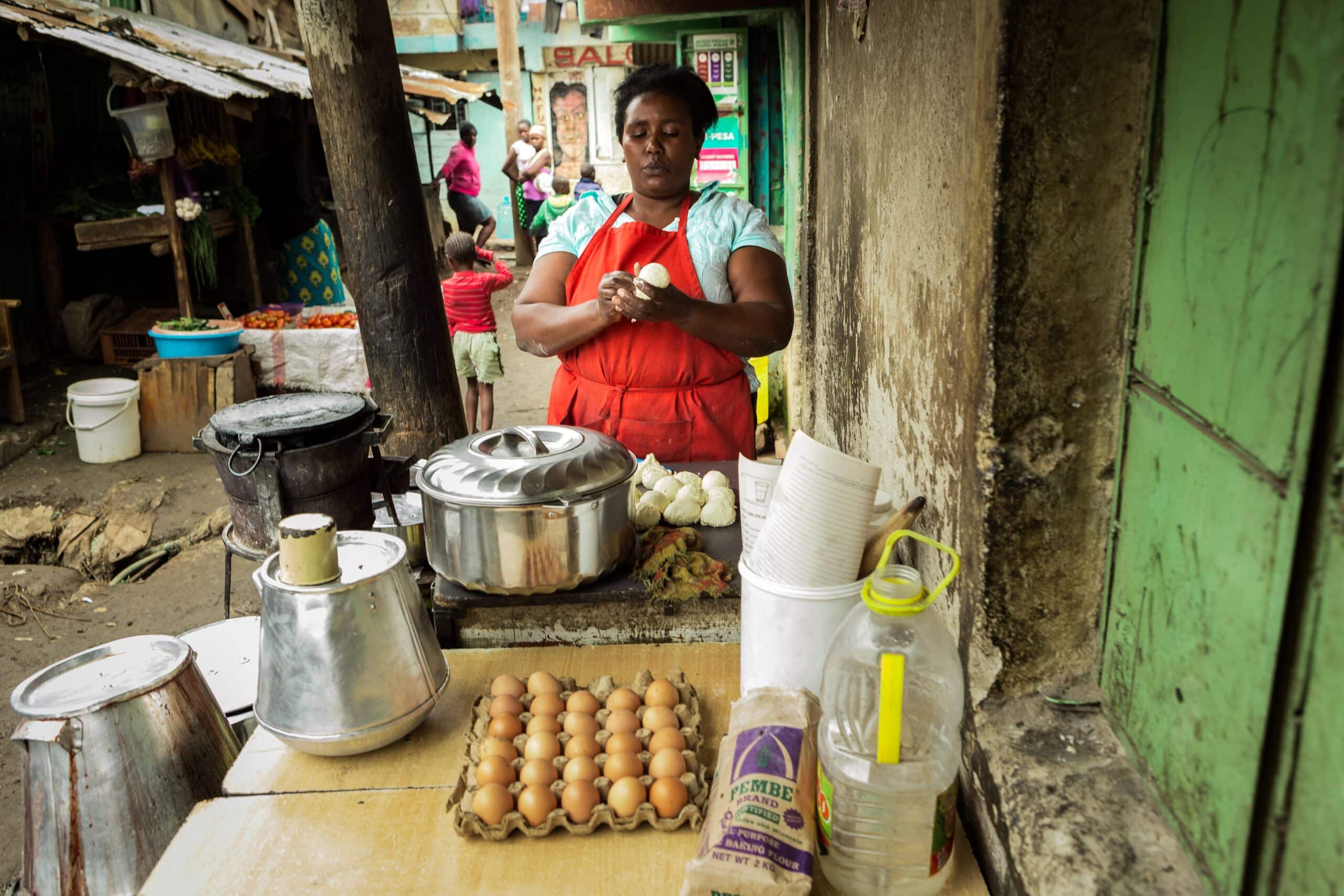
While FDPs often are vulnerable, poor, and burdened with instability, through a different lens they can present an intriguing opportunity. In places like Rwanda, large refugee camps can exist for decades and are home to vibrant micro-economies. Moreover, many FDPs fit the basic profile to access formal financial services; they have regular income, formal identification, and a need for financial products.

A study conducted by BFA Global in partnership with FSD AfricaAccess to Finance Rwanda[1] (AFR), and UNHCR last year suggests that there are good reasons to believe that forcibly displaced persons (FDPs) can be a profitable customer group for FSPs.

Demand: Refugees Need Financial Services

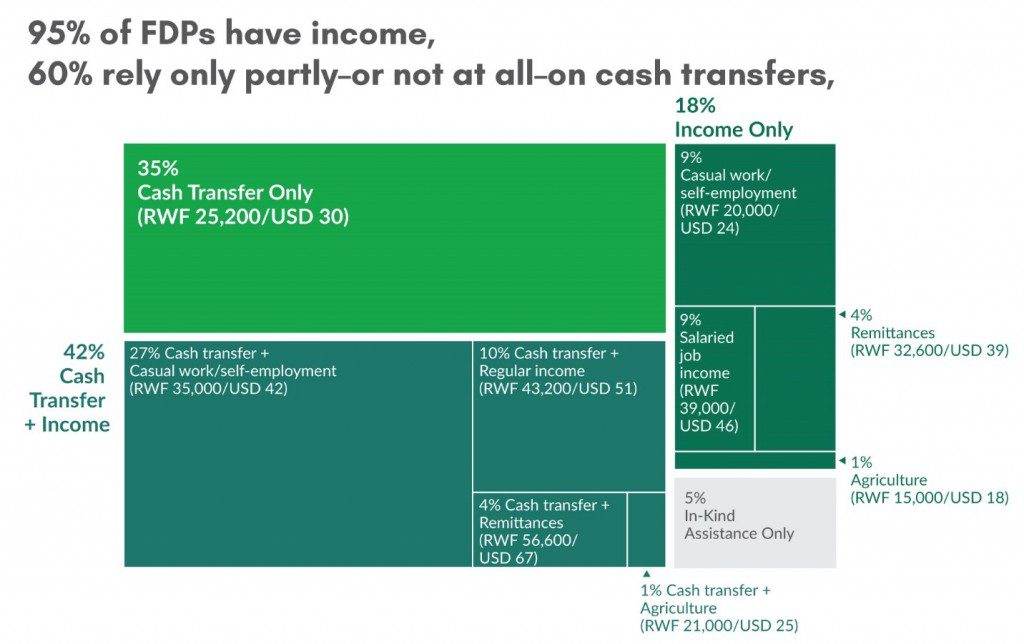
Many refugees not only receive aid, they also earn income, thereby creating sufficient cash flow to drive demand for financial services.

Although they are plagued by instability and insecurity, many refugees start businesses and some also have jobs. About a third, or 27% of refugees, are self-employed, providing services such as dressmaking and barbering largely within the camp. An additional 10% of refugees earn a monthly salary from employment. Finally, 4% receive remittances.

 In addition to the income earned from work, 95% of refugees receive humanitarian aid in the form of monthly cash transfers. The World Food Programme (WFP) and the UNHCR are shifting from providing refugee households with in-kind humanitarian support to giving them cash.  At the time of our study, refugee households in four out of the six camps in Rwanda were receiving monthly cash transfers. The other two camps were soon to migrate from in-kind to cash transfers.

With these regular inflows of cash, refugees need a place to receive and store their money, creating a clear demand for secure financial services.

Supply: Refugees can be a profitable segment

Not only is there substantial demand for financial services, our analysis suggests refugees are a viable customer segment. Of the 160,000 men, women and children who are displaced in Rwanda, we estimate that about 44,000 adults have sufficient monthly cash flow to make them viable customers for FSPs, with additional opportunities for cross selling.

To start, the basic transaction accounts that banks offer other low-income Rwandans would likely be even more successful with refugees who have regular, stable cash flows. Moreover, accounts that refugees open to receive their monthly cash transfers are notlikely to become dormant or inactive, as is generally the case with many low balance accounts, making refugees a more attractive proposition for banks.

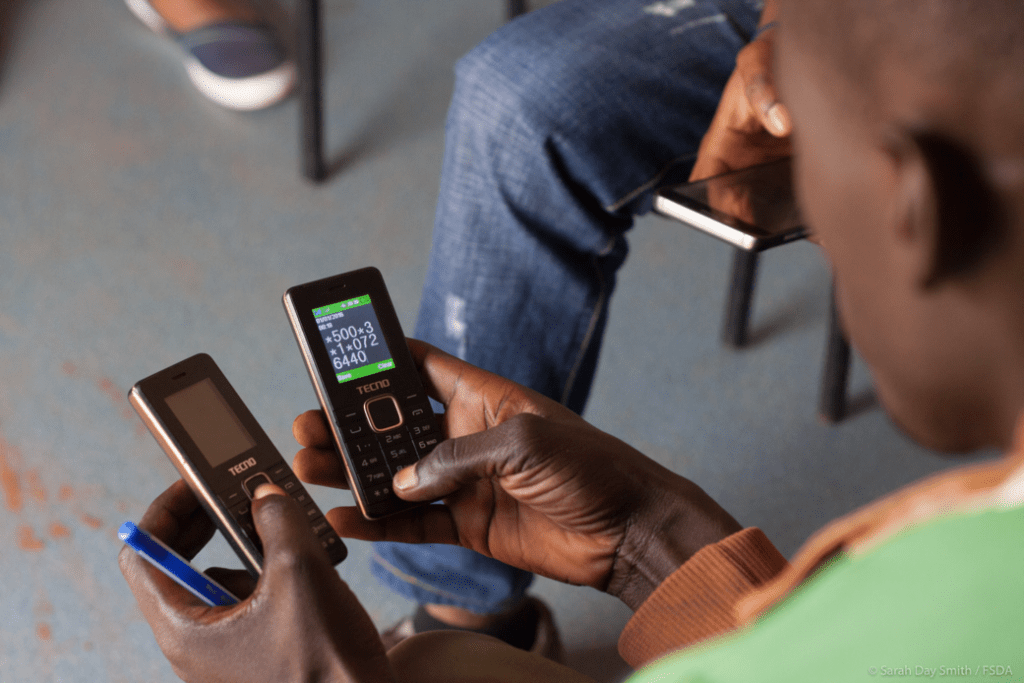
 In addition, there are opportunities for cost savings using mobile money. Although low-income households tend to use informal mechanisms such as savings groupto manage their finances, 90% of the refugees we interviewed use mobile money regularly and 95% already have experience using a bank account, thereby decreasing upfront training and client education costs.

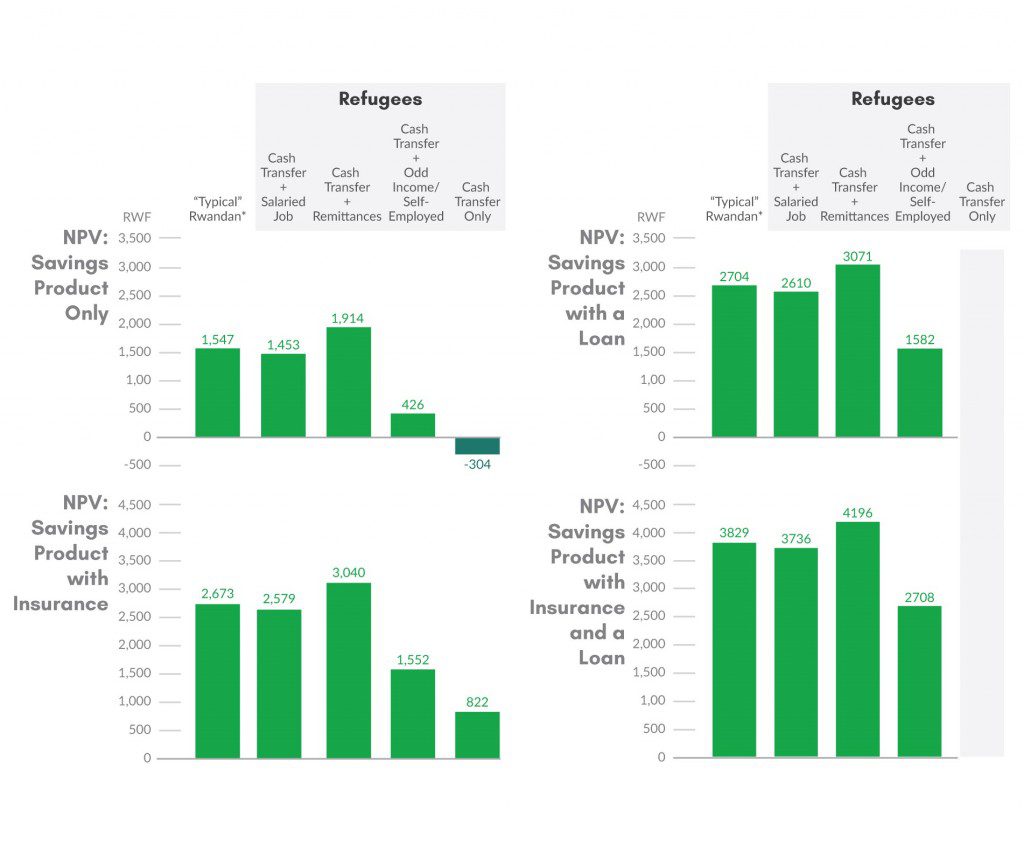
Finally, there are opportunities to cross sell other products although many segments are profitable with just a savings product. Our dynamic net present value model estimates FSPs can profitably serve refugees with salaried jobs, those who are self-employed, and those who receive regular remittances with only a savings proposition! In fact, we believe that these three segments, who together make up 41% of the adult refugee population, can be just as profitable to FSPs as typical low-income account holders in Rwanda.

That said, FSPs that offer only a savings product to refugees who depend solely on cash transfers are not likely to have a profitable proposition. Targeted cross-selling of other financial products, such as a loan or micro-insurance, will be needed to improve the FSP’s profitability for this segment.

Regulatory Environment: Refugees Qualify for Financial Services

Given the significant forces for demand and supply, the regulatory environment is the last piece of the puzzle. Fortunately, we found that refugees meet the formal requirements for opening a bank account in Rwanda.

Although most refugees do not have a government-issued ID card (which FSPs typically use for KYC purposes), all refugees have a proof of registration document issued by the Ministry of Disaster Management and Refugee Affairs. FSPs that want to serve refugees can request regulatory approval to use the proof of registration document to open accounts; the National Bank of Rwanda has approved such requests in the past.

Ultimately, our research suggests that FSPs shouldn’t be guided by the stereotypical narratives about refugees. We found that while refugees face difficult circumstances, they are also viable customers for FSPs that take an innovative approach to product design and customer acquisition.

As added incentive, in December 2017, FSD Africa launched an innovation competition to provide FSPs with ideas about how to bring financial access to refugees with grant funding of up to £160,000. The competition has received 21 concept notes to date.


[1]Rwanda is a signatory to the 1951 Convention relating to the Status of Refugees[1], which guarantees refugees the freedom of movement, right to work and other liberties and has been hosting refugees for over 20 years.

[1] BFA’s calculations based on the Maastricht Graduate School of Governance (2016) data set from a research conducted in May 20

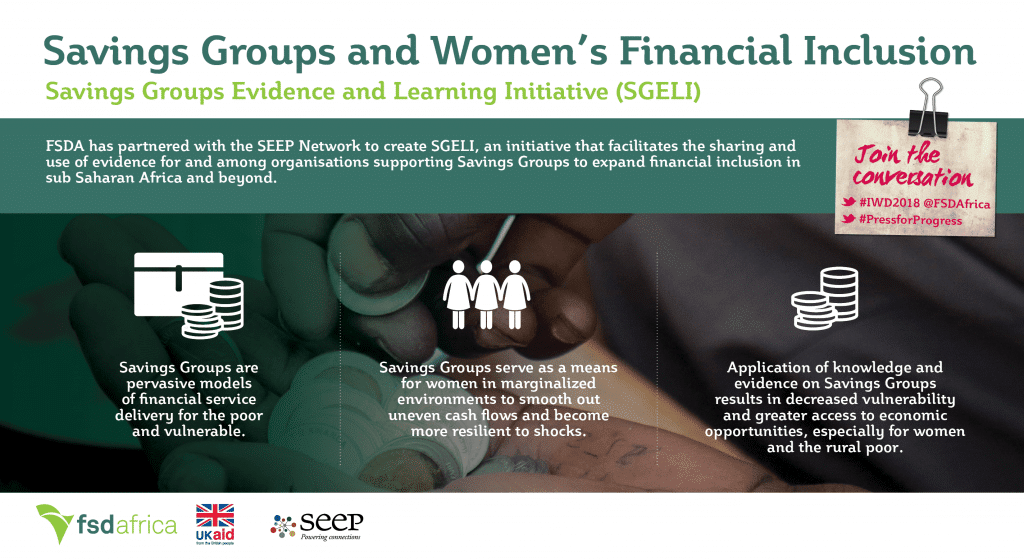
Savings groups and women’s financial inclusion

Join us in celebrating International Women’s Day 2018!

Through our #PressforProgress campaign, we are proud to share information about our partnerships that are supporting women’s economic empowerment in a variety of ways.


The SEEP Network is a collaborative learning network that supports strategies for vulnerable populations, especially women, to participate in markets and improve their quality of life. FSD Africa has partnered with SEEP to build and apply knowledge and evidence on savings groups in order to improve the ability of these groups to reduce vulnerability and enhance access to economic opportunities amongst their members, especially women and the rural poor.  Research shows that savings groups contribute towards women’s economic empowerment by expanding access to basic financial services and support networks. They serve as a means for women in marginalised environments to smooth out uneven cash flows and become more resilient to shocks.

To learn more on how saving groups have enhanced women’s financial inclusion, read this briefing note by David Panetta from the SEEP Network.

Women in financial inclusion policy advancement

Join us in celebrating International Women’s Day 2018!

Through our #PressforProgress campaign, we are proud to share information about our partnerships that are supporting women’s economic empowerment in a variety of ways.


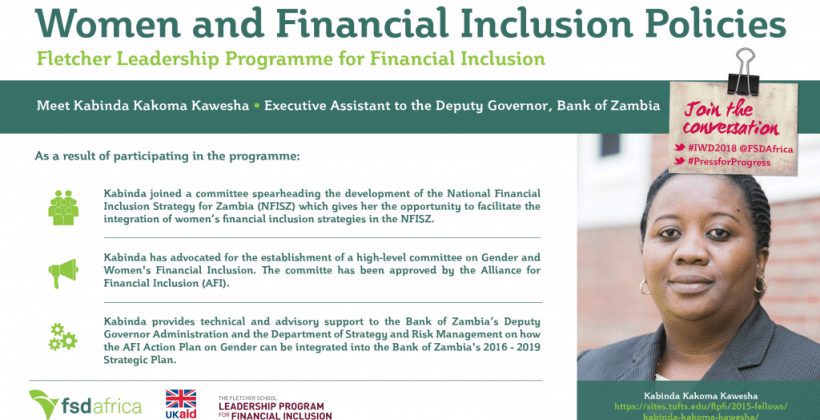
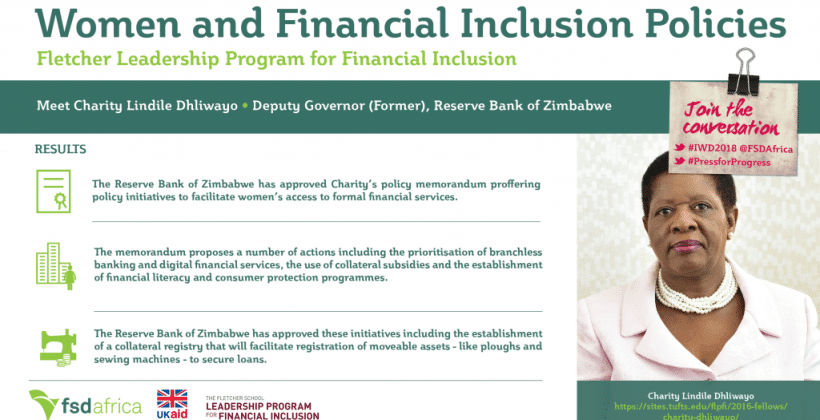
The Fletcher School Leadership Programme for Financial Inclusion is an intensive and innovative executive education initiative for promising financial regulators and policymakers from emerging and frontier markets, including in sub-Saharan Africa. Through support from FSD Africa, the Bill & Melinda Gates Foundation and the MasterCard Foundation, the programme has trained financial regulators and policy makers, including 40% women, with many going on to develop and implement policies that address financial inclusion in their respective countries, including for women.,

Addressing the gender gap in fintech

Just as in technology and finance industries around the world, fintech companies in Africa are grappling with a severe under-representation of women in leadership roles and throughout their businesses. When compiling the data in the 2017 Fintech Talent Africa report, Digital Frontiers Institute (DFI) made gender balance a particular focus of the research, knowing that this is a significant problem in the industry.

The findings of the report validated this belief. More than 400 industry leaders and professionals responded to the survey and of these, only 12.5% were women. The gender gap was reflected again in the data they reported: respondents indicated that the teams they lead are made up of approximately 39% women, while senior or executive teams are made up of 43% women. This data highlights that there is still a way to go in order to achieve gender parity.

To learn more about addressing the gender gap in fintech, access the full blog via this link.,

Building women’s skills and capacity

Join us in celebrating International Women’s Day 2018!

Through our #PressforProgress campaign, we are proud to share information about our partnerships that are supporting women’s economic empowerment in a variety of ways.


The Strathmore Business School (SBS) is a renowned institution in East Africa that aims at developing transformative business leaders to tackle the various social and economic challenges facing Africa. With support from FSD Africa, SBS has developed and expanded its Leadership Academy in East Africa including creating a ‘Women in Leadership’ programme. The programme is targeted at women in management and equips women with skills to perform effectively and efficiently to achieve excellence in the various spheres of their lives.

Additionally, The Chartered Institute for Securities & Investment (CISI) through FSD Africa’s support, is providing skills development and training in order to strengthen professional standards among Capital Markets Professionals – women included. CISI is a professional body that offers a wide range of qualifications in the financial sector including Operations, Wealth Management, Compliance/Risk, Capital Markets/Corporate Finance, Financial Planning and Islamic F

Remittances as a source of income for women

Join us in celebrating International Women’s Day 2018!

Through our #PressforProgress campaign, we are proud to share information about our partnerships that are supporting women’s economic empowerment in a variety of ways.

Cenfri supports financial inclusion and financial-sector development through facilitating better regulation and market provision of financial services through research, advisory services and capacity-building programmes. FSD Africa and Cenfri have partnered on the Risk, Remittances and Integrity (RRI) programme which seeks to strengthen the integrity and risk management role of the financial sector and to facilitate remittance flows within and into the continent.

With respect to remittances, research conducted by Cenfri indicates that remittances are an important source of income for women in sub-Saharan Africa. They are used to meet monthly expenses, deal with unexpected shocks, and support family obligations (e.g. paying school fees).,