Category: Blog

Five things we used to think about Africa’s credit market

For years, donors and regulators have been trying to cook up more mature consumer credit markets in Africa. We used to think we knew the essential ingredients for baking the perfect credit market cake.  But when we look around the world at how credit markets are functioning—especially for low income groups—we find that the credit cake is burnt in some places and raw in others. Something is wrong with the recipe itself.

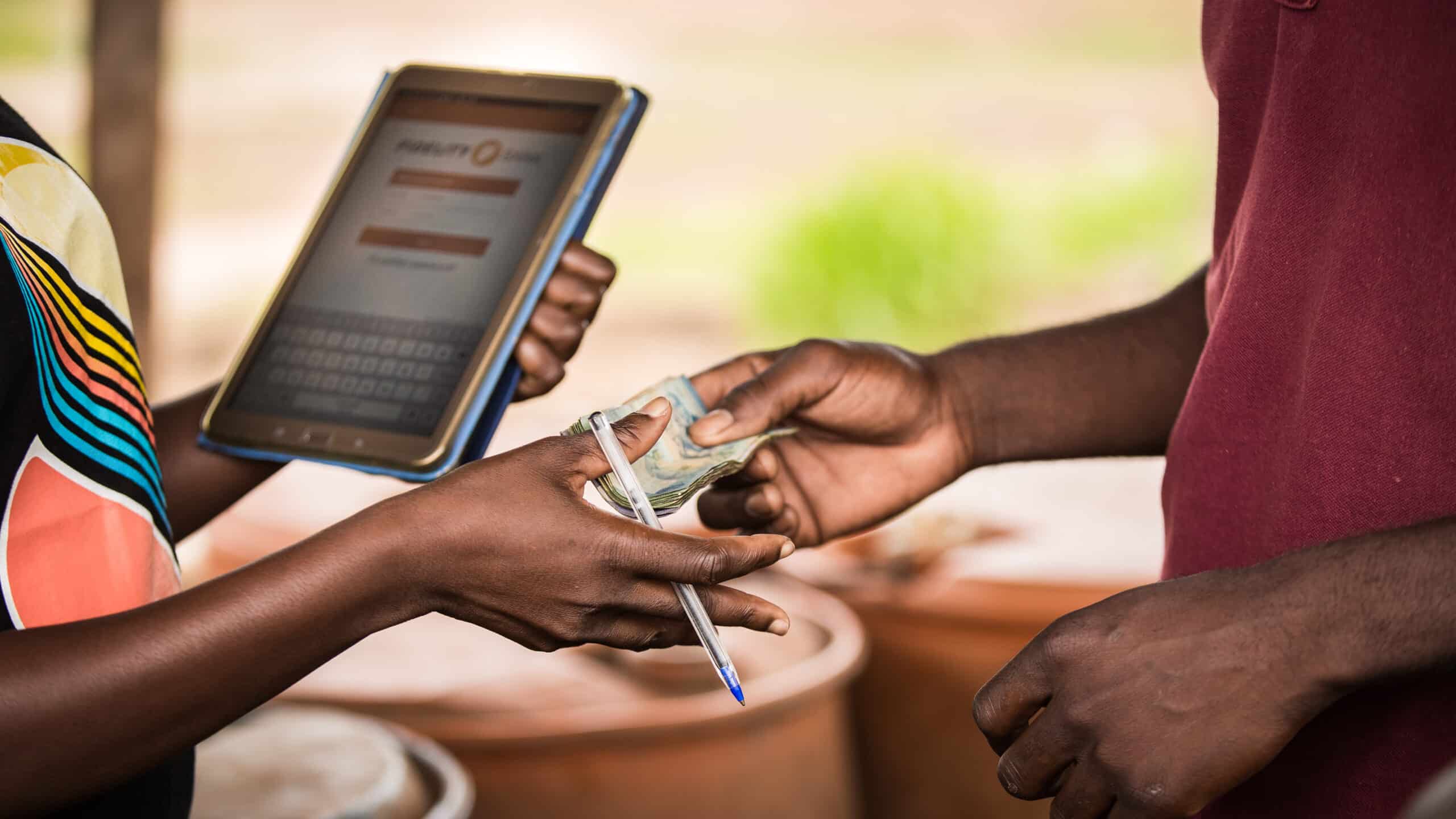
My research team and I collected in-depth stories from consumers in Kenya, Ghana, and South Africa, to understand the experiences of what we call “cuspers.” People on the ‘cusp’ of poverty and the middle class, already represent almost a quarter (23%) of Africans and as a group, they are growing. They are getting by on $2-5 per day and straddling the informal and formal economy. Their stories tell us that if we want credit markets that support upward mobility—and not just churn—we need to think again about our old recipe.

So here are five things we used to think:

1: l and should displace informal credit. We used to think, that banks and microfinance intuitions are implicitly more “fair” because they have to abide by consumer protection regulations. By extending formal options to previously excluded borrowers, we thought we were liberating them from predatory informal lenders who overcharge, lock people in debt cycles, and use unethical collections practices. We used to think that if banks cut back lending to low-income groups, evil loan sharks will fill the void.

But the reality is much more complicated. Firstly, informal lenders are not all evil. In fact, people told us that informal lenders—both those who charge interest and those who do not—were often more understanding and flexible than formal lenders. Some accept broader forms of collateral and proof of credit worthiness, simplify application and disbursement processes, and explain terms in ways that were understandable, even for the semi-literate. Many informal lenders even halt the accumulation ost when a borrower falls behind, which is very rare for a bank.

Secondly, informal lenders rarely offer products that actually compete with formal lenders. We found that most informal loans were significantly smaller. Informal lenders often cornered the market for $10 loans, while banks were going after those that were many times larger, rarely under $200. Only in Kenya (because of M-Shwari) do we see a bank offering a service that actually competes with informal lenders.

Finally, formal lenders are not all pillars of ethics and as an alternative, people don’t run to loan sharks. We were told stories of predatory lending, opaque terms and conditions, unclear—even intentionally obscured—loan pricing, and condescending and insulting bank staff. And our evidence shows that the main substitutes for formal borrowing are saving and delaying or forgoing consumption.

2: Credit for investment is “good”; credit for consumption is “bad.”  We used to think that because consumption credit does not produce a return, repayment of consumption loans is difficult and just increases the cost of consumption. But, we found many entrepreneurs borrowing for consumption as a means of keeping capital in their businesses. As long as this is a temporary fix and not a habit, consumption borrowing can be hugely helpful. We also see that borrowing for important, time-saving assg machines—can make a huge difference in the productivity of people’s lives.

3: Digital is inevitable. Digital is better. Of course digital lending can reduce cost but, digital is not moving as quickly as one might expect. In South Africa, despite widespread adoption of mobile phones we still see most lending taking place over the counter. In Kenya, mobile lending is taking off, but we see evidence that the lack of a personal relationship with the lender proves a disincentive for on time payments.  Many borrowers delay and default on very tiny loan payments, not because they don’t have the money, but because a distant, digital lender feels so far away.

4: Don’t dampen provider incentives. Yes, we need providers willing to invest in going after new markets, but what happens when those incentives work too well?  Credit to cuspers has been shown to be ‘price inelastic’. The more that’s offered, the more people borrow. Regulation matters.

5: The more cr sharing, the better. We used to think that the better lenders can know their borrowers and assess risk, the more competition and the lower interest rates will fall for good borrowers. Instead, we see that—without effective regulatory enforcement—near perfect information sharing can lead to aggressive lending practices, with lenders pushing credit on viable borrowers. In South Africa, where so much is known about borrowers, risk models can become more and more precise, encouraging lenders to simply price for more risk, increasing interest rates for all and of course the sheer volume of credit extended. In other markets, where lenders know less about borrowers, they are forced to be more cautious.

Credit on the Cusp is an FSD Africa project, implemented by Bankable Frontier Associates.<

Tales from a happy Kenyan i-taxpayer

I pay taxes in Kenya.  I am happy to pay my fair share.  It’s a shame more of us in Kenya who should be paying taxes are not.  But that’s another challenge and there are other battles to fight.

Interesting, by the way, to read about the Addis Tax Initiative, launched earlier this month, in which over 30 countries (including Kenya) and international organisations have now teamed up to strengthen international cooperation around tax systems reform. Development can’t really happen sustainably without a proper tax collection system.

So, back to Kenya. The least the Kenya Revenue Authority can do is to make it easy for people to pay their taxes. And the reason I am happy tax payer is that the KRA has made is super easy to pay with its new i-Tax payment system.  Here’s how it worked for me.

With great foreboding, expecting hours of electronic misery, I registered with the KRA’s i-Tax Online Service because KRA no longer accepts manual tax returns. I registered, like thousands of other people, at the last minute and, sure, the system on that day lurched and creaked but soon spat out my return.  I filled this in and I managed to get the system to accept it without too much trouble.

Within a day I was told what I owed, which was a tiny amount so I decided to ignore it. Then, I got a fiercer message a couple of weeks later to say that I owed a slightly larger amount.  The increase seemed pretty random to me (and was unexplained) but still within tolerance limits and so I decide that KRA would keep pestering me with annoying emails unless I paid up.

The payment option of choice, for anyone wanting to avoid the inconvenience of going to a bank or queueing up in person with a cheque, is of course M-Pesa, Safaricom’s mobile payment engine, which the UK government helped get going back in the mid 2000s with a grant to Vodafone.

Again, more foreboding.  Would it work?  I call KRA’s call centre for advice.  A completely charming person took my call pretty after perhaps two minutes on hold.  She rightly assumed I was tech-phobic, and possibly just stupid, and gently took me through every step I needed to make to register to pay my tax bill through M-Pesa.

It sounded complicated.  But actually it turned out to be totally straightforward and very quick.  Registering online meant that I was sent (immediately) a Payment Slip.  This had a unique identifier on it (a 16-digit number) which I would then proceed to use, along with the KRA’s M-Pesa Business Number (which, by the way, is 572572) to pay using my phone.  So, just two numbers needed.

So I did. And not only did I get the usual M-Pesa confirmation say the payment had gone through, giving that certainty which is partly what makes M-Pesa such an attractive service to use, but, within seconds, KRA also sent a message to say they had received my payment.  So I now know they are off my back.

E-government, when it works, is fantastic.  Hats off to KRA for making my (admittedly simple) problem go away. And kudos to organisations like Better than Cash Alliance for getting governments around the world to sign up to “cash lite” strategies in the interests of less waste, more accountability and more inclusive and efficient financial systems.

BTCA have also been doing interesting research on the cost benefits to businesses of digitising payments – how many businesses realise how much it costs them to keep paying wages in cash?

We, at FSD Africa are going to be providing training and support to policymakers and others on the ground here in Africa to help them think through their digital strategies and improve services for their citizens.  We are hoping to work with at least two countries on intensive programmes in this area. It’s undeniably complicated, and will take time, but we are happy to walk the journey with some countries that are serious about wanting to make progress in this area.

By the way, I was also very happy my tax bill was so low.  But I’d still like to know why it mysteriously went up…

Why Obama will need m-pesa for his visit to Kenya

Tomorrow, President Obama will come home to Kenya. He is likely to get calls from relatives asking for him to ‘chip in’. He will be expecting them. These types of calls are not uncommon in Kenya.

Only the other day, I got a text message while I was a work: “Uncle Matata is very sick and is seeing a doctor. The money we had budgeted is not enough. Can you help?” In Kenya, social obligations dictate that you ‘chip in’.

For me, it was just an ordinary day in the office and so I had left my debit card at home. My car had enough fuel to last three days so I took just a little cash for lunch. When I got the message, I checked”https://en.wikipedia.org/wiki/M-Pesa”>M-Pesa e-wallet and found it had half of the amount being asked for. So I sent a text back asking them to hold on as I waited for my meeting to end. After the meeting I stepped out and asked a colleague if he had some money in his M-Pesa e-wallet which I could borrow and refund that evening. I was able to send the money via M-Pesa.

According to the Central Bank of Kenya there are about 124,000 mobile money agents, serving 25 million customers, who made over 900 million transactions worth over KES 2.4 trillion (around USD $24 billion). This compared to about 12 million debit cards with 18 million transactions worth only KES 108 billion (approx. USD $1.1 billion) during the same period.

A growing number of banks and other financial institutions are looking to leverage the existing digital financial service infrastructure. But many are struggling to understand the key elements of these: from strategy to product delivery as well as how to drive uptake and usage, while managing risk and fraud. They need help.

FSD Africa recognises the important role that mobile money plays in facilitating payments. We have provided financial support to MicroSave Helix Institute for Digital Finance to research, design and train digital finance professionals across Sub-Saharan Africa.

When Obama visits Kenya he is likely to get calls from relatives. Some of those might be appeals for him to play his part in building social capital of Kogelo (the village where he comes from). Others might be from African leaders urging him to cement his legacy before he leaves office. For that, he may use a USAID grant from the State Department or a communique at the end of a global summit. But for family and friends in need of a just few shillings to tide them over, he will need his M-Pesa mobile money account. Because even he is expected to chip in

What is a micro-mortgage?

Micro-mortgages are defined as “housing loans of long duration (generally ten years or more) that exhibit all characteristics of traditional mortgage loans (long repayment period, house as collateral for the loan, ability to foreclose and sell the house in case of default) and are small enough that they can be afforded by poor and very poor households”. The term is often wrongly used interchangeably with HMF, although from the definition above, it is clearly not HMF. But precisely what it is can also be unclear, as a brief look at products on the continent will show.

UGAFODE, a micro-finance bank in Uganda for example started off with HMF lending, but according to them, they then proceeded, to offer “micro-mortgages” because the HMF loans offered were not large enough to purchase land, or erect buildings for commercial and larger residential houses. Its micro-mortgage ranges from US 1,200 – 10,000 as opposed to its HMF loans which average US$ 105. The term of the micro-mortgage can be surprisingly short, as little as only 36 months, very similar to HMF. Real People across the border in Kenya also a micro-financier offers a micro-mortgage for up to 9 years for “home construction”, basically development of a home from ground up. Loan amounts range from US$ 1,845 – 46,125. Housing Finance Kenya, a more traditional mortgage bank similarly has a product of a relatively short period of time, 5 years, for purchase of a residential plot. Besides this relatively short period however, it is very much a mortgage, requiring monthly salary deductions, land as collateral, property life insurance and so on. The same company also has an interesting product whereby plot owners choose from 50 different plans offered by the bank, obtain finance, and then let the bank project manage construction of the house from scratch to delivery within 3-9 months. This innovation presumably bridges the problem of poor market supply, but does not detract from the fact that the ensuing loan is a mortgage with amounts varying from US$ 18,465 – 312,000. KCB in the same country has interestingly a “group micro-finance loan” targeting savings groups. It however uses monthly salary deductions and land title as collateral, and is also very mortgage-like. Equity Bank in Tanzania has a 10 year individual mortgage loan for house or plot purchase for salaried individuals. In Zambia,Cavmont Bank has a mortgage for individuals for 10 years.

From this, it is clear that traditional mortgages are being redesigned constantly to create greater affordability, and what is emerging is an interesting array of products with different adaptations and innovations. The product that results from this re-design is then sometimes, but not always called a micro-mortgage. Sometimes a loan for a shorter period is called a micro-mortgage, for example the UGAFODE micro-mortgage for 36 months. Yet, Housing Finance Kenya has a equally short 5 year loan, this time called a mortgage. Loan size and the target of the loan is sometimes used to distinguish them, but again, the distinction is not very clear. Some micro-mortgages make reference to targeting affordability by “poor and very poor households”. However, the loan, in this case for US$ 1,200 ,may not be for the poor, at least not on this continent. In fact, the difference and distinction between mortgages and micro mortgages is blurred when mortgages are so diverse and may not be that useful. The much more important and distinguishable product is HMF. Not only does is serve lower income people, with much smaller loans but also, and very importantly the lending methodology is very different as formal title as collateral is not essential as it is in both type of mortgages. Rather, other forms of collateral such as group peer pressure are used. There lies the important difference.