For too long, the economic orthodoxy guiding businesses — as well as the central banks and regulators overseeing them — has taken scant interest in the natural capital that underpins so much economic activity. For decades, many have invested their faith in the power of the markets to inexorably protect value and the assets which guarantee it.
However, change is afoot. What’s more, it’s a seismic shift led by Africa.
Natural systems account for 50% of global economic value generation and few can now doubt that natural assets are inextricably linked to economic health. This emerging consensus, that acknowledges nature’s status as an engine of economic growth, could not come sooner.
The world’s stock of natural assets is declining at a disturbing rate. Just one of many depressing examples is the fate of the world’s coral reef habitats, which constitute the biodiversity engine of our oceans and illustrates the scale of the burgeoning crisis: Oceanpanel.org studies indicate that climate change — and the accompanying acidification of the oceans — will destroy 72% of coral reef habitats by the end of this century. That does not account for the toll of overfishing and pollution, which will cause further damage.
Africa’s leadership in integrating nature-related risk frameworks derives from the knowledge that the continent’s share of damage will be disproportionate. Why? The continent claims a quarter of the world’s natural capital, 65% of the world’s arable land, 25% of the world’s global biodiversity and 20% of global tropical rainforest area. Indeed, while the global decline in Biodiversity Intactness Index score amounted to 2.7% between 1970 and 2014, Africa witnessed a decline of 4.2% in its score.
A roadmap for real change
From an environmental standpoint, these statistics suggest a tragedy of unparalleled scale. But economically speaking, the risk is nothing short of existential.
The African Development Bank estimates that natural capital accounts for between 30% and 50% of the total wealth of African countries; and in sub-Saharan Africa, more than 70% of people depend on forests and woodlands for their livelihoods. From agriculture to fishing and tourism, Africa’s economic future is in real, imminent jeopardy.
Establishing nature as a key area of risk management marks a vital first step, from which can follow a roadmap to real, tangible change.
In December, world leaders convened in Dubai for the COP28 climate change conference, which has elevated nature as one of its central themes — an important move since COP15’s adoption of the Kunming-Montreal Global Biodiversity Framework (GBF). The framework contains vital targets for achievement by 2030, including the conservation of at least 30% of land, sea and inland waters, as well as restoration amounting to 30% of degraded ecosystems, and a $500bn annual reduction in subsidies that promote biodiversity loss.
Pre-empting the sceptics, it’s of course true that target-setting and ambitious rhetoric do not themselves address the challenge we face. But establishing nature as a key area of risk management —
requiring sober, active regulatory intervention — marks a vital first step, from which can follow a roadmap to real, tangible change.
Though indispensable, COP is not the only forum for change. The Taskforce on Nature-related Financial Disclosures (TNFD) marks an important shift in how businesses account for their non-financial liabilities, as well as their impact on the surrounding ecology. Its recommendations (already launched in Kenya and South Africa) have convinced much of the private sector that environmental performance is as material as revenues and market share — a shift inconceivable only a decade ago.
In Africa, both the African Natural Capital Alliance (ANCA)-run pilot, as well as the work of TNFD consultation groups in Kenya and South Africa, are revealing significant private sector interest in early adoption of nature-related disclosures. But what about those who supervise the private sector and set the economic ‘mood’?
We’re seeing a real shift in African voices leading the way for change. Many now recognise the need for African private and public sector awareness and capability-building for the successful integration of not only future nature-related risk frameworks and standards, but also broader nature-related capabilities. Without engagement on these topics, there is a danger of creating additional transition risks and barriers to investment in the African continent.
Asserting the centrality of nature
Arising from the 2017 ‘One Planet’ summit in Paris, the Network of Central Banks and Supervisors for Greening the Financial System (NGFS) has undertaken impressive work orienting the financial system to manage risks and mobilise capital for green investments. With 129 members hailing from every major region of the world, there is a real appetite among regulators for guidance on natural assets and capital. Crucially, African regulators have led the development and implementation of these recommendations, and from Morocco to Nigeria, Kenya to Ghana and South Africa, financial authorities are asserting the centrality of nature in national economies and economic strategies.
Both the TNFD and the NGFS have established frameworks and regulatory best practices to encourage natural capital’s incorporation into economic thinking and strategy. However, many continue to doubt the real, material economic benefits nature affords.
An economic case for natural conservation and restoration could invoke almost limitless examples, but mangrove restoration represents a particularly striking case in point. As well as being almost peerless havens for biodiversity, mangroves turbo-charge local economies and, indirectly, the broader global economy. For example, a staggering 80% of world fishing catches depend in some way on mangrove forests.
Beyond fishing and carbon sequestration, mangroves also matter to world business because they insulate coastal economies from the ravages of erosion, flooding, storms and tsunamis. They are, in essence, nature’s first line of defence.
Again, the coastal defences provided by mangroves benefit more than those inhabiting coastal regions — indeed, they are of vital importance to any business with direct or indirect connections to suppliers, customers, or services in major world economies such as India, Brazil, the Philippines, Ivory Coast, Mexico, China, Vietnam and Bangladesh. The ability of these economies to withstand the growing threat of rising sea levels will prove vital for the world’s supply chains and those companies hoping to reach consumers in much of the Global South — where a growing proportion of the world’s future customers will live and work.
Channelling capital into projects, such as those undertaken by the Global Mangrove Alliance, and ensuring regulation deters coastal depletion and deforestation, ranks as one of many nature-related challenges financial authorities will face over the coming decade. Failure to do so will unleash human and economic damage to global growth on a scale which will easily outstrip the disruption wreaked by the COVID-19 pandemic.
Few businesses are insulated from these risks
It’s worth restating the global implications of this threat — few, if any, businesses on Earth can reassure themselves that they are insulated from these risks. A survey of these threats makes for depressing reading. However, there’s another story to tell — one in which natural capital underwrites sustainable development and becomes a cornerstone of rapid economic growth.
With 75% of African countries having sea access, a sustainable blue economy promises significant long-term wealth if well-managed. The Green Growth Knowledge Platform, for example, found that every US dollar invested in marine protected areas in Senegal and Tanzania generated more than $5000 in economic value. A carefully managed process of extraction and processing could well endow the continent, which hosts 30% of the world’s mineral reserves, with economic firepower previously unthinkable.
Moreover, if financial regulators are able to construct a credible global market for carbon and biodiversity credits, Africa’s vast natural wealth can be, simultaneously preserved and monetised.
It’s a truth most MBAs cover in their first lesson, but one that we seem to have collectively forgotten: strong risk management is impossible without real transparency and honesty.
It’s time, therefore, to think about nature and its preservation not as a fluffy add-on or stamp of corporate virtue, but as a core business consideration — as material as accountancy rules or corporate governance regulations. The shift in attitude must be stark. Just as regulation protects business, investors and the public from practices such as fraud, which ultimately destroy value, so must financial authorities work to protect that which underpins all human activity: nature.
On December 5, ANCA — whose mission is to catalyse nature- positive African economies — hosted a session at COP28’s Blue Zone to discuss the results of a pioneering, first-of-its-kind stress test of nature risks across five African financial systems. We know the threat to Africa’s natural capital is looming, but it’s key that we establish just how exposed economies are, and in what ways. Only then can central banks and regulators intervene to ensure the strength of African financial systems, and the resilience of the environment and ecology which underpins them. Action is needed — and for this to be effective, clarity on where and how is key.
Africa is sitting on a green gold mine — but its institutions must work to protect the inheritance of Africans, both living and as yet unborn.
Dorothy Maseke is Africa lead, nature finance and Taskforce for Nature–related Financial Disclosures at FSD Africa, and head of the African Natural Capital Alliance.
 How it started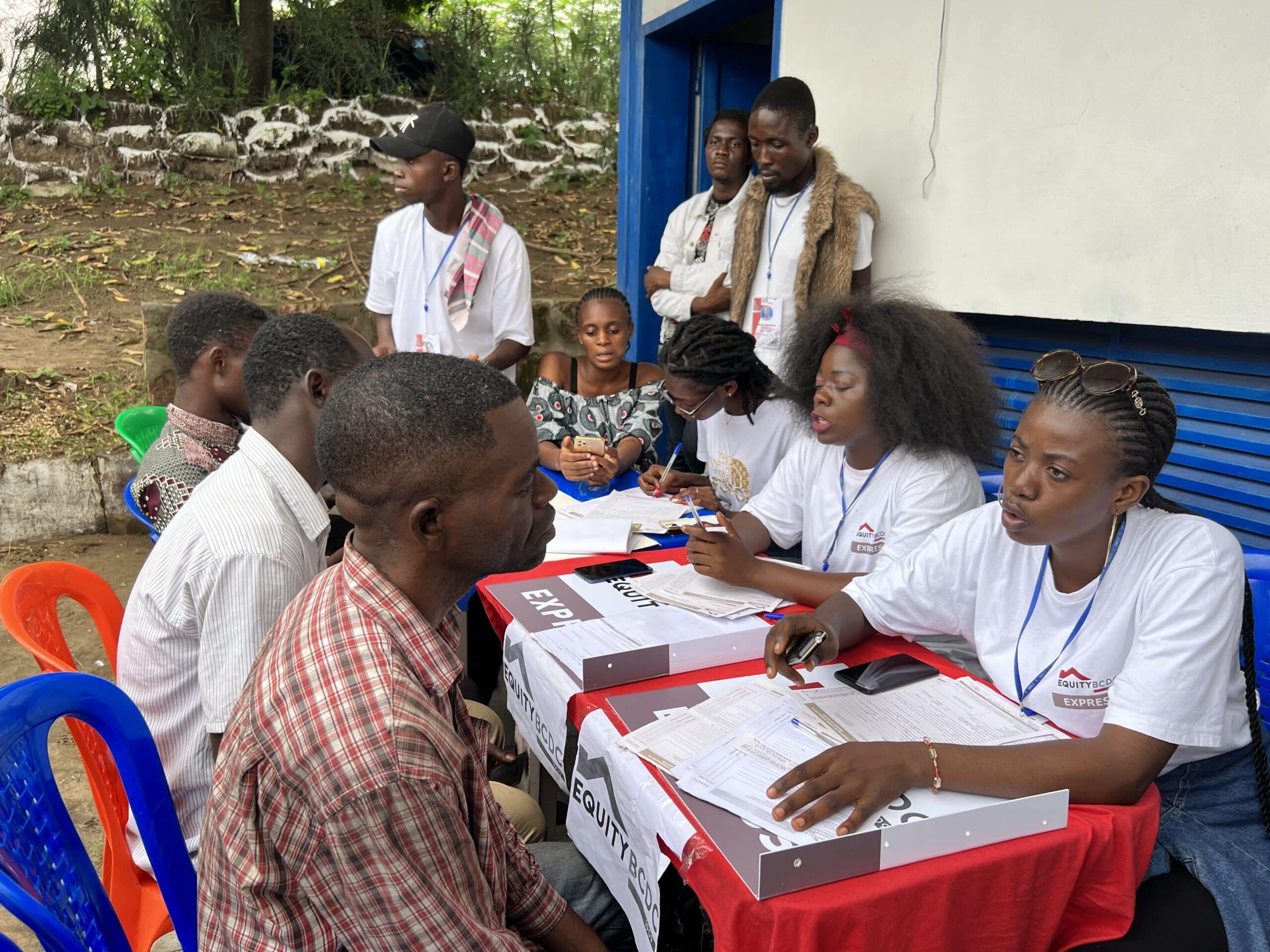
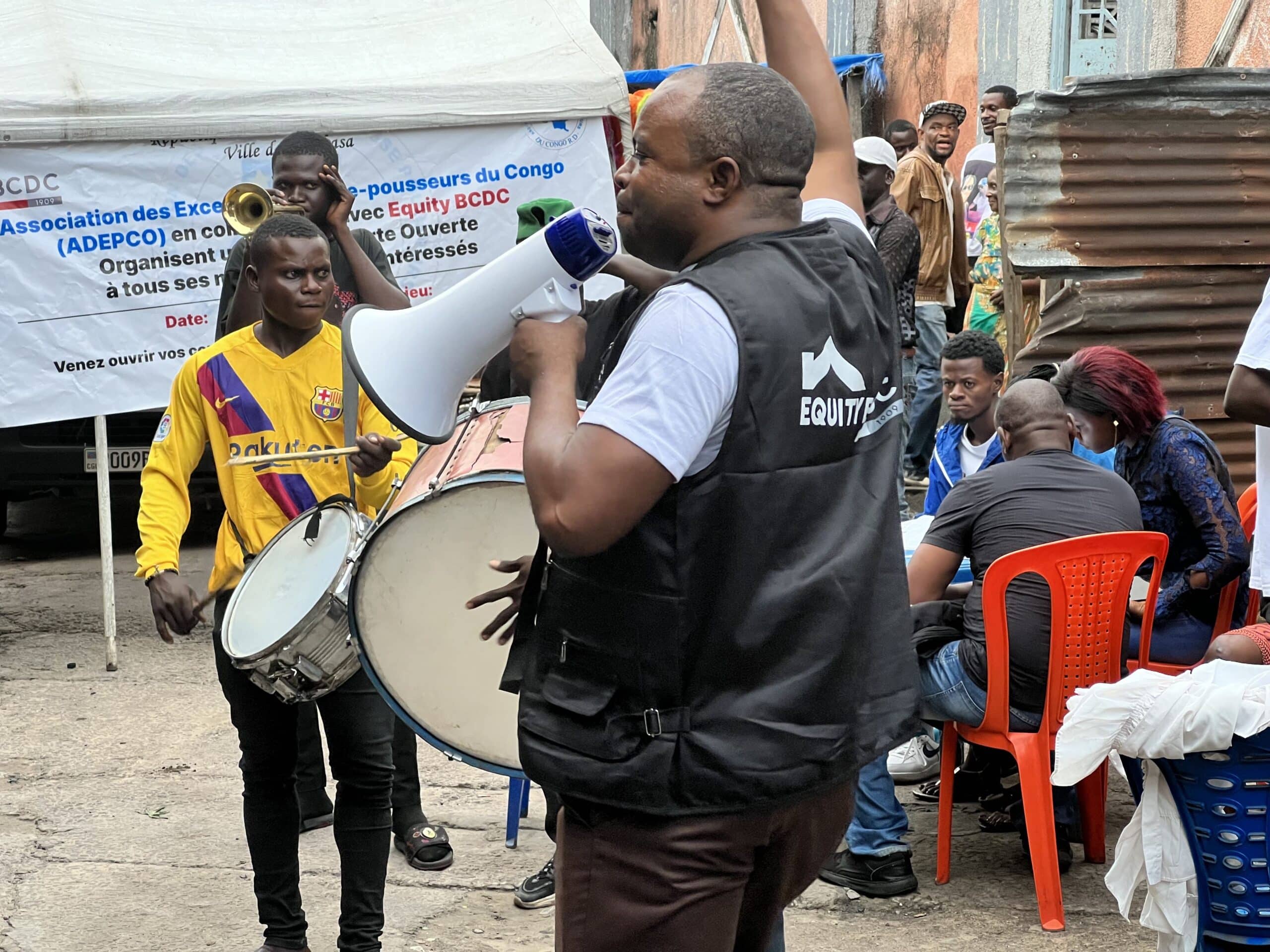
 What began as a dream evolved into an evident reality—a reality where farmers in Nsele can send money to their children in Kinshasa with a simple USSD code effortlessly without enduring long commutes. Where garbage collectors in Masina can reinvest their earnings to build a better future and inspire their community. Where women in Bunkeya foster empowerment and begin to see beyond traditional barriers, recognising the opportunities that access to finance affords.
 Transactions to transformation