Category: Blog

Ensuring that women’s financial access is not another casualty of COVID-19: the value of agent banki

Originally published on Next Billion

As the reverberations of COVID-19 continue to ravage global economies, the existing gender-poverty gap is set to widen, as women are more vulnerable to the impacts of the pandemic on their livelihoods. UN Women projects that for every 100 men aged 25-34 in extreme poverty due to the pandemic, 118 women of the same age will be living in extreme poverty by 2021.

Due to my work at the UK aid-funded FSD Africa, I am increasingly conscious of the disproportionate economic hardship women face. Even before the pandemic struck, their finances were precarious, despite the gains made in recent years. For instance, FinMark Trust found that 30% of female primary income earners in Kenya made their money via informal employment – which tends to be less reliable and less lucrative than formal jobs – as opposed to only 18% of their male counterparts. With their incomes severely impacted by the economic fallout of the pandemic, and with t­­­heir usual routes for accessing finances, such as community lending groups, disrupted by local lockdowns, we need to be innovative in identifying ways in which women can continue to access financial services.

So, what’s the solution? Working with Women’s World Banking and other partners, FSD Africa has been supporting alternative models of financial inclusion. We believe these models represent a real opportunity for furthering women’s access to key financial serme when they need them most. Underpinning all of this is the knowledge that initiatives driving financial inclusion must place a greater emphasis on gender. Below, we’ll explore one promising innovation that could make a substantial difference in women’s lives: agent banking.

HOW AGENT BANKING IS IMPROVING WOMEN’S FINANCES DURING COVID-19

We know that women are historically the managers of their households in sub-Saharan Africa – including household finances. The pandemic has added a new element to this, as an increase in time spent at home – with children at home due to school closures – means supplies are depleted at a quicker rate. This is making it harder for women to make ends meet. “https://covid19tracker.africa/” target=”_blank” rel=”noopener noreferrer”>survey of Ugandan women found that 67% of women who had missed a loan repayment during lockdown did so to pay for essential supplies, in contrast to only 42% of men. Some have had to sell their valuable assets, like cows, to meet household obligations.

As women struggle with rapidly depleting liquid assets during local lockdowns, agent banking can provide an avenue for accessing cash by creating a bridge to the financial solutions they need. Agent banking is a model in which third-party agents process transactions on behalf of traditional banking institutions. It enables banks to extend their reach to unserved or underserved customer segments without making huge investments in their own brick and mortar infrastructure. Agents are often relatively small outfits like micro-retailers, or existing agents of other banks or telcos. They offer an alternative channel to reach women who currently find themselves unable to access core banking services – especially those in peri-urban and rural areas.

Agent banng offers women with increasing household responsibilities a valuable alternative to lending and savings groups, which may be inaccessible due to local COVID-19 lockdown restrictions. It also provides an easily accessible way for women to obtain funds to pay for essential items, whether that’s through loans, or through transfers from friends or family members.

AGENT BANKING’S ROLE GOES BEYOND FINANCIAL INCLUSION

The benefits of agent banking can also extend beyond access to finance. Access to information is a key component of financial inclusion, and agents can assist women in navigating services which may be new and unfamiliar to them. Banking agents can even play a vital role in distributing health information, helping to keep women connected and informed during the pandemic. The COVID-19 crisis has revealed a disparity in access to reliable information in many underserved communities. If this is not addressed, women will be at increased risk of endangering themselves through a lack of awarenes the safety measures needed to combat the virus.

Agent banking also provides an alternative means of employment, which is particularly valuable in this time of economic disruption and job loss. By providing grants to support our partners like Women’s World Banking, FSD Africa delivers opportunities for women to become banking agents themselves. These agents can have a considerable impact in boosting financial access: As women often face a lack of trust and a level of stigma when meeting with men outside of the home, they are far more likely to seek out financial services that are offered directly through another woman. To help address this issue, in 2019 alone, Women’s World Banking’s network of agents reached 64 million women.

While the COVID-19 pandemic has brought enormous challenges to emerging economies, especially in sub-Saharan Africa, it has also presented an opportunity to advance innovations, like agent banking, that promote the inclusion of the most underrepresented communities. The financilusion sector must embrace these innovations as part of our evolving response to the crisis, as we work to ensure that women’s access to financial services is not another casualty of COVID-19.

&nbsp

Taking stock – CEO’s COVID-19 Updates

It is 10 months this week since Kenya – where UK aid-funded FSD Africa has its headquarters – confirmed its first case of coronavirus (COVID-19). Today, I want to take stock of our wide-ranging work over this unprecedented 10-month period, while looking ahead to chart FSD Africa’s evolving contribution to COVID-19 response efforts – from providing liquidity to ensure households and businesses have access to credit, to supporting the most vulnerable in fragile communities and states preparing Africa’s financial markets to bounce back better – and becoming more resilient, more inclusive and greener in a post-pandemic world. 

Like many companies and organisations around the world, we have been working from home and not travelling. However, this has not interrupted our efforts to design and deliver programmes to help Africa’s poorest households and communities.

From the beginning of the crisis, FSD Africa has focused its response on what it does best: strengthening financial markets so that they can better serve poor and vulnerable people.

Our efforts to respond to the effects of COVID-19 are therefore concentrated around three pillars: 

First – we’re providing emergency liquidity.

Micro, small and medium enterprises (MSMEs) are the engine of growth in African economies. They drive innovation and create employment, especially among the pivotal youth segment of the labour force.  MSMEs have had their consumption patterns disrupted and incomes put at risk due to the economic slowdown. COMESA’s survey found that 80% of MSMEs have been severely or very severely affected by the pandemic, citing the lack of operational cash flow as a major driver.

We are responding by making strategic investments in financial firms and funds that channel credit to these MSMEs For example, FSD Africa Investments has invested in BlueOrchards COVID-19 Emerging and Frontier Markets MSME Support FundBlueOrchard is a specialised impact investment manager which provides microfinance debt financing to more than 180 financial institutions in over 50 emerging markets. FSD Africa is participating in the first loss tranche of the new fund and, in doing so, has been instrumental in crowding in other investors such as the UK’s CDC Group plc and JICA (Japan International Cooperation Agency) to get to a first close of USD 100 million. This fund is directly helping to ensure households and businesses have access to the credit they need to preserve incomes, and jobs, and, later, to grow and thrive a significant catalyst for building back better. 

We are also investing in Lendable, the first debt crowdfunding platform designed specifically to finance African non-bank lenders (alternative lenders) that use digital technology to provide new financial solutions for MSMEs. We are very excited about this investment as it not only responds to the impact of COVID19 but it also accelerates the digitisation of MSME finance in Africa, which in turn lowers transaction costs and expands access – trends that will also help drive inclusive MSME-led growth in the long run. By increasing the access of alt-lenders in the African market to affordable capital, the most competitive and innovative of these ‘disruptors’ will be well-positioned to grow and help meet the financing needs of MSME customers at transformational scale. By 2021, Lendable aims to provide $706 million in liquidity to 75 alternative lenders in 15 countries. As the first marketplace lender of its kind in Africa with a young (but growing) track record of securitized deals, Lendable is laying the groundwork for new and sustainable capital markets investment flows to credit markets in Africa. At a time when COVID-19 is prompting a surge in sovereign borrowing in domestic banking markets that may crowd out traditional MSME credit flows, this diversification of the lender landscape is timely and necessary.  

Second, we’re responding with tailored interventions for fragile communities and vulnerable people.

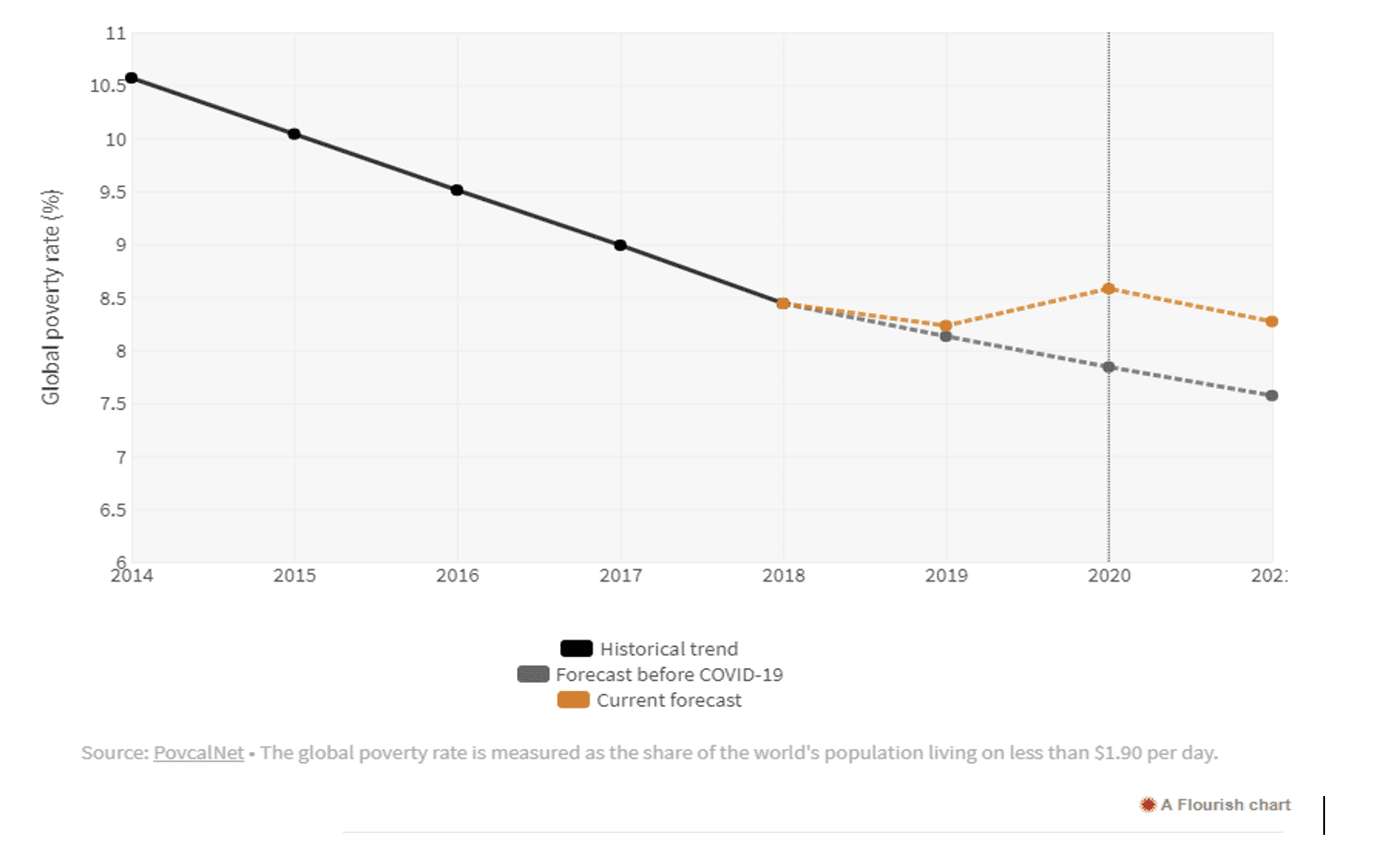
Fragile communities within the African continent are faced by several obstacles to flattening the COVID-19 curve. The lockdowns across the continent have resulted in business and school closures, market disruptions and job losses. This has led to income losses for a significant number of low-income and informal workers in countries such as Ethiopia, Kenya, and Nigeria. According to a survey conducted by Performance Monitoring for Action in DRC, Burkina Faso, Kenya, and Nigeria, the effects of the pandemic have also particularly affected women who have become apprehensive about accessing healthcare as their new immediate priority is feeding their families. A recent study conducted by UN-WIDER estimates that the number of people living in extreme poverty (under USD 1.9 a day) particularly in the Middle East and North African region and the Sub-Saharan regions could rise to poverty levels similar to those recorded 30 years ago 

Our existing programmes are all adapting and adjusting to the challenges presented by COVID-19. Our Financial Inclusion for Refugees Project, in collaboration with FSD Uganda and BFA Global, supports the development of financial products and services offered by Equity Bank Uganda, Vision Fund Uganda and the Rural Finance Initiative. In response to the pandemic, FSD Africa is encouraging digital payments, assisted by the reduction in mobile money fees in the region, as the pandemic redoubles the importance of non-cash alternatives in high population density settings. FSD Africa, in partnership with GiveDirectly and Mastercard Foundation, also continues to disburse cash transfers to young entrepreneurs in Mathare, a large slum in Nairobi, supporting 1,000 beneficiaries, all young people, trying to get ahead in informal business, to invest in their businesses, pay off existing debts, fund education and utilise technology to advance their businesses. This Youth Enterprise Grants programme started long before COVID-19 but has proved itself to be an effective delivery model that others have emulated specifically in response to the pandemic.    

In October, we launched a landmark $6.5 million fund set up between the UK and Germany in collaboration with the Government of Ethiopia to save thousands of jobs in Ethiopia’s textile and garments industry. The development of textile and garment factories in Ethiopia has been transformational to the country’s nascent industrialisation. Yet this progress is under threat by COVID-19 – especially as retailers have cancelled hundreds of millions of dollars worth of orders across the global garment industry. Already, 13 textile firms have stopped operating due to low demand. Preliminary estimates suggest that 1.4 million jobs are under threat although this figure could be as high as 2.5 million. Through the Jobs Protection Facility, factories in Ethiopia’s industrial parks can apply for wage subsidies – similar to the furlough schemes operating in many countries including the UK and Germany – as well as incentives to reward businesses that are able to adapt in response to COVID-19. 

Finally, we have a unique opportunity to ensure the recovery is sustainable, inclusive and green.

The pandemic has caused severe damage to African economies, but crises throw up new possibilities and can be a catalyst for change. This theme spans all areas of FSD Africa’s work – capital markets, insurance markets, remittances, agency banking, green bonds and beyond into new areas such as healthcare, agriculture, eco-tourism and energy. As an example, in our recent publication “Never waste a crisis – how sub-Saharan African insurers are being affected by, and are responding to, COVID-19” we find that while the pandemic has exacerbated pre-existing weaknesses in the insurance sector in SSA, it also provides an opportunity for insurers and regulators to become better equipped to embrace innovation and deepen their insurance markets – an opportunity we want to capitalise on. In addition, we are proactively assisting governments to innovate. For example, we are supporting the Securities and Exchange Commission (SEC) in Nigeria to modernise and transform its ICT systems – demonstrating that technology has role to play even for regulatory agencies in making them more accessible, efficient and resilient.   

Green finance has become a major priority for us. Building on long-standing work in the development of green bond markets especially in Kenya and Nigeria, FSD Africa now has major workstreams in green finance across its entire programme. In partnership with Cambridge University, the Eastern & Southern African Management Institute (ESAMI) and the International Institute for Environment and Development (IIED), we announced a major new green finance training programme which will help policymakers and the private sector alike secure investment in green projects across the continent. Whether the focus is on reducing emissions or resilience, urban spaces or the natural environment, green finance is the cross-cutting catalyst for change and FSD Africa has a major role to play in the run-up to COP26 and beyond, working with excellent partners to power a green recovery in SSA from COVID-19.       

This short round up touches on just a fraction of the work the FSD Africa is doing. I look forward to sharing further updates in the weeks and months to come. For now, I personally want to thank the UK government for its constant support and encouragement in these very difficult times; our implementing partners for their excellent delivery and willingness to adapt; and, especially, to all the FSD Africa team for their tireless efforts to design and manage these catalytic programmes at speed. For more information, please get in touch. 

Africa’s insurance fails to deliver on COVID-19

This article was originally published in the Africa Report on 23 November 2020

The COVID-19 pandemic has shone a light on the need for the African insurance sector to demonstrate its critical role in supporting people and businesses. The pandemic has been the most severe risk event in Africa in years, but many insurers have not delivered on their promise.

If the sector is to improve the narrative and rebuild trust, bold changes need to be made.

Over the past few months, we at FSD Africa have had discussions with over 80 insurers, reinsurers, regulatory authorities, associations and technical service providers across 27 countries in Africa to assess how the sector has been impacted by and is responding to the COVID-19 crisis. The broad consensus is that insurers have not fulfilled the role that the sector ought to play in responding to large systemic risk events.

Many businesses and households paid their premiums thinking they were covered for big risk events like the pandemic, but are now being forced to take general insurers to court to seek redress. In March, the Insurance Regulatory Authority in Kenya announced that all health-related COVID-19 claims would be honoured by insurers. Despite the initial agreement, as COVID-19 related health claims started trickling in, the industry began to backtrack on its commitmentJuly.

Some insurers are now turning away insured individuals who have medical bills worth thousands of shillings, saying that COVID-19 is a pandemic which is not covered by existing health policies. This is one of many examples where the insurance industry has struggled to deliver on its promises at time when it is needed most. As a result, trust is being eroded and many policyholders – whether it be businesses or individuals – are quickly becoming disillusioned with the sector.

However, there are some examples that do tell a more optimistic story. Companies like Prudential Life, which operates across eight African markets, added free new COVID-19 life insurance cover to existing and new clients and staff across their markets. Other companies including Hollard Mozambique and Naked Insurance in South Africa provided relief measures such as premium holidays and reductions to help take some of the financial burden off customers.

Rebuilding trust

In Africa, insurance is already anstry that individuals and businesses are wary of. Many often question its value: why pay money towards something that may not actually happen? Many are willing to take the gamble instead. Unfortunately, COVID-19 has, for the most part, exacerbated this perception, leaving the insurance industry at an all-time low.

With this low comes an opportunity for the insurance sector to step up and rebuild trust while adapting to new ways of doing business. Regulators have a key role to play. In instances where market consolidation is inevitable, regulators must act proactively to unwind weak insurers in an orderly fashion, ensuring that clients remain protected and their claims are honoured. If this transition is well-managed, there is potential to better facilitate market development and investment in products.

The insurance sector should prioritise innovation. The pandemic has highlighted the limited reach of insurance on the continent and the lack of products designed well enough to offer consums value and effectively address their risks and realities. Regulators should engage and support innovators as a key part of the recovery.

Meanwhile, insurers should encourage internal innovation and external collaboration with fintech to rethink and reimagine their approach to reaching new customers.

Now is the time for the insurance sector to reflect on how it can build trust in the sector by responding to customer realities and needs, and by meeting customers halfway. With largescale, systemic and society-wide risks like climate change continuing to gain prominence in the public conversation, insurers should use this time to enhance and accelerate efficiency.

The sector must consider resilience holistically and go beyond offering insurance products. Insurance alone will never be a sufficient mechanism to deal with major risks like pandemics or climate risks. We need to think about risk layering and public pools, consider options for risk prevention, management and mitigation by both pubic and private players. This applies at the macro and micro level. Micro and small businesses have been among the worst affected by the pandemic. They need tangible solutions that help them to understand, prevent and manage their risk – not just basic insurance policies that give poor cover for specific risks.

These are just recommendations. The choice to move forward is up to insurance companies. Do they continue with the old way of doing business or do they reinvent themselves to become more relevant to customer and business needs? What is clear is that insurers must adapt their business for the inevitable large-scale risks to come.

Finance for all: The financial inclusion for refugees project in Uganda

Late last year, we joined FSD Uganda and BFA Global in Uganda where we are implementing the Financial Inclusion for Refugees Project (FI4R) in Nakivale, Bidi Bidi and Palorinya refugee camps and with urban refugees in Kampala. This project aims to drive the availability of financial services to refugees and host communities. We are also conducting research with the aim of understanding the different sources of income for refugees, the uses of their finances and the financial products and services they use and supporting the development of financial products and services offered by Equity Bank Uganda Limited (EBUL), Vision Fund Uganda (VFU) and Rural Finance Initiative (RUFI) and evaluating the impact of those products and services on refugee livelihoods.

The project kicked off with extensive focus group discussions and individual interviews. It is the first Financial Diaries project with refugees which will not only provide a detailed picture, over the course of a year, of the incomes, expenditures and financial flows of refugee households but also reflect on how financial service providers engage with these households and make a difference to their financial picture.

Here are some of the preliminary discoveries from the initial baseline study.,

Unleashing the power of data to transform businesses

Low-income earners, women, and youth who have traditionally been locked out of the financial system are no longer invisible. The advent of mobile money and uptake by this market segment has created data footprints that enable financial service providers (FSPs) to analyse their financial needs. In addition, external research carried out by governments and donors is free and publicly available. This research data is instrumental in enabling financial service providers to obtain a better understanding of clients that they have had no previous interactions with.

The Data Management and Analytics Capabilities (DMAC) project implemented in Sierra Leone, Tanzania and Zambia sought to demonstrate the case for the use of data in the product development cycle of banks, insurance companies, and fintechs. Learnings and lessons from the project implementation have been developed into a toolkit that acts as a guide for FSPs seeking to derive maximum value from their internal data, externally available research data and other third-party data, in order to improve their service offering to new and existing clients.

Read more on how to use data to transform financial services here.,

Sustainable economic development in Africa depends on long-term finance

Long-term finance is vital to driving Africa’s economic growth and development. Africa currently faces significant long-term finance gaps in the real and social sectors. FSD Africa estimates that the funding gap for SMEs, infrastructure, housing and agribusiness is over USD 300bn per year that is currently not being met.

Significant strides have been made during the past decade to enhance financial inclusion across Africa. These improvements in the outreach of financial markets were made possible due to the rapid uptake of digital financial services. The use of new delivery modes, such as agent banking and mobile phones, to send and receive payments has completely reformed the financial sector’s outreach to remote, previously excluded users. While still more at the experimental stage, digital platforms increasingly enable the provision of financial services relating to savings, credit and insurance.

However, although inclusion of a large segment of the population as senders and recipients of dal payments certainly serves to empower a previously marginalized segment of the population, it does little to promulgate the core function of financial markets. The purpose of financial intermediation is to enhance the economy’s productive potential by facilitating more optimal allocation of scarce resources. Channeling capital to the most needed uses will contribute to meeting investors risk/return objectives while also augmenting the growth potential of African economies.

When compared to the ‘inclusion revolution’ of the last 10-20 years, progress in enhancing access to investment finance resulting in greater productive employment has been disappointing. Increasing the availability of long-term finance will support investments in the housing, infrastructure and enterprise sectors thereby, directly creating job opportunities. In addition, such investment in social and real sector projects will enhance productivity, and thereby contribute to poverty alleviation through potential sustained increases iosable incomes.

One of the key challenges faced by investors has been the lack of good quality information and information asymmetry on long-term finance. Enhancing domestic capacity in the provision of long-term finance is crucial to filling the sizeable long-term financing gaps that apply almost universally to the African infrastructure, housing and enterprise sectors. Only by harnessing the contribution of long-term finance made available by the private sector will African countries effectively leverage the limited resources made available by the public sector and by donors. Often, African policymakers are confronted with challenges in balancing large and invariably well-justified expenditure demands with very limited fiscal resources, and as a result governments resort to domestic security issuance to fund their current expenditures.

As investors find it more attractive to put their money in ‘risk-free’ government-issued securities, increased issuance of such securities reduces the willingness of loinvestors (banks and institutional investors) to take part in funding risky productive investments. In order to stem this ‘crowding out’ of risk-capital by the government, a concerted effort is required to strengthen management of fiscal resources; to better utilize existing sources of long-term funding, as provided by banks and institutional investors; as well as to develop new sources of domestic funding. Over time capital market financing may come to play a larger role in filling the financing gap that exists in developing economies, provided the approach adopted is appropriately tailored to the development challenges faced by small, underdeveloped markets.

In conclusion, the objective of promoting sustainable economic growth and job creation through greater provision of long-term finance is crucial for Africa and its people. It is imperative that decision-makers, both policymakers, investors, development finance institutions as well as development partners embrace measures that will enhance productivvestment in support of Africa’s economic development.

The Long-Term Finance Initiative

We have collaborated with the German Development Cooperation (GIZ), African Development Bank (AfDB) and the Centre for Affordable Housing Finance (CAHF) to support the Long-Term Finance Initiative, which has two main interventions:

  1. The Long-Term Finance Scoreboard:

The purpose of the Scoreboard is to assemble information about the sources and uses of long-term finance in Africa – whether provided by governments, donors, foreign direct investors or the domestic private sector. Previously, information and data on the availability of long-term finance in Africa has been scarce, spread across numerous sources, or simply unavailable. Thus, the intention of the long-term finance initiative is both to bring together existing sources of information as assembled by third parties and to augment the availability of data as regards long-term finance through collection of primary data. The Scoreboard also provides bench-marking that will facilitate comparison of how countries are performing vis-à-vis one another, thereby engendering interest and applying peer pressure among countryakeholders.

The purpose of the Scoreboard is to provide information to policy makers, private investors – both domestic and foreign investors – and development partners to support their decision-making as regards investments in Africa. The pilot website currently under development will be published in the coming months with a view to soliciting feedback and enhancing the scope and quality information provided.

Link to the live and online scoreboard: http://afr-ltf.com

  1. In-country diagnostics:

The purpose of in-country diagnostics is to identify effective ways to deepen local markets for long-term finance. By mobilizing local, private sources of finance and more effectively leveraging funding provided by the public sector, African economies will gradually be able to reduce reliance on donor funding and foreign direct investment. The diagnostic framework is based on a comprehensive approach to long-term finance that ranges from contributions of governments, donors, and private sector funding, whether provided by local or foreign investors, to funding intermediated by banks and capital markets, and other sources of private finance, such as private equity or venture capital.

The intention is that country diagnostics will inform country reform programs and create momentum for dialogue among key public and private sector stakeholders, thereby enhancing the focus and effectiveness of implementation efforts.,

Value for money approach for the FSD network

Financial Sector Deepening programmes (FSDs) face increasing pressure to show that they provide value for money (VfM). This includes demonstrating that they are delivering their interventions efficiently and achieving their desired development impact. To achieve this, strengthening of internal procurement processes, as well as monitoring and results measurement (MRM) approaches, continue to be key areas of focus.

With these objectives in mind, FSD Africa commissioned the development of a new VfM approach, as a resource for the FSD Network – a group of FSD programmes including eight national programmes in Ethiopia, Kenya, Mozambique, Nigeria, Rwanda, Tanzania, Uganda, and Zambia and two regional programmes (FinMark Trust in Southern Africa, and FSD Africa).

The approach was developed by Oxford Policy Management (OPM) and Julian King & Associates, building on OPM’s approach to assessing VFM. This approach treats VfM as an evaluative question about how well resources are being used, and whether the resource use is justified. Addressing an evaluative question requires more than just indicators – it requires judgements to be made, supported by evidence and logical argument.

The VfM approach emphasises evaluative reasoning as a way to make robust judgements, transparently and on an agreed basis. It involves developing definitions of good performance and VfM, which are agreed in advance of the VfM assessment. The definitions include criteria (aspects of performance) and standards (levels of performance) developed specifically for the FSD context. Criteria and standards provide a systematic framework to ensure the VfM assessment is aligned with an FSD programme’s theory of change, collects and analyses the right evidence, draws sound conclusions, and tells a clear performance story.

FSD programmes are complex and their performance depends not just on quantitative indicators of delivery (such as number of projects completed) but also on the quality of implementation (e.g. sound adaptive management to respond to a changing environment and to act on emergent opportunities and learning). A mix of evidence is necessary to support well-informed, nuanced judgements about FSD performance and VfM.

Indicators play an important role in measuring some aspects of FSD performance. But restricting a VfM assessment to indicators alone would run the risk of missing important information about the quality of delivery and outcomes – for example, focusing on aspects of performance that are easy to measure at the expense of aspects that are important but difficult to quantify.

Therefore, the new VfM approach accommodates a mix of indicators and narrative evidence. The approach seeks to maximise use of rigorous evidence from existing MRM frameworks. It is aligned with the FSD Network’s MRM frameworncluding  Impact-Oriented Measurement  (IOM) Guidance (on how FSDs can better measure their contributions to changes in the financial markets they seek to influence), and the FSD Compendium of Indicators (setting out a common theory of change and related measurement framework that form the basis of common indicators to track FSD outcomes and impact).

The VfM approach is designed to support accountability as well as reflection, learning and performance improvement across the FSD network. It can also be used to systematically identify areas where MRM systems can be improved, to provide better evidence and benchmarking of sound resource management, delivery, outcomes and impacts.

The VfM approach is detailed in our new VfM Framework and Guide. The VfM Framework explains the conceptual design and rationale for the approach. The Guide sets out a practical, user-friendly, step-by-step approach for design, assessment and reporting on VfM. These documents will support a consistent approach to VfM assessment and reporting across the FSD Network, while retaining sufficient flexibility to reflect differences in context.

These frameworks have undergone rigorous development and testing over the past 18 months. As detailed within the documents, this has included a consultative process with FSDs and donor agencies, a staged approach to framework development with input from all FSDs, a full-day workshop with FSD MRM teams (at the FSD Conference in Livingstone, Zambia, November 2017), and piloting of the approach during 2018 with FSD Moçambique, FSD Uganda, Access to Finance Rwanda, and FSD Africa.

It is hoped that FSDs will use this comprehensive VfM assessment approach to support accountability, learning, improvement, and making investment decisions. The FSD MRM Working Group serves as an ideal community of practice to support effective and consistent application of the approach.

Using development capital to finance sustainable growth in Africa

There is much talk lately about blended finance, the use of capital from public or philanthropic sources to increase private sector investment for sustainable development. I was on a panel earlier this year when one of the speakers described it as ‘the trampoline that can give you the bounce needed to launch.’

Smart deployment of blended finance not only provides early capital to sustainable solution but can guarantee long-term financing by attracting private and institutional investors.

FSD Africa Investment’s form of blended finance, development capital, is designed to invest in untested, breakthrough ideas that we believe can have a transformative impact on the continent’s sustainable growth. Our investment works to take early stage risk, allowing other sources of risk capital to invest in high-impact financial sector intermediaries and business, alongside us. Why is this important?

Africa needs investment capital with different risk/return profiles

Reaching the S require private and institutional capital to invest in structures that achieve development outcomes in a financially sustainable way.

We invest in high-potential businesses that are often deemed too risky for commercial investment.  The ‘trampoline effect’ makes it easier for commercial capital to flow to ventures that now match their risk/return profiles.  For example, our investment in <a”https://fsdafrica.org/programme/mfs-africa/”>MFS Africa, a remittance payments provider, enabled them to close their Series B round, and grow to raise capital in future funding rounds.

African SMEs need early stage risk capital

For investors seeking returns, Africa is a continent of opportunity, but also high risk.  Medium and SMEs account for 90%1 of Africa’s businesses and contribute to 40% of GDP, as well as creating 80% of the continent’s employment. The reality, however, is that the majority of African SMEs are in the early stages of their development, with investment needs between USD 50,000 and USD 500,000, but struggling to access capital to expand and grow into larger and more sustainable companies as they are deemed to high risk.

Our mandate is to change this perception, by testing new and alternative financing structures that can make investing in Africa’s SMEs more attractive to investors.

Africa needs investments in businesses that will increase access to basic services

The majority of people in Afrnot have access to affordable health services, opportunities to save for old age, safe water and clean energy or housing. With a projected population of 2.4 billion by 2050, the need has already surpassed the ability of governments and development finance institutions to address this crisis.

FSD Africa Investments development capital is critical to engaging the private sector, as well as institutional and impact investors, to fund businesses and products that can expand access to basic services for everyone. For example, we are already investing in an affordable housing finance company and a micro-pensions start-up.

Africa needs more private sector solutions for climate change

Millions of vulnerable people are falling into poverty as a direct consequence of climate change. Extreme climate conditions are affecting livelihoods – with loss of property, income, access to clean water and a safe environment. Trillions of dollars of investment are needed to combat climate change. We need to move quickly towards renewables, sustainable agriculture and energy efficiency.

We deploy development capital to mobilize financial resources into financial platforms and solutions to mitigate the causes of climate change and to adapt to its effects, reducing its impact.

Africa’s needs to harness its own sources of capital

Foreign Direct Investments to Africa have been on a downward trend over the last five years, falling from USD 74 billion in 2013 to 42 billion in 2017. Yet, Africa has large pools of its own capital through savings, insurance, pensions contributions but very little of thisoney finds its way back to the real sector or into alternative asset classes, such as private equity funds.  Finding investment platforms that use blended finance structures to manage the risk/return profiles would support a better allocation of this capital to the real economy.

Unlike many development finance institutions, we have a primary mandate to drive impact, which is secondary to the need to create return on our investments. We invest in order to drive impact and create solutions to the most pressing challenges facing Africa’s financial markets.

By stimulating and increasing the flow of commercial and institutional capital into financial firms and funds, we’re ensuring that Africa’s financial sector can serve its local communities and economies in the long-term, reducing the need for development funding in the future.


<cite”blockquote-source”>1The Challenges and Opportunities of SME financing in Africa, London Stock Exchange Group,

Fidelity bank Ghana’s journey to financial inclusion

Over the last few years there has been growing criticism about banks’ inability to spearhead innovations to meet emerging market needs. This may be partly true due to the high unbanked population in Sub-Saharan Africa and the cost to serve. Often, banks have innovative ideas, but need technical assistance to be able to build capacity for idea generation, prototyping and commercialization. As a result of this, banks are collaborating with like-minded partners to  help them innovate and to remain competitive in their markets.

In 2013, Fidelity Bank Ghana Limited (FBGL) saw the gap in financial services for the large unbanked population and was the first bank in Ghana to set up a dedicated unit to drive its Financial Inclusion agenda. The bank sought approval from Bank of Ghana to launch a low KYC account named Smart Account and the first bank led Agent network.  The Smart Account opened via mobile app with just one National ID, made it easy anyone to open a bank account whilst the Agent network se as an alternative low cost and effective channel to include largely unbanked and underserved rural populations. FBGL sold its vision to FSD Africa, and due to an alignment of objectives, FSD Africa agreed to support the project. Dubbed “Project 5x5x5”, FBGL aims to open 5 million accounts in 5 years through 5,000 agents.

The Project 5x5x5 started in earnest in 2015 with a sales force for recruiting agents and acquiring customers. This was a welcome change for the unbanked and underbanked in Ghana, which led to Smart Account winning an award for Best Bank in Product Innovation at the Ghana Banking Awards.  Due to unprecedented challenges, the project slowed down for several months to enable the technical teams from both institutions review some of the critical aspects on which the project deliverables depended. FBGL on its part was aware of the market backlash in response to withdrawal or slowed services but managed to counter this through by stepping up communication with its customers to allay any fea the market.

We are now happy to say that the project is back on track. A total of 2,600 Agents have been enrolled and over 790,000 Smart accounts opened. The split between male and female customers is at 49% and 51% respectively which is very impressive given the sub-Saharan context where female inclusion lags  behind men at 23%. The bank’s capacity to serve the underserved segment has been strengthened and internal reorganization of key departments within the Retail division and training of staff critical to the delivery of the project as well as the users, reinforced.

The bank has seen the value of Agency banking which is no longer viewed as a stand-alone project but one that has been mainstreamed into the bank’s business-as-usual processes. Agency banking is no longer a channel for inclusive-banking customers but has evolved into a channel that serves all banking segments unlocking a lot more value for the bank than initially envisaged. Additionally, the project has had to adapt to the changing ecom majorly influenced by digital innovations. Towards this, the bank has developed digital channels in partnership with Telcos which has enabled the roll out of digital savings and credit products. Soon customers will be able to open accounts on their mobile phones (self-onboarding) and access digital credit via USSD.

The success of this project relies on the close collaboration of FBGL and FSD Africa, and important lessons have emerged from this. Close working relationships are critical to project management in that they enable for candid discussions on performance leading to quick interventions where needed. In addition, being aware of the changing financial ecosystem has enabled the project to incorporate critical work-streams, like digital add-ons that were initially not part of the project, but critical to maintaining the bank’s relevance in the marketplace.

Although there were setbacks in the early stages of the project that could have easily discouraged the teams, FGBL had made a strategic decision reach the lower income segments through the Smart Account with a simplified way of account opening using a sales force, agents and bank branches. , This long-term vision fortified the determination to find solutions to emerging challenges. FSD Africa has been adaptable to emerging dynamics that have necessitated changes at various stages of the project. This is in line with its objective of incentivising financial institutions to innovate by availing the necessary technical assistance and supporting partners to iterate for optimal delivery of the projects.

This project is a clear demonstration of managing projects for results, and partners working together to overcome emerging challenges as they strive towards achieving the bigger goal. The project is on course to deliver the ambitious 5x5x5 objective with visible market system changes. Already, the Ghanaian market is responding positively to this innovation, as two banks have since launched Agency banking networks. FSD Africa is glad to have supported FBGL to set the pace in Ghana, and their financial landscape is permanently changed.,

Empowering women through savings groups

“Our economies are built on the back of women’s unpaid labour at home”

– Melinda Gates

Empowering women means, at its core, providing women with strength and confidence to control their lives, and knowledge of their own rights so that they can actively engage in their communities.

Increasing women’s access to financial services allows them to have better control over financial resources and improves independence and mobility. It also fosters greater investments in income-generating activities, and the ability to make decisions that serve the needs of women and their families. In short – financial inclusion empowers women.

But how do women, especially those living in rural areas, access financial services?

Savings groups (SGs) and access to finance

SGs are easily accessible groups of people who get together regularly to save money and borrow from the group savings, if needed, according to rules established by the group.

Programmes that promote SGs typically focus on women’s economic empowerment and measure change through quantitative indicators of economic well-being. This is mainly because SGs enable the accumulation of funds which can be used as capital for micro-enterprises and for such programmes, the quantification of results is easier. This approach, however, provides a limited understanding of the role of SGs in affecting various dimensions of women’s empowerment, such as social, political and reproductive empowerment.

The SEEP network, in partnership with FSD Africa and Nathan Associates, commissioned a savings group research across sub Saharan Africa. The aim of the research was to highlight good practices in the design and monitoring of Savings Group programmes for women’s empowerment outcomes. The research also led to the development of a monitoring tool for the measurement of the various dimensions of women’s empowerment within SGs.

Savings groups and women’s empowerment

The research built upon pre-existing frameworks and for the first time captured women’s empowerment in the specific context of SGs.

In particular, seven ‘domains’ or clusters of core areas within which empowerment can be measured have been identified. These are i) Economic independence; ii) Confidence and self-worth; iii) Decision-making; iv) Voice and leadership; v) Time use; vi) Mobility; vii) Health.

Through these domains, SGs market actors can design SGs interventions with sight of the empowerment impacts they aim to achieve. They can also observe the likelihood of empowerment outcomes and impacts across different SGs intervention types:

i) Savings Groups only interventions, for example, a development institution working on financial inclusion could adopt an SGs only approach to enable target groups to access appropriate financial services from formal financial institutions. For these kinds of interventions, empowerment impacts are strongly observed in 2 out of the 7 domains, economic independence and confidence and self-worth. Through this type of intervention, it was observed that participants gained access to appropriate financial services, enhanced financial management skills, expanded social and support networks. Fewer impacts on mobility, time-use and health were observed.

ii) Savings Groups in combination with other economic development activities, for example, a Savings Group initiative could be combined with financial education, technical or vocational training, or specific income generating activities. Strong empowerment impacts are observed for such interventions for 3 out of the 7 domains, that is, economic independence, confidence and self-worth and decision-making. Improved decision-making is observed through participants engaging in employment or self-employment and demonstrating abilities in influencing relevant decisions in their homes and communities.

iii) Savings Groups within other integrated programming i.e. programming that is aimed at weeding out harmful social norms & inequalities: for example, a Savings Group initiative could be integrated with gender programming that challenges harmful social norms such as domestic violence, female genital mutilation, negative attitudes to family planning/reproductive health, etc. The programming approach could combine SGs with education and capacity building for members accompanied by gender dialogue sessions, engaging members and their spouses, community and religious leaders.

For such interventions, impacts are strongly observed within 5 of the 7 domains: economic independence, confidence and self-worth, decision-making, voice and leadership and health. Empowerment demonstrated by leadership is observed through changes in gender norms, especially within women’s economic participation; empowerment in health through increased and improved investments in maternal, neonatal and child health or improved attitudes and norms with respect to reproductive and sexual rights. For empowerment demonstrated by time use, impacts are observed through more equitable allocation of unpaid household labour.

An example of an impactful SGs within an integrated programming intervention (i.e. intervention option iii), is the ‘Towards Economic and Sexual Reproductive Health Outcomes for Adolescent’ girls (TESFA) project under CARE International in Ethiopia. Girls within SGs provided with sexual and reproductive health (SRH) training demonstrated both economic and health related gains from programme participation. These were observed through, increased SRH knowledge, improved communication on SRH, decreased levels of gender-based violence, improved mental health, increased social support and gender attitudes.

A systematic approach to analyzing women’s empowerment

Saving Groups create economic independence for women but in order to analyze their contribution to other domains of empowerment, there is need for a systematic design of a monitoring and results measurement approach. Through this research, a toolkit that provides guidelines as to how to create an evidence-based theory of change was developed. Drawing from existing frameworks economic empowerment and existing data, the toolkit proposes a more holistic framework for SGs, based on the seven domains of empowerment discussed above. It also provides some standardized indicators to improve the comparability and aggregation of results across projects and organizations.

For more information and application of the WEE toolkit click here.