Country: Ghana

Africa is part of the solution to climate change, not just a victim

African and global leaders are gathering in Nairobi for the Africa Climate Summit which opens on 4 September.

Convened by President William Ruto of Kenya in conjunction with the African Union, the summit will address the urgency of marshalling resources to respond to the climate crisis, amid signs that we are entering unchartered territory.

This summit will also be about challenging the idea that African nations are solely victims suffering the impact of climate change, despite bearing little responsibility for it. Instead, the summit will aim to show all the ways that Africa can transform its economy by playing a major role in accelerating global decarbonisation.

Developing countries need access to energy, not access to fossil fuels

Underlying this is the growing realisation that we need to update our “vision” of growth and development, with its outdated assumption that economic growth must always depend on industries and practices which harm the planet.

As Ugandan climate justice advocate Vanessa Nakate has observed, “developing countries need access to energy, not access to fossil fuels”.

The possibilities for Africa and the world in an alternative, climate-positive growth path are immense. Africa is home to some of the world’s most potent renewable resources: its untapped renewable energy potential is over 50 times the world’s anticipated electricity demand by 2040. Importantly, in many African countries, solar energy can provide year-round electricity – making it a viable energy source even for industrial applications.

Moreover, because Africa contains relatively little in the way of established, highly-emitting industrial infrastructure, almost all newly generated renewable energy can be deployed directly towards greening local, regional and global economies. For example, Kenya already derives over 90% of its grid energy from green sources – and has only just begun to scratch the surface.

There is also a growing ecosystem of African start-ups using technology for green industries and processes across the economy, from clean cooking fuel to carbon capture and storage solutions. But these require risk capital and hands-on help to scale, attract further investment, and reach their potential. This was the thinking behind the partnership between FSD Africa Investments and Africa Climate Ventures – a new investment vehicle which aims to build Africa’s first “climate unicorns”.

Green Investment

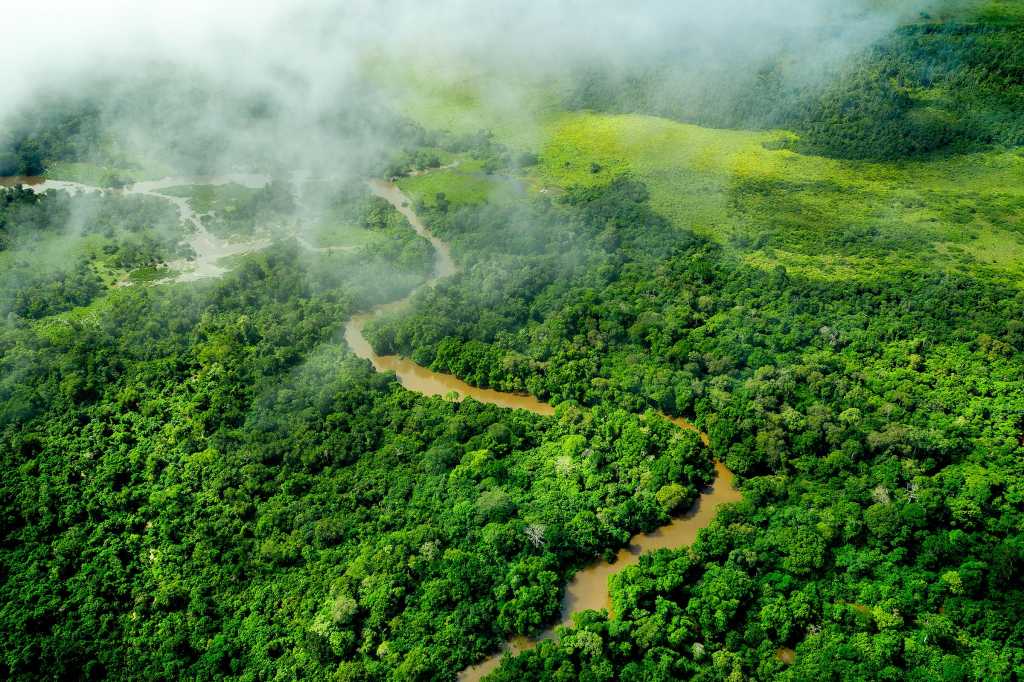
Africa boasts some of the world’s greatest biodiversity, with massive natural mature carbon sinks consisting of forests, peatlands, mangroves, and 60% of the world’s remaining unused arable land. To realise global net zero by 2050, we need to protect our planet’s natural carbon sinks, make our consumption greener, and remove carbon from the atmosphere at a massive rate. More than any other region, Africa can rapidly scale these activities, providing immediate, diverse, and lasting climate benefits.

Uniquely among global locations, scaling up many of these opportunities in Africa does not require complex trade-offs, or painful transformations. In fact, the process could provide much-needed jobs for the continent’s youth, as well as desperately needed energy access and sustainable economic growth.

Many of these opportunities will offer healthy financial returns, if there is fair and equitable access to financial markets. But realising this opportunity will demand unprecedented levels of investment. Indeed, by developing its renewable potential for on-continent use, Africa could generate reliable electricity access for all Africans – including the nearly 600 million currently without any energy access – by 2030 whilst reducing total emissions associated with energy production by 80% and with 30% lower costs. However, this will require 40% more upfront investment.

So the need for finance and investment will need to be front and centre of discussions at the Africa Climate Summit. That means ensuring reforms to the global financial architecture take account of the climate crisis and addressing the factors that are restricting the flow of green finance. It also means recognising that the perceived higher riskiness of investments into green assets in developing countries requires a big increase in the availability of concessional and smart capital as well as greater financial innovation to address systemic barriers.

Africa is ready to play its part and, as this summit will show, it offers many opportunities for green capital investment. The rest of the world can accelerate and amplify this by partnering with, and investing in, the continent as well as supporting market building initiatives to ensure it has the capacity to absorb the capital needed. If they do so, then Africa and her young, dynamic population can truly play their role as global climate leaders.

James Mwangi is CEO of Africa Climate Ventures and Anne-Marie Chidzero is CIO of FSD Africa Investments.

Read original article

Conceptual Framework of Contingent Liabilities and Guidelines for Managing Loan Guarantees and On-Lending in The MEFMI Region

1.1. Purpose of the Guidelines

The purpose of these Guidelines is to help countries build frameworks for managing loan guarantees and on-lending, by outlining standard structures and processes driven from sound
practices, at regional and global level. A secondary purpose is to provide key information on identifying and monitoring selected sources of contingent liabilities.

The MEFMI member countries are expected to adapt the Guidelines to develop their own frameworks, considering their specific circumstances.

1.2. Managing contingent liabilities

Contingent liabilities are sources of fiscal risks due to the uncertainty that is structurally embedded in them. History has shown that if governments do not manage fiscal risks arising from contingent liabilities and take necessary measures in a timely manner, they can be caught unprepared for their fiscal burden. Therefore, the objective of contingent liability management is to mitigate and manage fiscal risks arising from these liabilities both at the instrument and portfolio level.

Contingent liability management also aims to ensure that the decision makers are well informed about the costs and risks of the contingent liabilities they are considering beforehand. The information assists in the assessment of the contingent liability against other forms of government financing modes, such as on-lending, capital injections and direct subsidies. This objective is applicable for contingent liabilities that are explicitly issued by the government, e.g. loan guarantees. To achieve this objective, the costs and risks of the contingent liabilities should be assessed ex ante.

Study on Managing Sovereign Debt in Times of Crisis: Economic Impact of COVID-19, Policy Responses and Implications on Debt Dynamics

Introduction

The COVID-19 pandemic resulted in an unprecedented health and economic crisis across the world. Although sub-Saharan Africa has suffered a smaller death toll compared to the rest of the world, the pandemic has led to a sharp economic downturn in the region. As the pandemic spread, MEFMI member states joined the rest of the world in implementing measures to curb the spread of the virus. Such measures included national lockdowns, overnight curfews, border and port closures, social distancing, and greater rigour in hygiene, such as washing of hands and hand sanitisation.

While such measures have saved lives, they have at the same time severely attected economic activity and negatively impacted the livelihoods of millions of people, leading to declines in aggregate demand and output. The services sectors, which include tourism, transport, education, entertainment, sports and restaurants, were the most affected The economic effects of the pandemic were exacerbated by the presence ot a large intormal sector, which Is prevalent in most MEFMI member states. Besides domestic factors, the region was also affected by a deteriorating external environment, characterised by weak global demand and supply chain disruptions. T his affected tourism, exports receipts, foreign direct investment (FDI) inflows and international reserve positions, and led to a shortage of key imports. As a result, COVID-19 led to a decline in GDP growth rates. This in turn affected local revenue collections, in the face of the increased expenditure required in order to save lives and livelihoods.

As elsewhere in the world, MEFMI countries had no choice but to respond to the crisis. The effect of the pandemic on member countries varies from country to country in view of the diversity of the group. MEFMI countries span three income groups. Four countries are classified as low-income: Malawi, Mozambique, Rwanda and Uganda; seven as lower-middle income: Angola, Eswatini, Kenya, Lesotho, Tanzania, Zambia and Zimbabwe; and two as upper-middle income: Botswana and Namibia. The structures of the various economies in the group also differ. MEFMI includes mineral-rich and oil-exporting countries such as Zambia, Botswana and Angola, while other countries …

Study on Managing Sovereign Debt in Times of Crisis: External Financing Operations

Introduction

Since the beginning of 2020, countries around the world have been grappling with the worst economic, social and sanitary crisis of recent times. At the end of March 2020, the IJN was already warning about a ‘looming financial tsunami* for developing countries. Then, the dark clouds from the COVID-19 pandemic suddenly clogged all aspects of economic and social life. The pandemic brought about a severe contraction of productive sectors and overall GDP, increased unemployment; and put serious pressure on countries’ fiscal balance sheets through reduced revenue collection, the need for massive budgetary reallocation to finance urgent expenditure in health and other essential services, and the urgent need to put in place social safety nets for the most vulnerable segments of the population.

The COVID-19 pandemic is still evolving as the virus continues to mutate and infect more people around the globe. Initially, some observers felt that Africa had not been unduly affected by the spread of the pandemic.

However, it has become clear that the pandemic’s economic and social impact on African countries has been as considerable and pronounced as in other parts of the world. Despite recent progress in strengthening health systems, dealing With future waves of COVID-19 is likely to be more challenging in Africa than in other parts of the world, given limited access to healthcare across the continent and the availability of vaccines. According to the World Health Organization (WHO), as of mid-January 2022, only 17.31 vaccine doses per 100 population had been administered in Africa, compared to 143.14 in Europe, 144.4 in the Americas, 102.87 in South-East Asia and 185.21 in the Western Pacific. If indeed the reduction in mortality rates experienced in other continents is attributable to vaccination, then as the least vaccinated continent Africa remains very much at risk.’

According to the IMF, since the onset of the COVID-19 pandemic, real GDP of sub-Saharan African countries fell by 1.9 per cent in 2020, the worse performance on …


Study on Managing Sovereign Debt in Times of Crisis: Local Currency Bond Markets

Introduction

The COVID-19 pandemic that spread across the world in early 2020 triggered one of the most devastating global health and economic crises in modern history. The crisis affected all facets of socio-economic functioning, permeating through the financial markets. According to the IMF, the impact of COVID-19 on developing countries was historic and unusual in its severity as it induced debt stresses that exceeded past experiences across several dimensions (IMF, 2020). These included a sudden increase in government borrowing needs, a sharp downturn in economic activity, strain in market conditions and disruption in normal operations.

As reviewed in Chapter Two of this study, managing sovereign debt proved complex and challenging, particularly for debt managers in developing economies. Most of them entered the crisis with
pre-existing vulnerabilities (AfDB, 2021), especially limited fiscal space due to other localised shocks. Faced with significantly narrow fiscal space compared to its situation during the 2008/09 global financial crisis, sub-Saharan Africa was caught with limited room for manoeuvre. Specifically, 16 countries were either at high risk of debt distress or already in debt distress prior to the pandemic. In addition, their funding conditions remained highly vulnerable to global risk dynamics and therefore historically more volatile than in advanced economies (OECD, 2020). The stage of development and efficiency of local currency bond markets exacerbated debt managers’ challenges.

Operational challenges escalated to unprecedented levels during the crisis. It became evident that the pandemic created challenges on how to meet increased government borrowing requirements
against a backdrop of volatile market conditions, both locally and globally Worse still, the adoption of remote working arrangements changed the overall control environment in which staff performed their roles, thus exacerbating the vulnerability of debt management offices (DMOs) to operational risks. Generally, it is more challenging to manage risks in a dispersed remote working situation than in an office

Study on Managing Sovereign Debt in Times of Crisis: Governance and Operational Risk Management Frameworks for Public Debt

Introduction

The COVID-19 pandemic has caused devastating economic and social disruption across the world. It has especially affected developing countries, which were not fully prepared and had limited leeway to take the required preventive measures.

As seen in previous chapters of this study, not only was the impact of COVID-19 historic and unusual in its severity for developing countries, it caused immense debt stresses and put fiscal pressure on governments’ economic and financial fortunes. Faced with increasing requirements to spend on health and other essential services at a time when economic activity had all but stalled and revenue streams dried up, the need to resort to additional government borrowing became inevitable. That pushed the average general government gross debt-to-GDP ratio to 57.8 per cent at the end of 2020 for the 45 countries in the sub-Saharan Africa region, from 51.5 per cent in 2019. This was the highest level in almost 20 years, and an increase of more than six percentage points in just one year (IMF, 2021).

The fact that developing economies were already facing different vulnerabilities before the pandemic made it more difficult for them to manage the level of sovereign debt. Pressures particularly came from issues such as fast-growing interest expenses as a share of revenue, rollover risks due to shorter debt maturities, a narrowing of the differential between the real interest rate and growth, expanding contingent liabilities and, in some countries, debt collateralisation with limited transparency (AfDB, 2021). As seen in Chapter One of this study, the region entered the crisis with significantly less fiscal space than it had at the onset of the global financial crisis of 2008/09, with 16 countries either at high risk of debt distress or already in distress in 2019. At the same
time, the funding conditions of these countries were vulnerable to global risk sentiment and therefore historically more volatile than in advanced economies (OECD, 2020).

United Kingdom Government reiterates commitment to Africa’s green industries

In line with the UK Government’s commitment to supporting clean, green and sustainable economic growth in Africa, UK Foreign Secretary James Cleverly visited a Nigerian e-mobility platform and electric vehicle assembler, MAX Nigeria.


With support from the UK-funded Manufacturing Africa programme, MAX raised $31 million to ramp up the assembly of electric two- and three-wheelers. MAX is now gearing up for a third capital raise, to fund its expansion to become a regional e-mobility player. MAX Nigeria has empowered over 21,000 drivers operating in 8 cities within Nigeria and has contributed to cutting 52 metric tons of CO2 emissions from the environment.

Manufacturing Africa’s team of McKinsey consultants conducted a market assessment of the electric vehicle value chain for MAX, contributing to their electric vehicle (EV) scale-up strategy. UK-linked financiers including Novastar (backed by British International Investment) and Shell Foundation are some of the organisations financing MAX’s growth. MAX has also found a UK business partner in Field Ready, to support them on recruitment.

Work with MAX is part of the UK’s support for economic growth, job creation and value-addition in Africa that aligns with global climate priorities.

British funds continue to support game-changing entrepreneurs and companies in Africa. British International Investment manages a $4.7bn investment portfolio in Africa, including 86 companies and 43 funds in Nigeria alone. Other funding sources include:

  • Infracredit, which provides local currency guarantees to unlock long-term infrastructure financing in Nigeria
  • FSD Africa Investments, which invests in order to improve the financial instruments supporting Africa’s green economic growth
  • the Climate Finance Accelerator, a public-private finance initiative that supports low-carbon projects

Importantly, the UK also provides support for companies to access investment, whether from the UK or elsewhere. The Manufacturing Africa programme is supporting 22 manufacturers to land investments in Nigeria, with a pipeline of $664m+ foreign direct investment (FDI). The programme supports over 120 companies across 5 countries in Africa, which are mitigating 239,000 tonnes of carbon dioxide, while creating 14,000 new jobs.

British High Commissioner to Nigeria, Richard Montgomery said: “I am delighted to visit MAX Nigeria with our Foreign Secretary James Cleverly. MAX are truly innovative and entrepreneurial, solving a thousand problems at once to bring affordable electric vehicles to West African riders.”

It is fantastic that a combination of UK public and private sector support is helping MAX to create jobs, bring new skills into the market, and solve climate change challenges. We will continue to support companies doing this groundbreaking work on the continent.

Chief Executive Officer and Co-Founder of MAX Nigeria, Adetayo Bamiduro said: “Our mission at MAX is to continue scaling the impact of our vehicle subscription platform across Africa and to deliver on our commitment to provide sustainable income to millions of mobility entrepreneurs by enabling them to access income-generating, energy-efficient, and electric vehicles that meet the essential needs of Africans.”

Read original article

New report lays out urgent actions, that regulators can take to safeguard the new agenda for nature – key to Africa’s financial future

Nairobi, 25 July 2023: A new report from the collaborative forum of African financial institutions the African Natural Capital Alliance (ANCA) and management consulting firm Oliver Wyman has underlined the growing importance of African regulators acting on nature-related risks in line with their mandate of maintaining financial stability.

The report “Improving the transparency of nature-related risks in Africa: the emerging regulatory agenda”, outlines how financial sector stakeholders, including regulators, are increasingly recognising that the depletion of nature poses risks to financial and economic stability.

The report makes clear that the issue is a particularly urgent one for sub-Saharan Africa as its economies are disproportionately dependent on nature. For instance, over 70% of people living in the region are dependent on forests and woodlands for their livelihoods, compared to about half of the total world’s GDP generated in industries that depend on nature. The rate at which nature in Africa is being lost also exceeds the global average. For example, Africa’s Biodiversity Intactness Index (BII) score – which measures the number and abundance of species on land – declined by 4.2% between 1970 and 2014, considerably higher than the global BII score decline of 2.7% over the same period.

In East Africa alone, failure to protect natural capital as a whole (including its stocks of soil, air, water, and all living things, which underpin the region’s economy and human well-being) would result in an economic loss of more than $11.3 billion a year, according to an assessment commissioned in 2021 by USAid.

Dorothy Maseke, the Nature Lead at FSD Africa and ANCA, says: “Enhanced transparency of nature-related risks is fundamental to managing them effectively. This is the case for individual financial institutions, which need visibility of the nature-related risks in their lending, underwriting, and investment portfolios. And it is also the case for regulators, so that they can identify nature-related risk concentrations for regulated entities and assess whether they are being managed effectively.”

African regulators embracing this complexity is so important, she adds, because the continent is disproportionately exposed to nature-related risks.

Sandra Villars, senior advisor at Oliver Wyman, says: “The Global Biodiversity Framework (GBF), which was adopted in December 2022 by 188 governments across the world, aims to address biodiversity loss, restore ecosystems, and protect indigenous rights. This landmark agreement prompts governments to introduce policies to manage nature loss, which will lead to regulators having to act, and highlights the opportunities for regulators to do so proactively.

African regulators could thus benefit from engaging with this new agenda early and being at the forefront of integrating nature into their regulatory regimes.”

As summarised in the report, there are four simple steps regulators can take as part of a nature-related disclosure roadmap while policy frameworks are being finalised in their jurisdictions:

  1. Engage with finance and environment ministries to align their regulatory approach with
  2. government’s policy agenda on nature
  3.  Assess internal capacity and act on gaps
  4.  Assess the capacity for action among regulated entities
  5.  Engage in voluntary nature networks such as the Sustainable Insurance Forum (SIF), the Network for Greening the Financial System (NGFS), the African Natural Capital Alliance (ANCA), and the Task Force on Nature-Related Financial Disclosures (TNFD)

Framework for a national nature strategy: Facilitating the development of national nature strategies that are aligned with the Convention on Biological Diversity

Executive summary

The economies of African countries, like those of countries in other global regions, are heavily reliant on natural resources. Nature loss and degradation pose signifi-cant risks for economic development and well-being. Investments to protect and restore natural environments can help safeguard African and other global regions from risks associated with environmental degradation and unlock new economic opportunities.

A national nature strategy can facilitate countries’ efforts to navigate an increasing-ly complicated normative landscape characterized by numerous compliance obli-gations and commitments, including those stemming from the Kunming-Montre-al Global Biodiversity Framework, national biodiversity strategies and action plans, and countries’ nationally determined contributions. National nature strategies can help countries respond to nature-related risks and opportunities, align policies with international, regional and market priorities, and make implementation and reporting more efficient. National nature strategies can also help countries im-prove climate-related outcomes at the many points where nature interacts with the climate.

In this report, the authors present a framework that can facilitate efforts by Afri-can and other countries to draw up and implement national nature strategies. The framework provides start-to-finish guidance and covers the implementation of nature assessments, the establishment of a national vision and related targets, the development of a strategy to deliver on those targets, strategy implementation, the exploitation of nature-related opportunities, the management of nature-relat-ed risks, and compliance with international obligations, such as those stemming from the Kunming Montreal Global Biodiversity Framework and from national bio-diversity strategies and action plans. The strategy was developed in collaboration with a wide range of stakeholders, including policymakers, nature experts and representatives of non-governmental and multilateral organizations.

The framework comprises four components, namely: (I) Baseline and ambition: rea-sons for a national nature strategy and outcomes to aim for; (II) Initiatives: actions to take in order to achieve the aforementioned outcomes; (III) Instruments: incentiviz-ing action to achieve desired outcomes; and (IV) Governance and implementation: planning and implementing the strategy and assigning responsibilities.

Advocating for Nature and Climate

In this edition of the African Business podcast we speak to Elizabeth Maruma Mrema about her role as co-chair at the Taskforce for Nature-related Financial Disclosures. Maruma Mrema is also the United Nations Assistant Secretary General and the Deputy Director of the United Nations Environment Programme. She is one of Time magazine’s Most Influential People for 2023 – having been a key figure at the Nature COP 15 in Montreal spearheading a groundbreaking agreement on biodiversity protection.

In this episode she tells us how the Taskforce on Nature-related Financial Disclosures (TNFD) was established to develop a risk management and disclosure framework for organisations, aiming to shift global financial flows towards nature-positive outcomes.

As climate change and nature are interconnected, an integrated approach has become necessary to effectively address these challenges. Maruma Mrema tells us about the significance of integrating nature-related disclosures within climate-related reporting and the role of corporate disclosures in promoting transparency and accountability.

The TNFD also complements the Task Force on Climate-related Financial Disclosures (TCFD). By integrating nature-related information into financial decision-making processes, businesses can mitigate risks, identify sustainable opportunities, and contribute to nature conservation. The TNFD has closely aligned its recommendations with the TCFD to promote consistency and facilitate the adoption of an integrated climate-nature disclosure framework.

We also look ahead to the launch of the TNFD framework in September in New York and to Cop28 in December in the UAE.

Read an excerpt from the interview in IC Intelligence Insights 09: Nature and Climte Redux 

Credits

Host and executive producer: Dr Desné Masie

Co-producer: Peter Doerrie

Digital Editor: Charles Dietz

Design: Jason Venkatasamy

Music: Corporate Uplifting Chill by MusicLFiles

Licence: http://creativecommons.org/licenses/by/4.0/

Read original article