Country: Ghana

People’s Pension Trust secures additional £500,000 funding from FSD Africa Investments to expand pension coverage and access to informal work

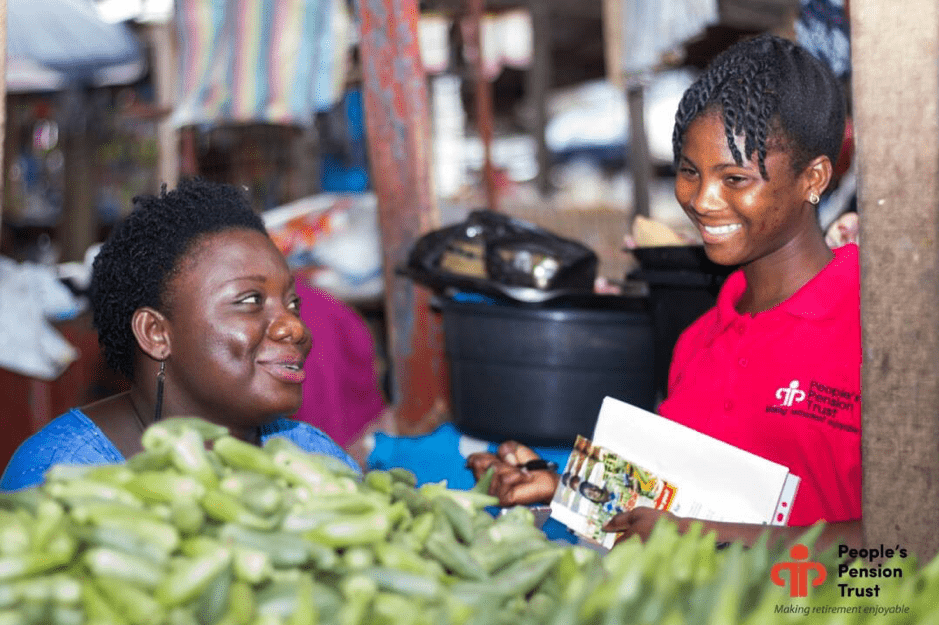
People’s Pension Trust (PPT) has received funding of up to GBP 500,000  from FSD Africa Investments to expand pension coverage and access to informal workers in Ghana. This will be done by developing innovative approaches specifically designed to foster inclusion in financial and social protection systems.

The funding will enable People’s Pension Trust to innovate through behavioural science, human-centred design, data analytics and artificial intelligence, ultimately developing groundbreaking pension products that meet the needs and aspirations of underserved constituents such as smallholder farmers, drivers, market women, head porters – among others.

This continued partnership with FSD Africa Investments provides the necessary runway for PPT to address old-age poverty especially among women that are most vulnerable. Through financial literacy programs and pension education coupled with incentive-led push for savings, PPT aims to impact economic growth by helping maintain the push for savings despite the covid-19 pandemic.

At FSD Africa Investments, we work to rece poverty by supporting innovative propositions touching on the financial sector that we believe will transform Africa’s financial markets. The PPT story is one such proposition that touches on micro-pension and by extension savings and we believe will have significant impact in the lives of Ghana’s informal workers and possibly go beyond the borders to the many who could use the same service across Africa.
Anne Marie-Chidzero, Chief Investment Officer, FSD Africa Investments

Our ambition is now to scale and to replicate our business model across the region, providing millions of informal sector workers with pension cover over the next few years. Securing this investment from FSD Africa Investments is therefore a significant step to making this possible. It certainly gives us a positive outlook for the coming years as we work to ensure that no one is left behind in the financial inclusion agenda.

Saqib Nazir, Chief Executive Officer of People’s Pension Trust

In addition, loyalty and reward programs will be rolled out to encourage uptake of digital savings options – like Auto Debit and Direct Debit, to ensure consistent savings-, and the PPT team will focus on regulatory engagements to drive policy change and the inclusion of global best practices and industry trends, accelerating real progress for our members.

&nbsp

CAHF’s African housing investment landscapes report series

The rising urban middle class, increasingly localised construction materials industry and innovations in housing finance, including the emergence of Real Estate Investment Trusts and mortgage liquidity facilities, are seeing increasing interest in investment in housing across Africa.

However the lack of credible, updated data on breadth and nature of funding flows for infrastructure continues to create barriers for increased investment. This is particularly true for the housing sector as stimulating targeted investments requires highly differentiated data that unpacks market segmentation for varying household income levels.

By providing clear market intelligence that quantifies, tracks and analyses investment in underserved housing markets, we can support a better policy environment & increased private sector activity in affordable housing. Improved data can thus catalyse scale interventions.

In the current environment, there is little information on housing investment activities and trends in Africa. Specific information gaps include:

  • Market overview data on who is investing in housing delivery, where, and at what level.
  • Market performance data segmented by target market, housing type or investment intervention and geography, in order to understand which are the top performing investment instruments, and why.
  • Competitive market horizon, including historical data on the mortgage, home equity, personal loan, consumer loan, microfinance and housing microfinance sectors—to enable credible modelling of investment horizons.

The Housing Investment Landscapes report series forms part of the Centre for Affordable Housing Finance’s Investor Programme which aims at plugging in some of the above-mentioned gaps, with the intention of identifying and championing increased investment in affordable housing across the African continent.

The overall goal of this project is to quantify the breadth of investment activity with respect to housing and housing finance across Africa and to establish a mechanism to track this on an ongoing basis. This project has collected data and highlights gaps and opportunities in the investment landscape in 26 countries to date, across all five sub-regions in Africa. The country and regional reports profile investors and investment instruments with the greatest impact on the housing finance market within Africa.

Access the reports here.

Regional economic hubs in sub-Saharan Africa

Recent years have seen large scale de-risking and financial exclusion happening in developing countries, particularly those countries that most need capital flows to finance social services, aid and development.

Where regional economic hubs are de-risked, it has a profound effect on the developmental outcomes for the hub itself as well as the spoke countries it is integrated with.

To stem the risk of illicit financial flows (IFFs), the threat of being de-risked and the corresponding knock-on effect on capital flows, it is important to ensure that there are adequate regulatory frameworks in place to promote a robust level of financial integrity in a way that does not undermine inclusion.

This two-note series explores the effect of de-risking and illicit financial flows on capital markets and the role of regional economic hubs to address financial integrity issues.

The previous note highlights the relationship between de-risking, illicit financial flows and capital flows in the context of regional economic hubs.

In this second note, Identifying regional economic hubs in Africa, dives into the concept of a regional economic hub, exploring the methodologies for determining which countries are hubs within their respective regions.

Despite the importance of hub economies, very little has been published on the identification and analysis of hub systems in sub-Saharan Africa. Regional economic hubs can be defined as countries that play a significant role in the economy of the broader region and have been found to help facilitate the movement of capital. They tend to have the most developed financial markets in the region as well as more favourable or developed regulatory environments. Hence, they act as gateways for capital to flow into the countries they are integrated with (i.e. their spoke countries). This interconnection between regional economic hubs and spokes can help create stable financial flows for countries in a region and contribute to the development of their financial systems.

This work forms part of the Risk, Remittances and Integrity programme in partnership Cenfri.

De-risking in Africa: Illicit financial flows and regional economic hubs

Recent years have seen large scale de-risking and financial exclusion happening in developing countries, particularly those countries that most need capital flows to finance social services, aid and development.

Where regional economic hubs are de-risked, it has a profound effect on the developmental outcomes for the hub itself as well as the spoke countries it is integrated with.

To stem the risk of illicit financial flows (IFFs), the threat of being de-risked and the corresponding knock-on effect on capital flows, it is important to ensure that there are adequate regulatory frameworks in place to promote a robust level of financial integrity in a way that does not undermine inclusion.

This two-note series explores the effect of de-risking and illicit financial flows on capital markets and the role of regional economic hubs to address financial integrity issues.

This note highlights the relationship between de-risking, illicit financial flows and capital flows in the context of regional economic hubs.

The next note, Identifying regional economic hubs in Africa, dives into the concept of a regional economic hub, exploring the methodologies for determining which countries are hubs within their respective regions.

Capital flows, or moves between capital-rich and capital-poor countries depending on the opportunities for return on investment, and are important for economic development. These capital flows can consist of official capital flows, which include official development assistance and aid in the form of grants or loans, as well as private capital flows such as bank and trade-related lending, foreign direct investment, portfolio investments and workers’ remittances. Foreign direct investment (FDI), foreign aid and remittances are the major capital inflows in Africa. Such inflows play an important role in regional economic development. Between 2000 and 2017, FDI contributed an average of 3.4% to regional GDP in sub-Saharan Africa, with foreign aid and remittances contributing an average of 3.3% an2.3% respectively. These capital flows support job creation, skills and technology transfer, provide financing for government budgets and contribute to long-term economic growth. Capital flows are affected by the risk or perceived risk of illicit financial flows. Regional economic hubs can act as channels for IFFs, thereby in effect regionalising IFFs.

While Note 1 relies on the methodologies explored and utilised, Note 2, provides more details and specifics on the concept of economic hubs.

This work forms part of the Risk, Remittances and Integrity programme in partnership Cenfri.

Cost of credit for financial institutions – case studies in Ghana and Zambia

The overall cost of providing credit is high both in Ghana and Zambia. In 2018, the cost of credit relative to their average portfolio ranges between 26% and 103% for the Ghanaian institutions and between 53% and 80% for the Zambian institutions in the study.

There is a high diversity of the cost of credit across different types of institutions and different credit products. Economies of scale contribute to lower costs of credit.

The cost of operations is the main component of the cost of credit amongst the institutions studied. It varies widely, from between 37% to 80% amongst the institutions, due to two internal factors: product portfolio composition and composition of operational expenses.

Banks that provide credit to corporates have relatively lower operational costs than those providing credit to micro-enterprises and personal loans. Further, staff costs dominate the cost of operations, contributing on average to 52% of total costs.

The cost of funds is driven by the ability to attract cheap sources of funding. Deposits are the cheapest source of funding, but blend financing is also attractive.

There is a high variation in the cost of risk, attributed to both internal and external factors.

Viability of gender bonds in sub-Saharan Africa

A landscape analysis and feasibility assessment

Gender bonds are broadly defined as bonds that support the advancement, empowerment and equality of women, though no official definition exists. Like other themed bonds, they can be issued as senior unsecured notes referencing the balance sheet of the issuer, but where proceeds are ring-fenced for specific use on eligible ‘gender’ activities, or as securitisations referencing a pool of assets directly.

The state of the market

There are currently no dedicated guidance principles on how to issue a gender bond, nor any specific eligibility criteria for use of proceeds. Most bonds issued with a gender label have so far relied on the ICMA’s Social Bond Principles, the UN’s Sustainable Development Goals or the UN Women’s Empowerment Principles as reference standards.

As of March 2020, 13 gender-labelled bonds have been issued by a variety of entities, ranging from large commercial banks to NGOs, to multilateral development banks. These can be grouped into three categories:

The majority of gender bonds issued so far address financial inclusion of women and female entrepreneurship in emerging markets or access to leadership positions and gender-positive
corporate policies in developed markets. Missing from the market are companies that provide goods and services which disproportionately benefit women or bonds which look at women in the issuer’s supply chain.

Reporting on the impact of gender bonds also needs further attention. For financial inclusion bonds, few bonds go beyond the ‘loans disbursed’ metric to look at the impact they have on women’s lives. Similarly, for corporate behaviour bonds, it is not always clear whether the companies being lent to are required to improve on their current performance, and if so, how and at what rate.

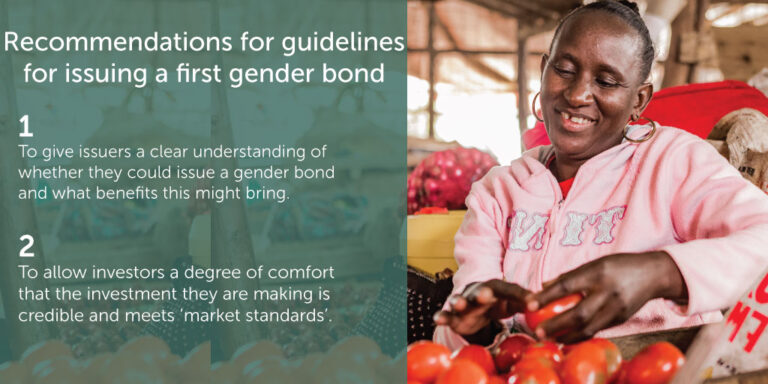
By making it easy for both investors and issuers to understand what a gender bond is, the potential for market growth increases significantly.

While there is some interest in gender lens investing, no gender bond has yet been issued in sub-Saharan Africa. In our assessment, we focused on the countries with the most developed capital markets and most likely chance of success in the short and medium-term: Nigeria, Kenya and South Africa.

We concluded that issuance in a local market will not be straightforward outside of South Africa, due to mismatched expectations and relatively conservative investors:

Africa green bonds toolkit

Climate change is one of the greatest challenges of our time, requiring far more capital than governments alone can provide. Private sources of finance are needed. Tapping into the international capital markets, as well as domestic capital, will be critical.

Green Bonds are one tool that can offer the African capital markets an opportunity to leverage private capital at scale towards building a more climate-resilient, greener economy. Green Bonds have been an effective financial instrument to moving institutional capital to priority economic sectors in the global economy, promoting the development of climate-resilient, low carbon infrastructure that allows for equitable and sustainable development. Globally the green bond market has grown tremendously in recent years, with issuances totalling USD257.7bn in 2019 (CBI, 2020).

In 2020, we partnered with the Climate Bonds Initiative (CBI) to develop a practical guide to issuing green bonds for Africa. This Green Bond Toolkit has been developed to provide the African capital markets with guidance on how to issue green bonds that are in line with international best practices and standards. The Toolkit provides a backdrop to the development of the market and features successful examples of green bond issuances that have emerged out of Africa – such as Acorn Holdings in Kenya and Access Bank in Nigeria.

FSD Africa also supports Green Bond programmes in Nigeria and Kenya, click here to read more.

Islamic finance toolkit

The Islamic finance industry has expanded rapidly over the past decade where its total assets reached over $2.1 trillion in 2018, spreading across dozens of countries and covering primarily Islamic banking, capital markets, and insurance sectors.

Islamic finance has also been integrated within the global financial system as a universal alternative financial proposition appealing to Muslims and Non-Muslims alike. In fact, many international financial hubs including London, Hong Kong, and Luxembourg, have created enabling environments for Islamic finance to thrive in their jurisdictions and issued sovereign Sukuk (Islamic bonds) to further support their Islamic finance infrastructure.

However, despite having great potential in the continent, the Islamic finance industry in Africa remains relatively underdeveloped where its share of the industry’s total assets is around 1% in spite of Africa being home to 27% of the world’s Muslim population. Similarly, Africa accounted for only 2.2% of global Sukuk issuances between 2001 – 2017, showing the underdevelopment of Islamic capital markets in the continent and signifying the untapped potential of Sukuk in the region.

In an attempt to address the aforementioned challenge, we sponsored the development of this Islamic Finance Toolkit by Islamic Finance Advisory & Assurance Services (IFAAS) for the benefit of the African policymakers and regulators to demystify the key founding principles, structures, and products of Islamic finance, shed light on the industry potential in Africa, and how Islamic finance could be used to achieve the key strategic development objectives of African governments.

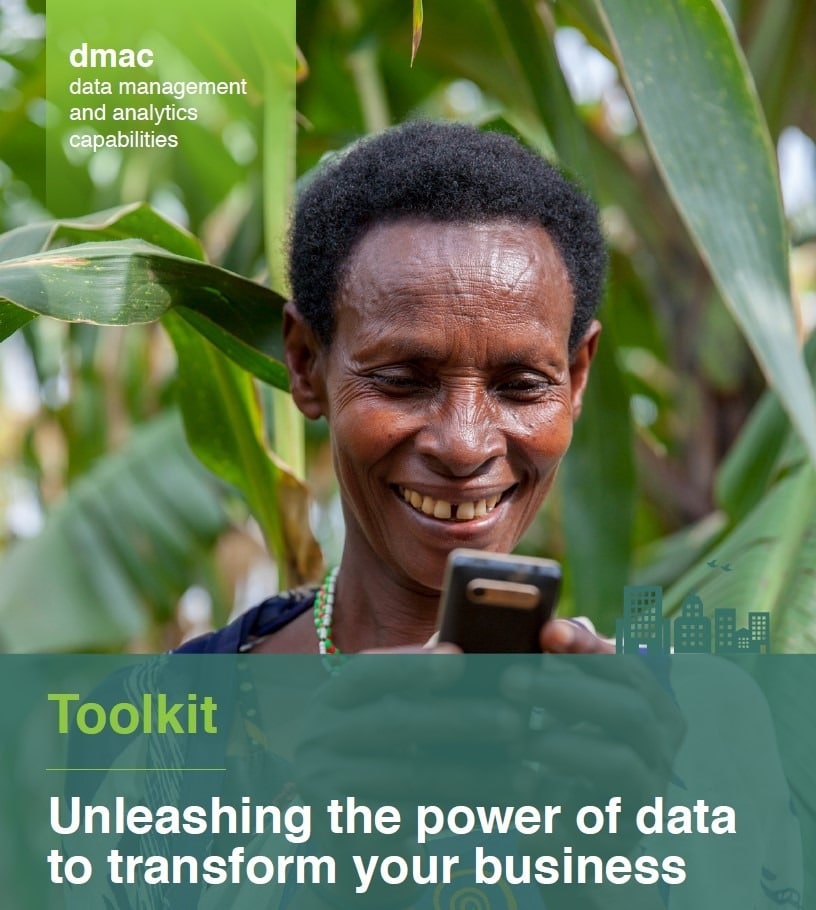
DMAC Toolkit: Unleashing the power of data to transform your business

With more data being created at a faster rate than ever before, it can be hard for financial service providers (FSPs) to know what to do with the plethora of data available to them. FSPs are capturing large amounts of data on their internal systems and also have access to external data – as a result of improved connectivity and increasing smartphone penetration, as well as through publicly available external data (e.g. national surveys).

However, many FSPs are not making full use of this data as they may not understand its full potential, have information overload, inefficient processes and systems, and think it is expensive to make use of data. The toolkit aims to help FSPs understand the different data sources available to them and how to use them effectively to transform their business.

Although primarily aimed at FSPs, the toolkit may also be of use and interest to those who provide services to FSPs in their respective markets (such as data management and research firms) and other organisations wanting to implement programmes that encourage FSPs to make more and better use of data.

The toolkit draws on the valuable learning gained through the Data Management and Analytics Capabilities (DMAC) programme that uses data-driven evidence to help FSPs in sub-Saharan Africa to design inclusive and affordable financial products and services that respond to the needs of unserved and under-served adults, with a particular focus on women and youth.

Sustainable economic development in Africa depends on long-term finance

Long-term finance is vital to driving Africa’s economic growth and development. Africa currently faces significant long-term finance gaps in the real and social sectors. FSD Africa estimates that the funding gap for SMEs, infrastructure, housing and agribusiness is over USD 300bn per year that is currently not being met.

Significant strides have been made during the past decade to enhance financial inclusion across Africa. These improvements in the outreach of financial markets were made possible due to the rapid uptake of digital financial services. The use of new delivery modes, such as agent banking and mobile phones, to send and receive payments has completely reformed the financial sector’s outreach to remote, previously excluded users. While still more at the experimental stage, digital platforms increasingly enable the provision of financial services relating to savings, credit and insurance.

However, although inclusion of a large segment of the population as senders and recipients of dal payments certainly serves to empower a previously marginalized segment of the population, it does little to promulgate the core function of financial markets. The purpose of financial intermediation is to enhance the economy’s productive potential by facilitating more optimal allocation of scarce resources. Channeling capital to the most needed uses will contribute to meeting investors risk/return objectives while also augmenting the growth potential of African economies.

When compared to the ‘inclusion revolution’ of the last 10-20 years, progress in enhancing access to investment finance resulting in greater productive employment has been disappointing. Increasing the availability of long-term finance will support investments in the housing, infrastructure and enterprise sectors thereby, directly creating job opportunities. In addition, such investment in social and real sector projects will enhance productivity, and thereby contribute to poverty alleviation through potential sustained increases iosable incomes.

One of the key challenges faced by investors has been the lack of good quality information and information asymmetry on long-term finance. Enhancing domestic capacity in the provision of long-term finance is crucial to filling the sizeable long-term financing gaps that apply almost universally to the African infrastructure, housing and enterprise sectors. Only by harnessing the contribution of long-term finance made available by the private sector will African countries effectively leverage the limited resources made available by the public sector and by donors. Often, African policymakers are confronted with challenges in balancing large and invariably well-justified expenditure demands with very limited fiscal resources, and as a result governments resort to domestic security issuance to fund their current expenditures.

As investors find it more attractive to put their money in ‘risk-free’ government-issued securities, increased issuance of such securities reduces the willingness of loinvestors (banks and institutional investors) to take part in funding risky productive investments. In order to stem this ‘crowding out’ of risk-capital by the government, a concerted effort is required to strengthen management of fiscal resources; to better utilize existing sources of long-term funding, as provided by banks and institutional investors; as well as to develop new sources of domestic funding. Over time capital market financing may come to play a larger role in filling the financing gap that exists in developing economies, provided the approach adopted is appropriately tailored to the development challenges faced by small, underdeveloped markets.

In conclusion, the objective of promoting sustainable economic growth and job creation through greater provision of long-term finance is crucial for Africa and its people. It is imperative that decision-makers, both policymakers, investors, development finance institutions as well as development partners embrace measures that will enhance productivvestment in support of Africa’s economic development.

The Long-Term Finance Initiative
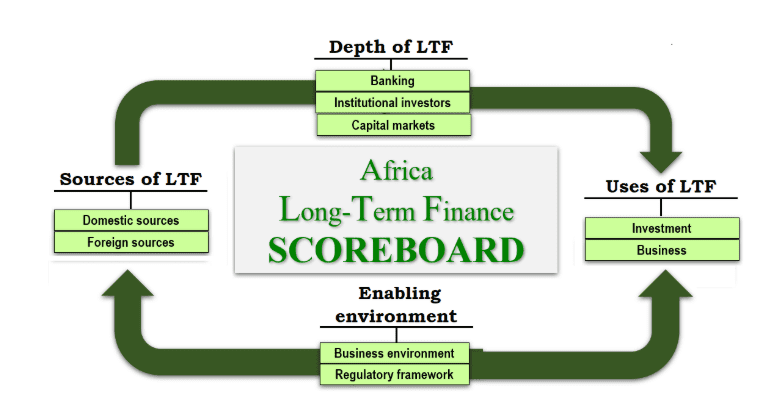
We have collaborated with the German Development Cooperation (GIZ), African Development Bank (AfDB) and the Centre for Affordable Housing Finance (CAHF) to support the Long-Term Finance Initiative, which has two main interventions:

  1. The Long-Term Finance Scoreboard:

The purpose of the Scoreboard is to assemble information about the sources and uses of long-term finance in Africa – whether provided by governments, donors, foreign direct investors or the domestic private sector. Previously, information and data on the availability of long-term finance in Africa has been scarce, spread across numerous sources, or simply unavailable. Thus, the intention of the long-term finance initiative is both to bring together existing sources of information as assembled by third parties and to augment the availability of data as regards long-term finance through collection of primary data. The Scoreboard also provides bench-marking that will facilitate comparison of how countries are performing vis-à-vis one another, thereby engendering interest and applying peer pressure among countryakeholders.

The purpose of the Scoreboard is to provide information to policy makers, private investors – both domestic and foreign investors – and development partners to support their decision-making as regards investments in Africa. The pilot website currently under development will be published in the coming months with a view to soliciting feedback and enhancing the scope and quality information provided.

Link to the live and online scoreboard: http://afr-ltf.com

  1. In-country diagnostics:

The purpose of in-country diagnostics is to identify effective ways to deepen local markets for long-term finance. By mobilizing local, private sources of finance and more effectively leveraging funding provided by the public sector, African economies will gradually be able to reduce reliance on donor funding and foreign direct investment. The diagnostic framework is based on a comprehensive approach to long-term finance that ranges from contributions of governments, donors, and private sector funding, whether provided by local or foreign investors, to funding intermediated by banks and capital markets, and other sources of private finance, such as private equity or venture capital.

The intention is that country diagnostics will inform country reform programs and create momentum for dialogue among key public and private sector stakeholders, thereby enhancing the focus and effectiveness of implementation efforts.,