Pillar: Development Impact

Africa getting little of $382m renewable energy projects cash

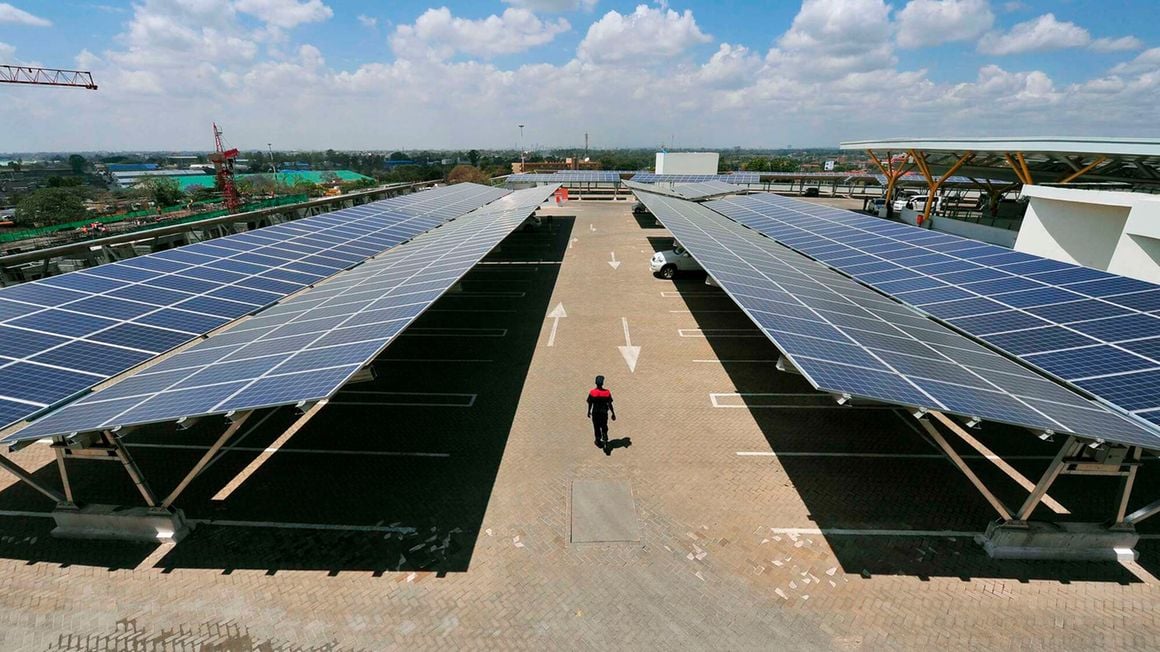
Renewable energy projects attracted investments worth $382 billion globally in 2021, according to the International Energy Agency, but only $13 billion, or three percent of that, funded projects in Africa, highlighting a major funding gap foiling green transition and energy access on the continent.

With only 48 percent of African population having access to electricity, experts say investment in the continent’s renewable energy sector could both leapfrog the green transition efforts and connect more people to the grid.

Despite this, it has been established that investors with the capacity to invest in this sector shy away from the African market, a problem which brought together several stakeholders in the energy sector in Nairobi this week, attempting to change the narrative.

At a forum convened by the World Resources Institute (WRI) and the Children’s Investment Fund Foundation, participants drawn from the private sector, government, civil society organisations from Kenya and beyond deliberated on how investors can be mobilised to support Africa’s green transition through investments.

Reluctant to invest

Rebekah Shirley, WRI’s deputy regional director told the forum that private sector players are reluctant to invest in this sector, creating a funding gap of billions of dollars every year, despite the wide access gap.

“Even in other regions of the world where energy access is still a challenge like the Southeast Asia, we don’t see funding gaps of this magnitude, why Africa?” she posed.

Alex Wachira, principal secretary for the state department of energy, said that there is a list of challenges contributing to the energy gap, even in Kenya, which slow down economic growth in the country.

“We (the Ministry of Energy) are aware of the many challenges attributed to this, including limited incentives to attract private sector investors,” he said in a speech read by a representative.

Lack of political will

Another challenge identified is the lack of political will for appropriate legislation and implementation of policies to incentivise private sector investment in renewable energy projects, especially in rural areas.

For instance, only two of Kenya’s 47 counties have drafted energy plans that would give way to appropriate energy policies, deprioritising renewable energy projects at the local governments.

This, according to Eva Sawe – a senior programmes officer at the Council of Governors, is because lawmakers have not been sensitised on why renewable energy projects should be a priority.

But even with the right policies and incentives to support private sector investment in renewable energy on the continent, investors said there is a still a shortage of talent in Africa limiting the production capacity of companies investing in the sector.

“If an investor is coming into the country to do any renewable energy project, the first hurdle they will face is the lack of skilled people,” said Andrew Amadi, the chief executive of Kenya Renewable Energy Association.

Read original article
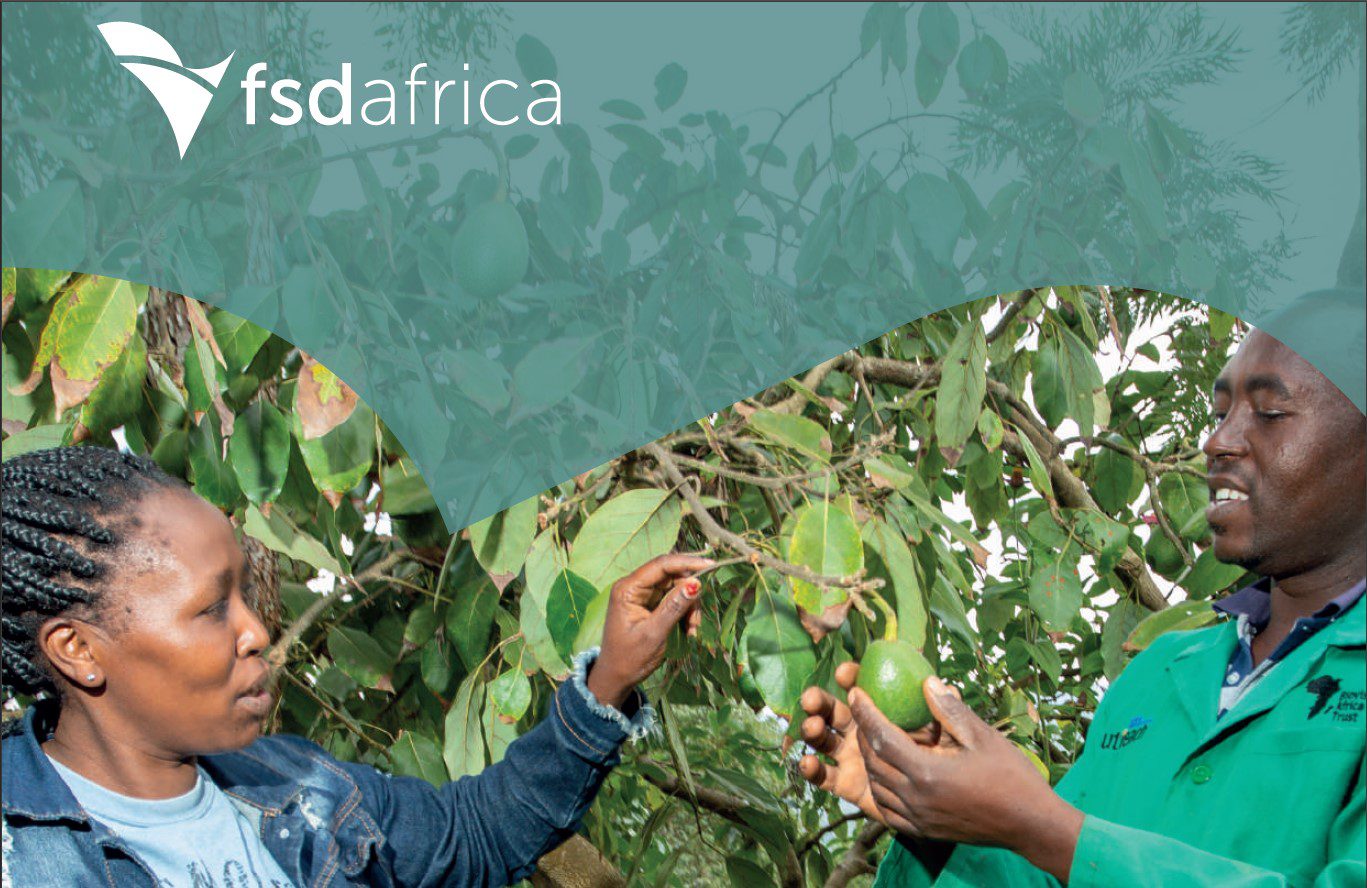
FSD Africa Impact Report – 2022

FSD Africa is a specialist development agency working to make finance work for Africa’s future. Set up in 2012, we work on policy and regulatory reform, capacity strengthening and improving financial infrastructure, and addressing systemic challenges in financial markets to spark large-scale and long-term change.

Additionally, we provide risk capital by investing in cutting-edge ideas that we believe have the potential for significant impact. We take on projects that are more complex and riskier than those taken on by typical development finance firms, to unlock additional funding for innovative sectors.

Over the past decade, we’ve seen that investing in financial markets drives economic growth, boosts the income of vulnerable groups and helps to reduce poverty. Through our market-building initiatives, we have directly and indirectly crowded in around £1.9 billion in long-term capital, availing finance for SMEs, affordable housing and sustainable energy projects.

Our work has also enabled development of innovative products, increasing access to financial services for close to 12 million people in Africa. This improved access has been particularly beneficial during the Covid-19 crisis. Between 2020 and 2021, we saw an 87% increase in the use of remittance services to cushion families from the economic effects of the pandemic.

Our programmes have also supported business growth, increasing access to jobs for vulnerable groups such as women. To date, we have created or sustained approximately 67,200 full-time equivalent (FTE) jobs, of which 12% were green jobs and 59% were occupied by women.

Results against five-year targets

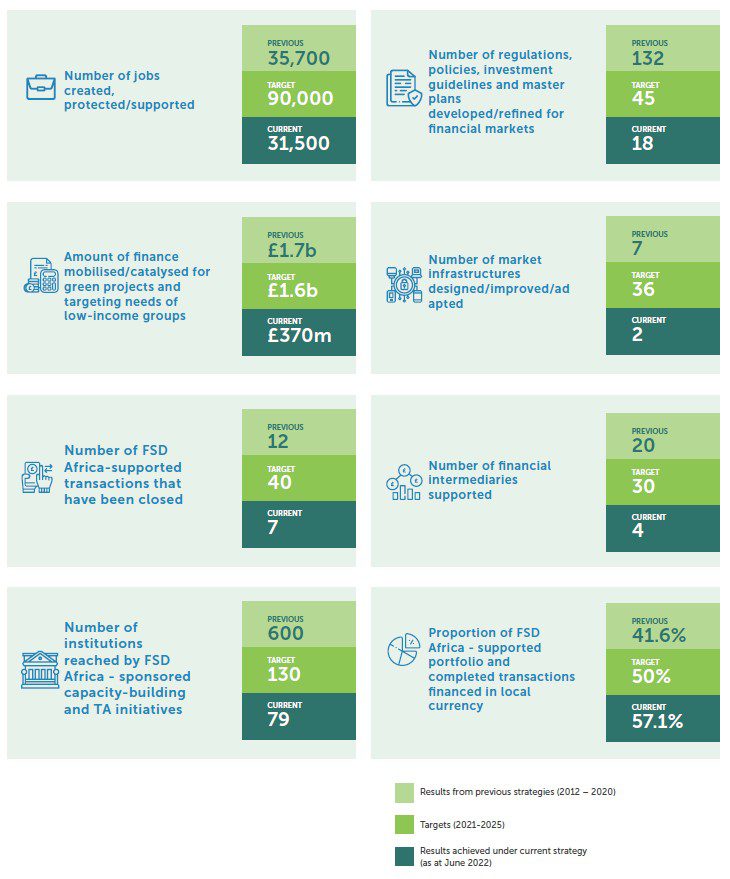
The figure below shows our cumulative results against the five-year targets for each of our core indicators.

Impact over 5 years

Value for money approach for the FSD network

Financial Sector Deepening programmes (FSDs) face increasing pressure to show that they provide value for money (VfM). This includes demonstrating that they are delivering their interventions efficiently and achieving their desired development impact. To achieve this, strengthening of internal procurement processes, as well as monitoring and results measurement (MRM) approaches, continue to be key areas of focus.

With these objectives in mind, FSD Africa commissioned the development of a new VfM approach, as a resource for the FSD Network – a group of FSD programmes including eight national programmes in Ethiopia, Kenya, Mozambique, Nigeria, Rwanda, Tanzania, Uganda, and Zambia and two regional programmes (FinMark Trust in Southern Africa, and FSD Africa).

The approach was developed by Oxford Policy Management (OPM) and Julian King & Associates, building on OPM’s approach to assessing VFM. This approach treats VfM as an evaluative question about how well resources are being used, and whether the resource use is justified. Addressing an evaluative question requires more than just indicators – it requires judgements to be made, supported by evidence and logical argument.

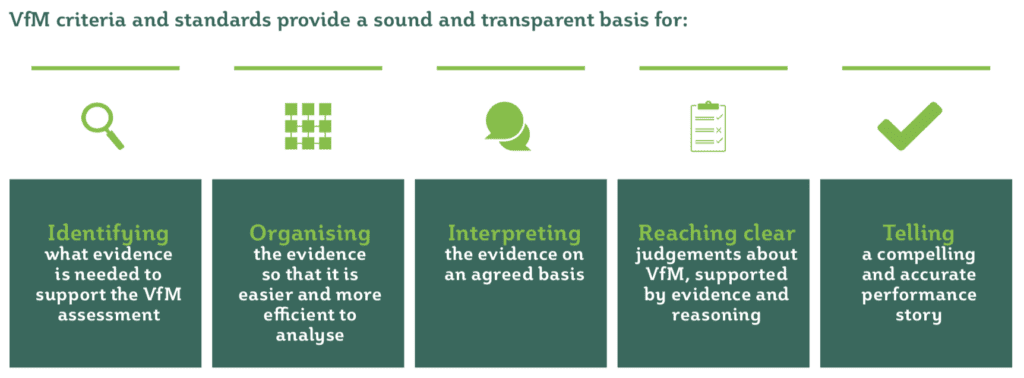
The VfM approach emphasises evaluative reasoning as a way to make robust judgements, transparently and on an agreed basis. It involves developing definitions of good performance and VfM, which are agreed in advance of the VfM assessment. The definitions include criteria (aspects of performance) and standards (levels of performance) developed specifically for the FSD context. Criteria and standards provide a systematic framework to ensure the VfM assessment is aligned with an FSD programme’s theory of change, collects and analyses the right evidence, draws sound conclusions, and tells a clear performance story.

FSD programmes are complex and their performance depends not just on quantitative indicators of delivery (such as number of projects completed) but also on the quality of implementation (e.g. sound adaptive management to respond to a changing environment and to act on emergent opportunities and learning). A mix of evidence is necessary to support well-informed, nuanced judgements about FSD performance and VfM.

Indicators play an important role in measuring some aspects of FSD performance. But restricting a VfM assessment to indicators alone would run the risk of missing important information about the quality of delivery and outcomes – for example, focusing on aspects of performance that are easy to measure at the expense of aspects that are important but difficult to quantify.

Therefore, the new VfM approach accommodates a mix of indicators and narrative evidence. The approach seeks to maximise use of rigorous evidence from existing MRM frameworks. It is aligned with the FSD Network’s MRM frameworncluding  Impact-Oriented Measurement  (IOM) Guidance (on how FSDs can better measure their contributions to changes in the financial markets they seek to influence), and the FSD Compendium of Indicators (setting out a common theory of change and related measurement framework that form the basis of common indicators to track FSD outcomes and impact).

The VfM approach is designed to support accountability as well as reflection, learning and performance improvement across the FSD network. It can also be used to systematically identify areas where MRM systems can be improved, to provide better evidence and benchmarking of sound resource management, delivery, outcomes and impacts.

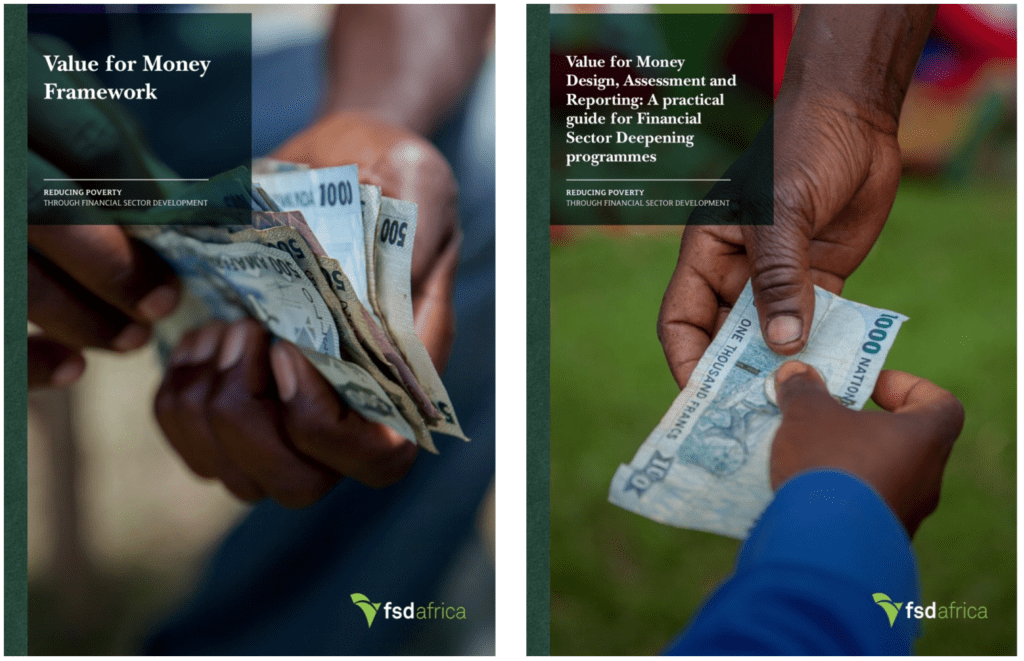
The VfM approach is detailed in our new VfM Framework and Guide. The VfM Framework explains the conceptual design and rationale for the approach. The Guide sets out a practical, user-friendly, step-by-step approach for design, assessment and reporting on VfM. These documents will support a consistent approach to VfM assessment and reporting across the FSD Network, while retaining sufficient flexibility to reflect differences in context.

These frameworks have undergone rigorous development and testing over the past 18 months. As detailed within the documents, this has included a consultative process with FSDs and donor agencies, a staged approach to framework development with input from all FSDs, a full-day workshop with FSD MRM teams (at the FSD Conference in Livingstone, Zambia, November 2017), and piloting of the approach during 2018 with FSD Moçambique, FSD Uganda, Access to Finance Rwanda, and FSD Africa.

It is hoped that FSDs will use this comprehensive VfM assessment approach to support accountability, learning, improvement, and making investment decisions. The FSD MRM Working Group serves as an ideal community of practice to support effective and consistent application of the approach.