Author: Kihingu Inc

From $3M to a $70M Climate Fund: What building Africa’s climate investment pipeline actually takes

Africa’s climate finance gap is often framed as a question of scale. Hundreds of billions of dollars are needed each year, yet only a fraction flows to the continent.

But focusing only on the quantity of capital misses a quieter constraint upstream: the shortage of fund managers with the track record, institutional structure, and operational capacity to deploy early-stage climate capital effectively across African markets.

Capital cannot flow at scale if the managers capable of deploying it do not yet exist, or if they lack the credibility required to attract institutional investors.

This is the challenge FSD Africa Investments (FSDAi) had in mind when we invested $3 million in Persistent Energy Capital in 2022.

Backing the team before the fund existed

Persistent had already spent more than 14 years building and investing in climate-focused businesses across Africa. Their portfolio companies had improved the lives of more than 10 million people, created over 20,000 jobs, and helped avoid more than 2 million tonnes of CO₂e emissions.

The team knew how to identify, build, and scale climate ventures. What they did not yet have was a formal fund structure capable of attracting institutional capital and scaling that model.

FSDAi’s $3 million commitment in 2022 came before the fund existed. The capital was deployed directly into climate businesses identified and supported by Persistent across sectors including solar energy, e-mobility, energy efficiency, and sustainable agriculture. But FSDAi’s role went beyond early capital, working closely with the Persistent team to establish the institutional infrastructure required to manage a larger, institutional-grade fund.

Those investments have now been warehoused and transferred into the newly launched Persistent Africa Climate Venture Builder Fund. The fund launches not with a blank slate, but with an existing portfolio already built, tested, and validated, and a team with the systems, structures, and capability required to absorb and deploy institutional capital at scale.

Most funds don’t begin this way. It reflects FSDAi’s integrated approach to investment, combining capital with manager capacity strengthening and ecosystem building to establish a track record and create the conditions for institutional investors to follow.

“For many emerging fund managers, the challenge isn’t just proving a strategy, but building the capacity to manage institutional capital at scale,” said May Yego, Investment Manager at FSDAi. “Our work with Persistent reflected FSDAi’s mandate to test, accelerate and mobilise —  combining early capital with hands-on support to strengthen investment processes, governance and readiness for larger capital. That integrated approach de-risked the opportunity and positioned the fund to attract follow-on investors.”

A fund designed to crowd in capital

The Persistent Africa Climate Venture Builder Fund has now reached a $52 million first close, against a $70 million target.

FSDAi’s $10 million anchor commitment sits alongside the Nordic Development Fund (NDF) and the African Development Bank’s Sustainable Energy Fund for Africa (SEFA) as co-anchor investors.

Additional investors include JICA, deploying capital under its new Blended Finance Window for the first time, alongside the Soros Economic Development Fund, Impact Fund Denmark, and the Schmidt Family Foundation.

This investor base is no coincidence. It reflects a fund structure intentionally designed by FSDAi and Persistent to give institutional and commercial investors the confidence to follow catalytic capital.

Through a blended finance architecture that provides first-loss protection and priority returns, the structure reduces the perceived risk of allocating to an early-stage African climate fund and opens the door for a broader set of investors to participate.

This first close demonstrates that early-stage climate funds in Africa can attract institutional capital when both the manager and the fund structure are intentionally built to meet investor expectations. The result is a vehicle designed not only to deploy catalytic capital, but to crowd in significantly larger pools of private investment.

A venture builder for climate businesses

The fund invests from pre-seed through Series A across three transition themes: energy, agriculture, and resources. It also retains the flexibility to deploy follow-on capital to support the growth of high-performing portfolio companies.

Alongside the investment fund sits a $5 million Venture Building Facility, funded by NDF and FMO, which provides operational support to portfolio companies. This combination of capital and hands-on venture support makes the model more than a fund. It is designed as a company-building engine for climate innovation in Africa.

The impact ambition

Over the life of the fund, the Persistent ACV Fund is targeting:

  • 17 million tonnes of GHG emissions mitigated
  • 7 million beneficiaries reached, with 50% women
  • 60,000 direct jobs created, with 50% women
  • 420,000 households gaining new or improved electricity connections
  • $450 million in downstream investment catalysed

These are ambitious targets.

But they are grounded in a foundation many early-stage climate funds do not yet have: a proven team, an existing portfolio, and over a decade of operational experience building climate ventures across Africa.

Gender inclusion is also embedded in the design of the strategy. Persistent’s portfolio construction aligns with the 2X Challenge, ensuring that women are both beneficiaries and participants in the growth of climate enterprises.

What this proves

The $52 million first close answers a question FSDAi asked in 2022: Is there demand for a well-structured, manager-development-focused early-stage climate fund in Africa?

The participation of NDF, AfDB, JICA, SEDF, and others suggests the answer is yes.

For FSDAi, the Persistent ACV Fund represents more than a single investment success. It is part of a broader effort to build the financial market infrastructure required for Africa’s climate transition.

Our portfolio includes InfraCredit Nigeria, Ci-Gaba, ATAF, the Acre Impact Fund, and ARM-Harith’s ACT Fund. These are not isolated investments. Together they strengthen the ecosystem that allows capital to flow at scale by supporting fund managers, financing structures, institutional track records and demonstration effects.

Backing Persistent before the fund existed was a bet on a team and a model. Its first close validates that bet.

The bigger question for Africa’s climate finance ecosystem is how many other teams like Persistent’s are out there, building track records without the institutional backing required to scale them.

Finding them earlier and supporting them sooner is the work we are in.

Africa’s Asset Management Sector Hits US$ 600 Billion, New Industry Data Shows Investment Remains Conservative

Closing the gap between the scale and impact of long-term savings is critical to Africa’s ability to mobilize domestic capital

9am, Nairobi, Kenya, 27 January 2026: Africa’s pension funds and other collective investment schemes other institutional now hold over USD 600 billion, substantial long- term capital, ranging from USD 17 billion in Nigeria to USD 390 billion in South Africa to USD 20 billion in Kenya, yet most remains concentrated in government securities rather than productive sectors such as infrastructure, housing and SMEs, according to a new Landscape Report on Africa’s Institutional Capital Markets.

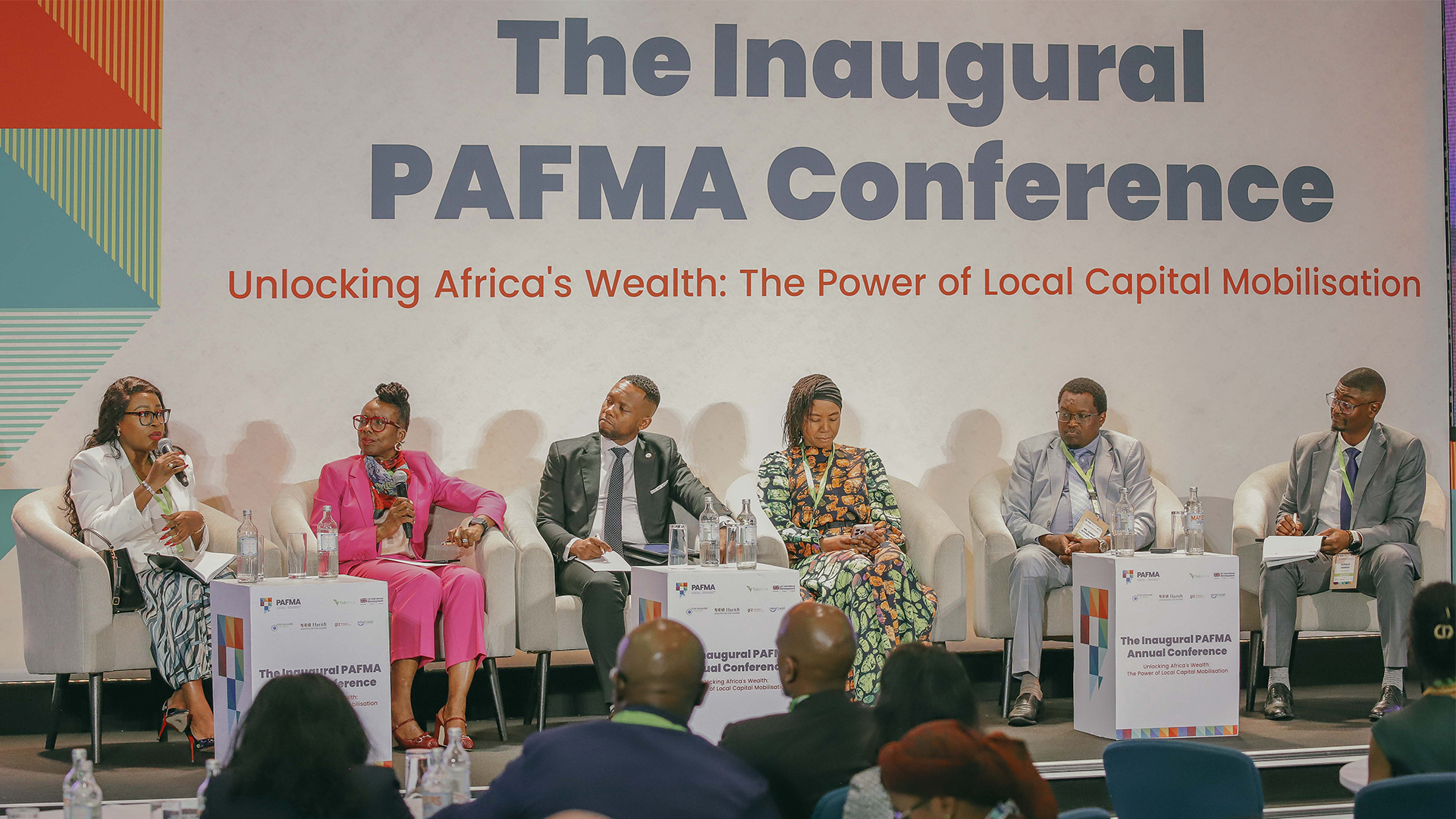
The report, which was released at the continent’s first Pan-African Fund Manager’s Alliance (PAFMA) Conference in Nairobi, examines why this persists and what could change. It concludes that closing the gap between the scale and impact of long-term savings is critical to financing Agenda 20631 – The African Union’s 50-year blueprint for transforming Africa into a global powerhouse – and the continent’s ability to mobilise and deploy its own domestic capital.

Commissioned by FSD Africa, in partnership with the African Pension Supervisors Association (APSA) and the Pan-African Fund Managers’ Alliance (PAFMA), the report highlights that in many markets, less than 10% of pension assets are allocated to productive sectors such as infrastructure, housing, private credit or small and medium- sized enterprises. It calls for increased coordination, market infrastructure and scalable investment pathways that allow long-term capital to be deployed productively.

The report, which draws on data compiled from pension funds and asset managers across multiple African markets, offers a rare snapshot of how long-term domestic savings are currently allocated and provides actionable insights and recommendations to help unlock the full potential of African pension and asset management systems.

It was launched in tandem with a new interactive database, the APAM Data Hub, containing up-to-date information on Africa’s pension systems and asset management industry along with analytical tools, providing a valuable resource for policymakers, regulators, industry practitioners, and researchers.

Key findings of the Report include:

  • Institutional savings are larger than often assumed, with assets under management in Collective Investment Schemes (CIS) ranging from USD 3 billion in Nigeria to USD 200 billion in South
  • Asset allocation remains highly conservative, with government bonds accounting for approximately 60–70% of pension fund portfolios in many countries. 90% in Ghana, 60% in Nigeria and 50% in
  • Pension funds now form the backbone of domestic sovereign debt markets, supporting short-term stability but increasing long-term exposure to fiscal and inflation
  • Shallow capital markets and limited investable pipelines continue to constrain diversification, even where institutional appetite

Commenting on the findings, Evans Osano, Chief Financial Markets O`icer at FSD Africa, said: “This new report shows how unevenly pension and asset management markets have evolved across the continent, but it also indicates how significantly Africa’s institutional savings have grown overall as a pool of largely untapped long-term capital. Mobilising domestic institutional pools of capital for Africa’s development priorities will require a concerted ‘business unusual’ approach. We need new asset classes, new partnerships, and new enablers.”

Tapologo Motshubi, Chair of PAFMA, added: “Progress will depend on sustained collaboration between fund managers, regulators, project sponsors and policymakers. PAFMA’s role is to provide a platform for that collaboration, helping align market practice, regulatory thinking and investment opportunities so that domestic institutional capital can play a larger role in Africa’s long-term development.”

Since its introduction by FSD Africa at the Africa Climate Summit in 2023 as part of its mission to build deeper, more coordinated capital markets, PAFMA membership has grown to 11 members representing 23 countries with a market size exceeding US$200 billion in AUM. The PAFMA Conference brings together senior industry leaders, regulators and policymakers to discuss the report’s findings and explore practical steps to strengthen capital market infrastructure, expand investable pipelines and improve regional coordination.

ENDS

For more information, please contact:

 Kaara Wainana,

Senior Manager, Advocacy, Campaigns and Partnerships FSD Africa Kaara@fsdafrica.org

About Pan African Fund Managers Association (PAFMA)

 PAFMA is a pioneering trade association uniting fund managers from across the African continent. Established in 2023 by five founding members – Pension Fund Operators Association of Nigeria (PENOP), the Fund Managers Association (FMA) in Kenya, the Botswana Investment Professionals Society (BIPS), the Ghana Securities Industry Association (GSIA) and the Investment Management Association of Uganda (IMAU), PAFMA is dedicated to bridging the climate finance gap through private sector initiatives, with a strategic focus on alternative investments and green finance.

Since its introduction by FSD Africa at the Africa Climate Summit in 2023, PAFMA membership has grown to 11 members representing 23 countries with a market size exceeding US$200 billion in AUM; building a strong network of African fund managers, PAFMA seeks to unlock the potential of Africa’s domestic capital pools, ensuring that African savings finance African development.

About FSD Africa

FSD Africa is a specialist development agency funded through UK International Development operating in more than 30 countries working to help make finance work for Africa’s future. Based in Nairobi, FSD Africa’s team of financial sector experts work alongside governments, business leaders, regulators, and policymakers to achieve policy and regulatory reform, capacity strengthening, and improving financial infrastructure, to address systemic challenges in Africa’s financial markets. Since 2017, the organisation’s strategy has evolved to prioritise solutions to Africa’s most critical challenges: economic, social, and environmental. The organisation has worked to promote investment into the continent’s green economy, as well as its rates of financial inclusion and gender equality. FSD Africa – previously known as Financial Sector Deepening Africa – was founded in 2012 and is based in Nairobi, Kenya.

For more information, please visit: https://www.fsdafrica.org

Celebrating 10 Years of Frontclear: Unlocking Liquidity and Building Resilient Markets

Trust is the backbone of any banking system, and liquidity is what keeps it moving.

A decade ago, across much of Africa, those two forces were not aligned. Many money markets resembled roads filled with red lights: banks were reluctant to lend to one another, liquidity remained trapped, and smaller institutions, even those holding government securities, could not access interbank credit. With legal protections unclear and confidence in short supply, central banks became the only reliable counterparties. As a result, domestic financial markets struggled to grow. Uganda ranked near the bottom of the Absa Africa Financial Markets Index, Ethiopia had no securities exchange, and Kenya’s bond trading was thin and opaque.

The idea behind Frontclear was simple yet transformative: if banks could lend with the backing of a guarantee, they could rebuild trust, unlock liquidity and strengthen market confidence. Through credit guarantees, legal reform and consistent stakeholder engagement, Frontclear helped turn those red lights green, enabling financial markets to move, build trust, and grow stronger.

A decade of impact

Since its founding, Frontclear has helped reshape Africa’s financial landscape and demonstrate how catalytic interventions can unlock systemic change.

  • £2.1 billion mobilised for African obligors
  • 117 transactions closed and 45 market infrastructure solutions developed
  • More than 90 technical assistance programmes delivered
  • Over 2,500 market participants trained through the Frontclear Academy
  • Legal and regulatory reforms in Uganda, Tanzania, Zambia and Ethiopia.

Every dollar guaranteed by Frontclear has unlocked almost nine times more in private capital, underscoring its catalytic impact.

The launch of Tradeclear in 2022 – Frontclear’s guarantee platform that helps manage counterparty credit and settlement between banks – followed by the passage of netting laws in 2023, is transforming Uganda’s interbank market. In Ethiopia, the launch of a securities exchange and a central securities depository in 2025 has created the foundation for repo trading and capital market growth.

The continuing opportunity

While Frontclear’s footprint continues to expand across the globe, significant opportunities to unlock liquidity, build trust and strengthen the resilience of financial systems remain. Africa’s local-currency bond markets have doubled in the past decade, from US$ 350 billion in 2014 to nearly US$ 700 billion by 2023. However, funding remains tight, credit is costly and interbank trading is still concentrated among a few large players.  Legal certainty for repos and derivatives is uneven, and access to long-term local-currency hedges remain limited. This leaves both borrowers and lenders exposed to foreign exchange risk and volatility.

Progress will depend on continuous collaboration. Regulators need to pass and implement robust netting laws; treasuries must support active bond markets, broaden repo-eligible collateral; regulators should champion the adoption of global master agreements, while investors and development partners should find creative structures to catalyse capital, and support technical assistance initiatives. Together, these efforts paint a picture of Africa’s financial future where interbank repos form the backbone of liquidity management, reliable reference rates are built on real market activity, and small and growing businesses benefit from the efficiencies created when banks borrow more efficiently. It is a future where domestic bond markets provide the foundation for financing sustainable growth, reducing reliance on fragile external debt.

A partnership built on catalytic capital

For FSD Africa Investments (FSDAi), Frontclear’s story is a powerful example of how catalytic capital can transform financial systems. 

In 2015, FSD Africa made an early US$ 7.5 million investment in Frontclear, anchoring its subordinated capital and absorbing initial risk. This commitment supported the launch of the Frontclear Technical Assistance Programme (FTAP) and crowded in major development finance institution partners including FMO, Proparco, SIDA, EBRD, and BMZ , who provided additioinal funding to expand warehouse financing and local-collateral repo activity. In 2019, FSDAi made a further US$ 2 million investment to help restructure Frontclear’s capital base and enable it to operate at greater scale. By combining investment with technical assistance, FSDAi demonstrated how patient, catalytic capital can be leveraged to share the early risk, prove new models, and crowd in investors to build sustainable, resilient markets.

Looking ahead: Frontlear at 10 and beyond

Frontclear’s 10-year milestone is more than an anniversary. It is a reflection of what can be achieved through partnership, persistence and innovation. As Frontclear 2.0 takes shape, its ambition is  to establish a global platform for money markets that integrates and supports emerging and frontier economies. FSDAi is proud to have been part of this journey, helping turn a bold idea into a proven model for market transformation, and look forward to the next decade of innovation, growth and impact across Africa.

Catalytic Capital in Action: FSDAi’s Role in Shaping Kenya’s Affordable Green Housing Market

Unlocking finance for affordable, sustainable homes

In 2021, FSD Africa Investments (FSDAi) joined a consortium of leading investors including UK Climate Investments (UKCI, now under British International Investment management), the European Investment Bank (EIB), and the County Pension Fund (CPF) to launch the International Housing Solutions (IHS) Kenya Affordable Green Housing Fund. The Fund was established to tackle Kenya’s pressing urban housing deficit by financing developments certified through the EDGE green building standard, targeting low- and middle-income households.

By providing catalytic equity capital, FSDAi aims to demonstrate the commercial viability of green affordable housing. The Fund aims to deliver up to 4,000 green-certified homes by 2030, improving living standards, reducing utility costs, and contributing to Kenya’s climate resilience and inclusive urban growth.

Turning investment into market insight

Beyond financial returns, FSDAi’s investment sought to create lasting market impact. Through a side letter agreement, FSDAi required IHS to adopt an Open Source Policy, ensuring that data and insights generated from the investment would be publicly shared. To embed this principle, FSDAi provided the Centre for Affordable Housing Finance in Africa (CAHF) with a grant for a four-year Open Access Initiative (OAI) to collect, analyse, and disseminate data from IHS and other housing developments in Kenya.

This initiative is now generating vital, publicly available market intelligence and helping new investors understand the economics of affordable housing, guiding policymakers, and strengthening the capacity of housing practitioners across the region. By doing so, FSDAi’s catalytic investment continues to multiply its impact far beyond a single project, driving systemic change in Africa’s housing finance ecosystem. Various outputs have been published on CAHF’s Open Access website, benchmarking construction costs in Kenya, reviewing reasons for rejection, promoting ESG standards, and now, as the housing developments that IHS is funding start to unfold, tracking the steps, time and costs involved in the delivery of affordable housing in Kenya.  With the support of FSD Kenya, CAHF has also secured the agreement of the Kenyan State Department for Housing and Urban Development to track six Affordable Housing Programme (AHP) projects, documenting and comparing their costs, while also considering the impact of the AHP on the economy and on job creation.  A further initiative has been the Nairobi Metropolitan Area Dashboard which collects and maps all housing developments in the Nairobi Metropolitan Area, giving an indication of market activity and targeting.  CAHF is currently in discussion with partners in Abuja, Nigeria, to replicate this model there.

It is still early days, but the delivery of these outputs is having two broad impacts – first, the content is being incorporated in strategic decision making by the parties, as developers and investors, as well as the Kenyan government, consider the data.  Second, the sensitivities around data sharing are slowly being overcome, and more developers are expressing an interest in participating in the OAI, both to better understand their own businesses, but also to showcase their track records and experience in the wider sector and to investors in particular.  CAHF hopes that the OAI will continue to be supported by funders so that it can grow into a sustainable offering not only in Kenya but across the continent.

Catalytic capital for systemic change

The IHS Kenya case demonstrates FSDAi’s unique approach as:

  • A catalyst for innovation — testing and scaling new investment structures that blend impact and commercial sustainability.
  • An enabler of market development — providing insights that attract institutional capital and build investor confidence.
  • A partner committed to impact — improving access to affordable housing while advancing climate resilience and social inclusion.

Through strategic, insight-driven investments like this, FSDAi is helping reshape Africa’s housing finance landscape — proving that catalytic capital can unlock lasting, large-scale transformation for people and planet.


See a short case study of the IHS Investment and the Open Access Initiative in the recently published Playbook for Blended Finance in Affordable Housing in Africa.

Commentary: Beyond Mobile Money, Mobilising Africa’s $2.4tn in Domestic Capital

Patrick Njoroge (“A financial meltdown in Africa will affect everyone”, Opinion, September 4) is correct in highlighting improved financial inclusion and growth in remittances as reasons to be cautiously optimistic about Africa’s long-term future. Business leaders in retail finance must surely be looking forward with great confidence to the economies of scale that will eventually come from serving a tech-savvy population whose median age is 19 and growing almost three times faster than that of the EU.

But he overlooks another reason for optimism — the growth in domestic institutional assets under management, which FSD Africa estimates now stand at well over $2.4tn across Africa, 50 times greater than annual aid flows to the continent. Growth in Kenyan pension assets in 2024 was up 14 per cent in Kenyan shilling terms and 40 per cent higher in dollars, but could have been even faster, according to the regulator, had there been a more supportive policy and regulatory environment.

As Njoroge rightly says, Africa needs stronger domestic financial markets. Rebalancing long-term financing towards local currency would make growth less reliant on international finance, including aid, and more resilient to shocks, not least those resulting from climate change.

As an innovation in African financial markets, mobile money was staggeringly successful. We now need breakthrough innovation in African capital markets to draw private institutional capital away from defaulting to funding government debt so that potentially very large volumes of capital can be put to work funding the projects that will give Africans the jobs and basic services they want.

Mark Napier

Chief Executive Officer, FSD Africa, Nairobi, Kenya

FSD Africa London Climate Action Week in review

We are just back from the London Climate Action Week (LCAW) which happened against a backdrop of increasing geopolitical and economic uncertainty as well as growing evidence of the developmental and financial challenges facing Africa as a result of climate change and biodiversity loss.

Africa’s financing needs are particularly stark. Africa needs about $190bn per annum for climate and yet is only attracting $44 billion. Adaptation financing is a particular concern – in Africa, finance for adaptation is less than a third of the total and is not increasing to any material extent, despite global attention being paid to the need to invest in adaptation, especially in Africa. With public funds in short supply as a result of cuts to international aid programmes and domestic government finances constrained by the cost of servicing high levels of debt, the role of private capital will be crucially important.

At the same time, African institutional investors control over $2.4 trillion in assets (expected to grow to at least $6.4 trillion by 2040). This capital is conservatively invested, with little allocation to alternatives, infrastructure and climate-aligned investments. Mobilising this private capital, which is mainly in local currency, could make a major contribution to filling Africa’s development financing gap.

Across more than five events at LCAW which FSD Africa will be hosting or participating in, our team will be discussing these issues and highlighting both the financing challenges facing Africa and the huge opportunities a locally financed, green economic pathway to growth offers. They will make the case that if we are to mobilise the capital Africa requires, we need a more resilient and innovative financial system. But we will only be able to achieve this through collaboration between international development finance, investors and the African private financial sector.

Speaking ahead of LCAW, Mark Napier, CEO of FSD Africa said: “We are in a moment of major change. On the one hand, the turbulence in the aid (and development finance) world is a threat. On the other, we are seeing the emergence of a consensus that developing countries need to strengthen their own economic resilience and self-reliance – and domestic financial market development is going to be an important part of this.”

We are glad that our sessions enhanced understanding of both the challenges and the solutions to Africa’s development finance and hear inspiring examples of the huge progress already being made – in capital markets infrastructure, new financial solutions, in nature finance and carbon markets – and in measures to redirect available finance towards climate adaptation and resilience.

If you are keen to continue conversations on these critical topics of our time, please contact our Ag. Strategic Communications Director Kaara Wainaina kaara@fsdafrica.org

Sessions we curated/participated in at the London Climate Action Week 2025 can be viewed here.

ARM-Harith and FSD Africa Investments Announce GBP 10m Commitment to Unlock Nigerian Pension Funds and Catalyse Local Capital for Infrastructure

FSD Africa Investments (FSDAi), the UK-backed specialist development finance investor, is investing GBP 10 million into ARM-Harith’s Climate and Transition Infrastructure Fund (ACT Fund) to unlock local institutional capital for climate infrastructure. ARM-Harith Infrastructure Investment Limited is a leading African private equity firm committed to catalysing economic growth through sustainable infrastructure.

ARM-Harith and FSDAi’s investment introduces an innovative solution to allow Nigerian pension funds to address a longstanding challenge in infrastructure equity finance: the ability to invest while receiving early liquidity. By enabling predictable interim distributions during the early phases of investment, this innovative facility directly addresses a key barrier that has historically deterred domestic institutional capital from entering the asset class.

In addition, 75% of the FSDAi facility will be provided in local currency — a first-of-its-kind approach specifically designed to mitigate the impact of foreign exchange volatility for pension funds. This structure is expected to unlock an additional GBP 31 million in pension fund contributions — nearly five times the participation achieved in ARM-Harith’s first fund.

FSDAi’s investment aligns with its broader mission to deepen African financial markets towards accelerating the financing of Africa’s green economic transformation and will support the Fund’s investments in climate-resilient infrastructure including energy, transport, water, and digital connectivity. In alignment with at least four of the UN’s Sustainable Development Goals, the initiative is projected to create or support approximately 3,000 green jobs.

The British Deputy High Commissioner in Lagos, Mr. Jonny Baxter said,

“The UK government, through its bilateral and investment vehicles is committed to continue to support the country’s financial sector — developing domestic capital markets as a means of financing priority sectors and driving economic development. Local currency capital helps mitigate the impact of foreign exchange volatility, narrows the financing gap, supports diversification into new asset classes and into climate-related projects and social sectors – while providing long-term funds to growing businesses.”

Announcing FSDAi’s investment, FSDAi’s Chief Investment Officer, Anne-Marie Chidzero said:

“We are thrilled to collaborate with ARM-Harith to showcase how risk-bearing capital from a market-building investor like FSDAi can be strategically structured to unlock domestic institutional capital. This approach strengthens Africa’s financial markets and facilitates capital allocation towards sustainable, green economic growth across the continent.”

ARM-Harith CEO Rachel Moré-Oshodi emphasized the significance of this investment:

“For too long, domestic pension funds have remained on the sidelines of infrastructure equity due to liquidity constraints and heightened perception of risk. We are proud to have collaborated with FSDAi to design a pioneering solution that reduces risk for pension funds while delivering both early liquidity and long-term capital growth. This is a global first—a groundbreaking private sector-led solution that could fundamentally change how infrastructure equity is financed—not just in Nigeria, but across Africa.”

Bank of Industry and FSD Africa Collaborate to Drive Green Finance Initiatives in Nigeria

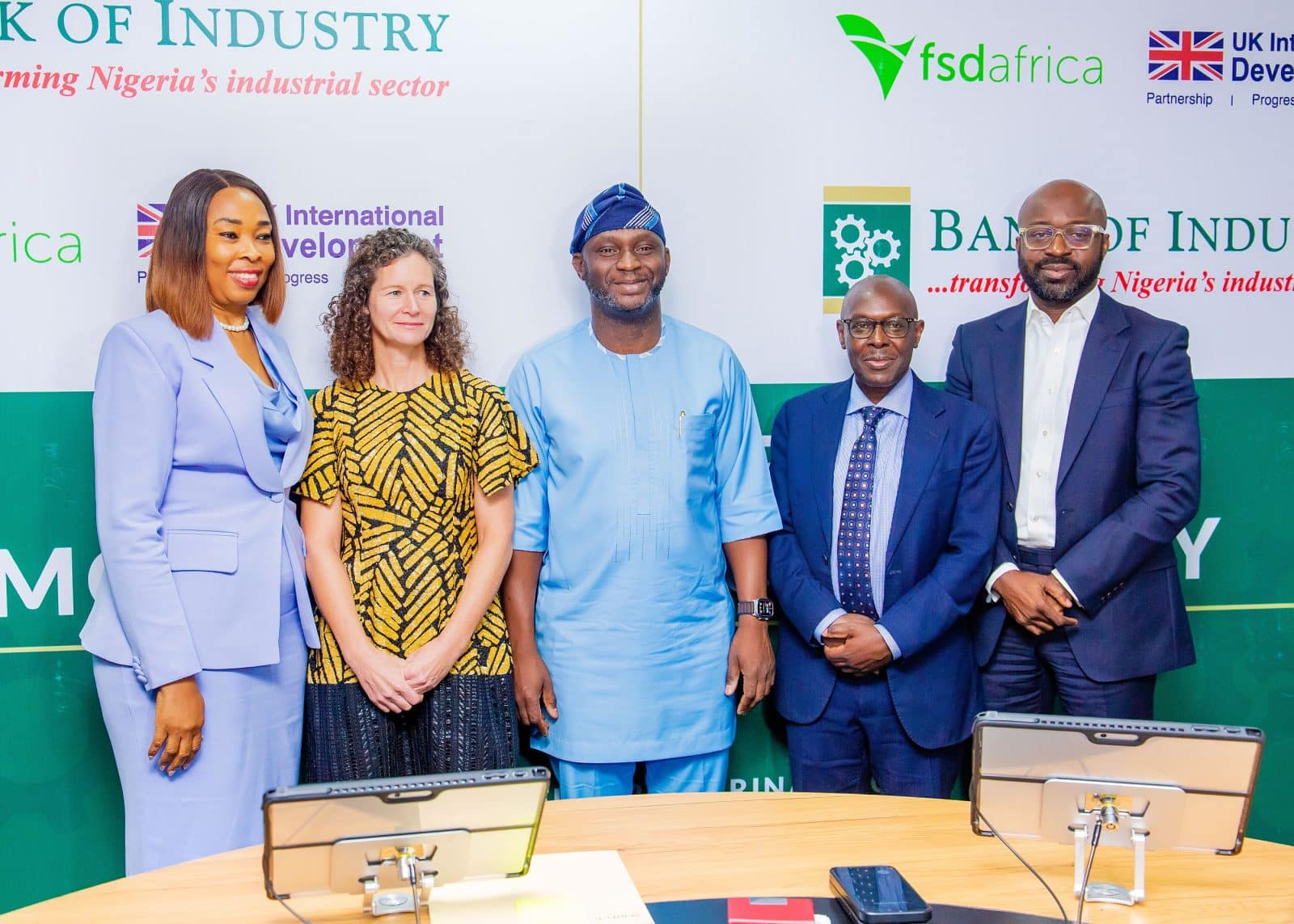
Lagos, Nigeria – The Bank of Industry (BOI) is pleased to announce a significant milestone in its commitment to promoting sustainable finance in Nigeria with the formal signing of a Memorandum of Understanding (MOU) with FSD Africa, a leading agency dedicated to strengthening climate financing in financial markets across Africa.

Under this partnership, FSD Africa will deepen BOI’s sustainability finance proposition, providing technical assistance, strategic guidance, and capacity development initiatives. This will involve supporting the bank in strengthening its sustainability strategy, delivering decarbonisation pathways and advancing its adaptation finance initiatives. These resources will better position BOI to offer tailored lending solutions and business support for Nigerian climate-focused projects, further solidifying its position as a key driver of green finance in the country. 

The MOU establishes a robust framework for collaboration, enabling BOI to expand its climate financing portfolio and support enterprises committed to sustainability. This partnership will deepen BOI’s impact in fostering climate-resilient economic growth across Nigeria.

Speaking at the signing ceremony held at BOI’s headquarters in Lagos, BOI Managing Director/CEO Dr. Olasupo Olusi said:

“This partnership with FSD Africa is a critical step in our efforts to promote climate resilience and sustainability as one of our central pillars of our operations. Together, we will pioneer innovative solutions that address the challenges of climate financing while unlocking opportunities for businesses and communities across Nigeria.”

Representing FSD Africa at the event, Dr. Evans Osano, Chief Financial Markets Officer, said:” Our partnership with BOI in advancing sustainable finance is pivotal at this critical time. Nigeria’s annual climate finance gap is estimated at USD27.2 billion. Bridging this gap requires concerted effort including catalysing domestic capital in addition to international investments to drive sustainable investments.  We are excited about the bank’s commitment to promoting climate transition and driving Nigeria’s climate commitments towards net zero, and we are happy to be part of this journey.”

The MOU aligns with BOI’s recently launched three-year strategic plan, which prioritizes climate and green finance as key focus areas.

“With the support of strategic partners like FSD Africa, we are confident that BOI will continue to play a leading role in fostering sustainable development and driving positive change across Nigeria’s economic landscape.”Dr. Olusi added.

This partnership represents the beginning of a transformative journey, creating a framework for innovative and impactful collaboration. BOI and FSD Africa reaffirm their shared commitment to advancing the climate finance agenda in Africa and addressing the pressing challenges of climate change.

Ethiopia’s new securities exchange aims to unlock interbank liquidity

By Michael Habte is ESX’s chief operating officer and Victor Nkiiri is a senior specialist – capital markets at FSD Africa

Ethiopia, Africa’s second most populous country, is among the fastest-growing economies in the world, with GDP growth projected at 6.5 per cent in 2025. The country has adopted a bold vision to achieve lower-middle-income country status by 2030, underpinned by sweeping economic reforms to transition from a state-controlled to a market-driven economy. 

Among the new economic initiatives recently rolled out is a new securities exchange, the Ethiopian Securities Exchange, or ESX, planned for launch on January 10. For decades, Ethiopia’s financial an interbank trading platform. Simply put, banks could not effectively lend to one another, resulting in high interest rates to borrowers and significant inefficiencies in bank liquidity management. Such inefficiencies have constrained businesses, particularly the small and medium-sized enterprises which are the backbone of Ethiopia’s economy. 

The new exchange is already addressing this challenge. An interbank trading platform which is part of the exchange is optimising liquidity and improving credit flow in the banking system. Since its pilot in late October, the platform has facilitated trades exceeding 135bn birr($1.1bn), demonstrating robust uptake by the banking sector. 

Regulatory reforms

This milestone reflects the effectiveness of reforms such as the Interbank Money Market Directive issued by the National Bank of Ethiopia, which created the necessary regulatory framework. By enhancing price transparency and reducing transaction costs, the platform is already improving credit accessibility for businesses, enabling them to grow, innovate and drive economic activity.

The impact of the ESX extends far beyond the banking sector. A functional interbank market itself is the foundation for developing critical financial instruments such as treasury bills, corporate bonds and commercial papers. These instruments rely on liquid money markets for effective pricing and execution. With its state-of-the-art electronic trading platform that is integrated with the central securities depository, the ESX is well-positioned to facilitate the efficient issuance and trading of these instruments.

The exchange is also a critical enabler of economic diversification. By reducing borrowing costs and expanding access to finance, it empowers businesses to invest in new projects, expand operations and create jobs. These outcomes align with Ethiopia’s ambitions to achieve middle-income status and build a globally competitive economy. 

Establishing the new securities exchange has been a challenging yet rewarding endeavour. To succeed it needed support from a wide spectrum of actors. The public-private partnership model facilitated this, tapping the power of collaboration to drive financial innovation. Ethiopian Investment Holdings, in partnership with FSDAfrica and the Ministry of Finance, worked hand in hand to develop the exchange, in an approach that prioritised market development initiatives that addressed local challenges while adopting global best practices. This ensures that the ESX is not only tailored to Ethiopia’sunique needs but also equipped to compete on the global stage.

Blueprint for innovation
As Ethiopia integrates into global financial markets, the ESX has the potential to position the country as a regional hub for capital market activity. This integration will strengthen Ethiopia’s appeal to foreign investors, unlocking new opportunities for economic growth. Beyond its immediate economic impact, the ESX also serves as a powerful symbol of Ethiopia’s ambition and potential. It exemplifies the transformative role that well-structured capital markets can play in fostering inclusive growth and economic resilience.

The new bourse is also anticipated to inspire other African nations to pursue similar reforms, unlocking the continent’s immense economic potential. Institutions like FSD Africa, which has been instrumental in supporting the ESX, are poised to replicate these lessons in countries that lack functional capital markets. Such efforts are vital for modernising Africa’s financial systems and driving sustainable development.

The launch of the ESX is not just a win for Ethiopia but a blueprint for capital market innovation across the continent.

Ethiopian Securities Exchange Launch Marks a New Dawn for Ethiopia

The Ethiopian Securities Exchange (ESX) was officially launched today in a colorful event officiated by Prime Minister Dr. Abiy Ahmed. The exchange, established by the country’s sovereign wealth fund, Ethiopia Investment Holdings (EIH) in partnership with the Ministry of Finance and FSD Africa, marks a historic milestone in Ethiopia’s economic development.

Licensed by the Ethiopian Capital Market Authority in December 2024 to operate as a Securities Exchange and Over the Counter (OTC) market, ESX is set to revolutionise the nation’s capital markets. By providing equitable access to capital and enhancing liquidity, it aims to support private sector growth in Ethiopia, the second most populous country in Africa and one of the fastest growing economies globally, with projected GDP growth of 6.5 in 2025.

For decades Ethiopia’s financial sector has lacked a strong mechanism for equitable access to capital and liquidity for the private sector. In particular, the lack of an interbank trading platform has meant banks could not effectively lend to one another. This resulted in high interest rates to borrowers and significant inefficiencies in bank liquidity management which has in turn constrained businesses, particularly small and medium-sized enterprises (SMEs).

The new exchange is already addressing this challenge. An interbank trading platform, which is part of the exchange, is optimising liquidity and improving credit flow in the banking system. Since its pilot in late October 2024, the platform has facilitated trades exceeding ETB 135 billion (USD 1.1 billion), demonstrating robust uptake by the banking sector. By enhancing price transparency and reducing transaction costs, the platform is already improving credit accessibility for businesses, enabling them to grow, innovate, and drive economic activity.

ESX’s state-of-the-art multi-asset Electronic Trading Platform, which is integrated with a modern Central Securities Depository for post-trade settlement and clearing, will also support more efficient issuance and trading of financial instruments such as Equities, Treasury Bills and Bonds, Corporate Bonds, Commercial Papers, Repos, and Derivatives. This is expected to attract both domestic and international investors, further strengthening Ethiopia’s financial markets.

ESX CEO Tilahun Esmael Kassahun was optimistic that the new bourse would inject dynamism in the economy and deepen especially the debt market to the benefit of all actors in the ecosystem.

“We see the new securities exchange as a multi-faceted financial infrastructure, providing multiple markets and variety of products, catering for different types of issuers and investors. The Fixed income market will provide a platform to list and trade debt instruments including treasury bills and bonds, corporate bonds and Shariah compliant securities such as Sukuk Bonds.”

On his part, FSD Africa CEO Mark Napier underscored the role of modern and deep capital markets in accelerating the already impressive economic growth momentum of Ethiopia.

“The launch of the ESX is a true game-changer for the country. As an organization running development finance programmes in well over thirty African countries, we know only too well the impact well-functioning and modern capital markets can have in catalyzing economic growth. We are proud to have played a role in the development of this exchange, that will undoubtedly spur equity, fixed income and other innovative financial instruments,” noted Mark.

The launch of ESX follows significant economic reforms in Ethiopia over the past year, including floating the national currency, the Birr, opening the banking sector to foreign competition, and advancing capital market development. The exchange is poised to become a vital platform for raising capital, trading securities, and driving economic transformation.