Author: Kihingu Inc

Finance for all: The financial inclusion for refugees project in Uganda

Late last year, we joined FSD Uganda and BFA Global in Uganda where we are implementing the Financial Inclusion for Refugees Project (FI4R) in Nakivale, Bidi Bidi and Palorinya refugee camps and with urban refugees in Kampala. This project aims to drive the availability of financial services to refugees and host communities. We are also conducting research with the aim of understanding the different sources of income for refugees, the uses of their finances and the financial products and services they use and supporting the development of financial products and services offered by Equity Bank Uganda Limited (EBUL), Vision Fund Uganda (VFU) and Rural Finance Initiative (RUFI) and evaluating the impact of those products and services on refugee livelihoods.

The project kicked off with extensive focus group discussions and individual interviews. It is the first Financial Diaries project with refugees which will not only provide a detailed picture, over the course of a year, of the incomes, expenditures and financial flows of refugee households but also reflect on how financial service providers engage with these households and make a difference to their financial picture.

Here are some of the preliminary discoveries from the initial baseline study.,

Unleashing the power of data to transform businesses

Low-income earners, women, and youth who have traditionally been locked out of the financial system are no longer invisible. The advent of mobile money and uptake by this market segment has created data footprints that enable financial service providers (FSPs) to analyse their financial needs. In addition, external research carried out by governments and donors is free and publicly available. This research data is instrumental in enabling financial service providers to obtain a better understanding of clients that they have had no previous interactions with.

The Data Management and Analytics Capabilities (DMAC) project implemented in Sierra Leone, Tanzania and Zambia sought to demonstrate the case for the use of data in the product development cycle of banks, insurance companies, and fintechs. Learnings and lessons from the project implementation have been developed into a toolkit that acts as a guide for FSPs seeking to derive maximum value from their internal data, externally available research data and other third-party data, in order to improve their service offering to new and existing clients.

Read more on how to use data to transform financial services here.,

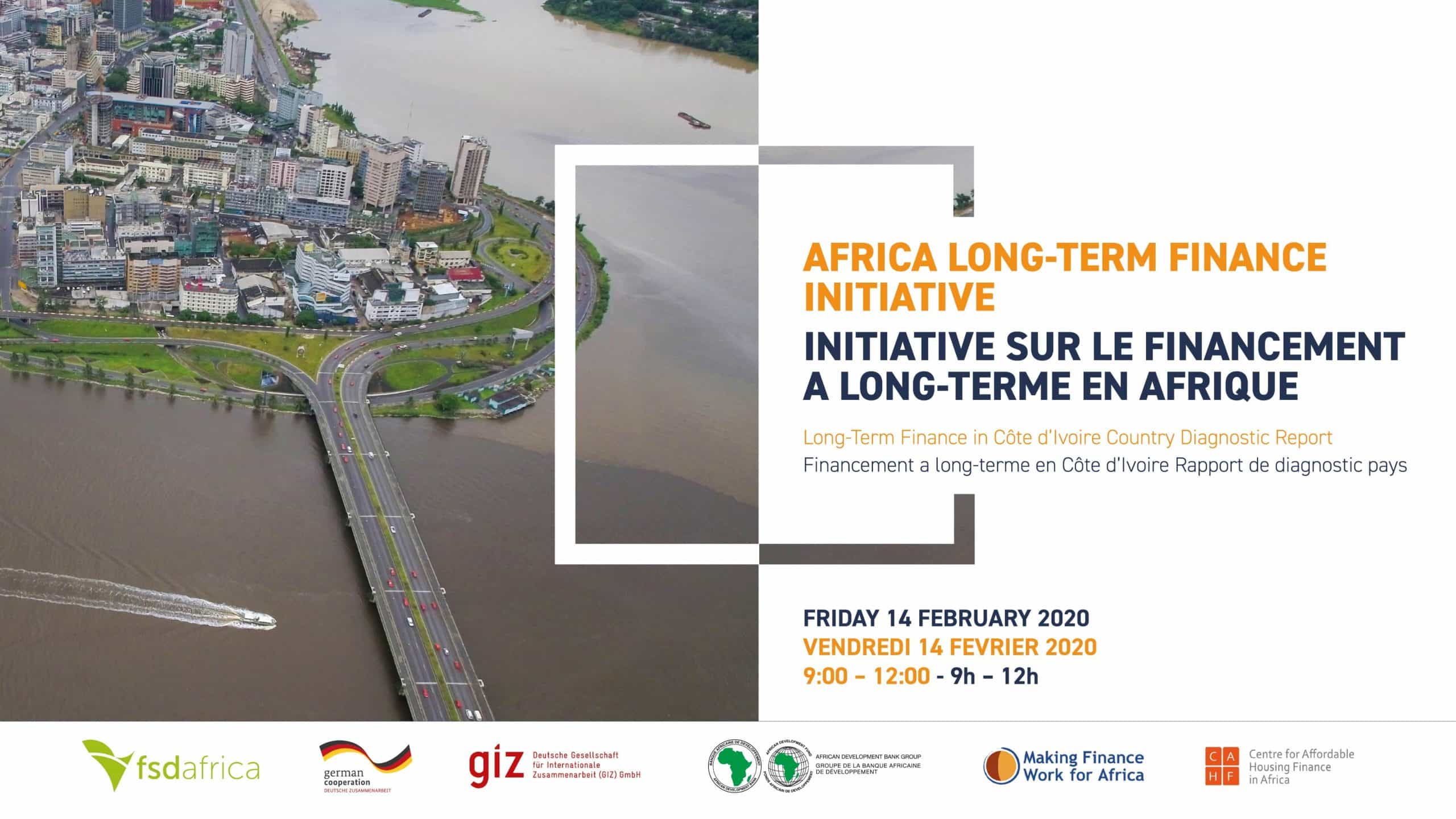
Launch of country diagnostic report on long-term finance in Côte d’Ivo

Together with our partners the African Development Bank, the German Economic Development Cooperation (implemented by GIZ), the Making
Finance Work for Africa (MFW4A)
and Centre for Affordable Housing, we recently launched a country diagnostic report on long-term finance (LTF) in Côte d’Ivoire.

This country report focuses on infrastructure, housing, and enterprise finance in Côte d’Ivoire and applies a flexible definition of LTF that reflects the differing productive life of assets being financed, which may vary from 20 to 30 years in the infrastructure and housing sectors and 5 years or less for enterprises.

Given scarce fiscal resources and the underdeveloped status of domestic financial markets, the report identifies sizable long-term financing gaps in the infrastructure, housing, and enterprise sectors.

The Africa Long-Term Finance (LTF) Initiative seeks to rebalance the focus toward this perspective by (a) assembling data and establishing an “LTF Scoreboard,” on which individual countries are benchmarked against one another on the availability of LTF, and (b) undertaking country diagnostics in a number of African countries to identify specific hurdles faced in deepening markets for LTF and ways such hurdles could be overcome. This report is the first of these country-diagnostic reports.

We started the Africa LTF Initiative to assemble information about the provision of LTF across countries in Africa as well as to provide guidance as to how the public and private sectors can work together in strengthening the provision of LTF.

FSD Network collaborations aimed at harnessing the power of the digital platform economy

Digital platforms are virtual marketplaces that connect providers of goods and services with consumers. In 2018, the i2i facility identified 277 digital
platforms, of which around 80% were of African origin
. These platforms derive revenues from facilitating interactions between providers and consumers of goods and services. Transactions are normally settled on the platform through various payment methods, such as bank cards, bank transfers, cash, mobile money and digital wallets.

A growing number of Africa-based digital platforms are starting to leverage their technology to channel financial services to their customers, therefore providing early demonstration of the ability of platforms to extend financial service reach to new or under-served individuals and small enterprises. They offer financial service providers access to customer data that enables more appropriate product design, as well as access to a range of payment solutions through which they can service these customers.

We are currently providing support to two innovative projects that leverage platform technology in collaboration with FSDs.  This support s provided by Cenfri, through our Risk, Remittances and Integrity (RRI) programme.

Addressing risks and constraints in Kenya’s housing sector


We have forged a partnership with FSD Kenya and iBUILD, through Cenfri to understand and address constraints to providing construction-linked financial services in Kenya.

Kenya’s housing shortage is estimated to be around two million units, with over 60% of the country’s urban population reported to be living in slums. Only 7% of Kenyans are able to access formal housing finance, such as mortgage finance. Construction workers, building suppliers and other housing industry players face various risks, ranging from injury, loss of income and breach of contract, as well as constraints such as lack of capital and fluctuations in price or consumer demand.

iBUILD is a digital platform that offers the potential to contribute to tackling some of these issues and broadening financial service delivery to the sector. It connects construction workers with people looking to build and facilitates open access to housing support services that guide individuals through housing construction and reconstruction processes.

Cenfri has signed an MOU with FSD Kenya to rtake consumer research to help build a business case for insurance companies, banks, Microfinance Institutions (MFIs), Savings and Credit Cooperatives (SACCOs) and others to offer construction-linked financial products to users of the iBUILD app in Kenya.

The consumer research will focus on three iBUILD small and medium-sized enterprise (SME) users: construction workers, contractors and building suppliers.  It will tease out the issues they face and identify how financial services could add value to their businesses, including asking the questions: How can finance add real value to small businesses and informal workers in construction?  How does their participation in a digital platform help facilitate the delivery of innovative solutions?

The ultimate objective of this research is to support the launch of a financial service (insurance, credit or savings) that is distributed through iBUILD to its customers. FSD Kenya will engage with financial service providers to understand what such a financial produccould look like.

Building the resilience of e-hailing drivers in Rwanda

Through Cenfri, Access to Finance Rwanda (AFR) and Yego – an e-hailing taxi service in Rwanda – we are collaborating to help improve the resilience of e-hailing drivers by understanding the financial service needs of Yego’s drivers.

Yego is a digital platform that was launched in Rwanda in 2018. Like Uber, it connects passengers and local drivers of cars and motorbikes (moto) through a computer or mobile device. Yego currently has around 11,000 motorcycle and 2,000 taxi drivers signed up in Rwanda and is looking to expand on the continent.

Initial scoping suggests an encouraging opportunity to offer financial services, specifically insurance, to Yego drivers, who report that they trust Yego and would be open to procuring insurance through the company. Yego is keen on partnering with insurance firms to develop products suitable to the needs of the Yego drivers.

Cenfri has signed an MoU with AFR and Yego to support this collaboration. The objective will be to build a business case for financial service providers, specifically insurers, to service tharket through digital platforms.  AFR and Cenfri will provide technical assistance to Yego in the form of consumer research and support to identifying an insurance partner, as well as during the product development process.

Sustainable economic development in Africa depends on long-term finance

Long-term finance is vital to driving Africa’s economic growth and development. Africa currently faces significant long-term finance gaps in the real and social sectors. FSD Africa estimates that the funding gap for SMEs, infrastructure, housing and agribusiness is over USD 300bn per year that is currently not being met.

Significant strides have been made during the past decade to enhance financial inclusion across Africa. These improvements in the outreach of financial markets were made possible due to the rapid uptake of digital financial services. The use of new delivery modes, such as agent banking and mobile phones, to send and receive payments has completely reformed the financial sector’s outreach to remote, previously excluded users. While still more at the experimental stage, digital platforms increasingly enable the provision of financial services relating to savings, credit and insurance.

However, although inclusion of a large segment of the population as senders and recipients of dal payments certainly serves to empower a previously marginalized segment of the population, it does little to promulgate the core function of financial markets. The purpose of financial intermediation is to enhance the economy’s productive potential by facilitating more optimal allocation of scarce resources. Channeling capital to the most needed uses will contribute to meeting investors risk/return objectives while also augmenting the growth potential of African economies.

When compared to the ‘inclusion revolution’ of the last 10-20 years, progress in enhancing access to investment finance resulting in greater productive employment has been disappointing. Increasing the availability of long-term finance will support investments in the housing, infrastructure and enterprise sectors thereby, directly creating job opportunities. In addition, such investment in social and real sector projects will enhance productivity, and thereby contribute to poverty alleviation through potential sustained increases iosable incomes.

One of the key challenges faced by investors has been the lack of good quality information and information asymmetry on long-term finance. Enhancing domestic capacity in the provision of long-term finance is crucial to filling the sizeable long-term financing gaps that apply almost universally to the African infrastructure, housing and enterprise sectors. Only by harnessing the contribution of long-term finance made available by the private sector will African countries effectively leverage the limited resources made available by the public sector and by donors. Often, African policymakers are confronted with challenges in balancing large and invariably well-justified expenditure demands with very limited fiscal resources, and as a result governments resort to domestic security issuance to fund their current expenditures.

As investors find it more attractive to put their money in ‘risk-free’ government-issued securities, increased issuance of such securities reduces the willingness of loinvestors (banks and institutional investors) to take part in funding risky productive investments. In order to stem this ‘crowding out’ of risk-capital by the government, a concerted effort is required to strengthen management of fiscal resources; to better utilize existing sources of long-term funding, as provided by banks and institutional investors; as well as to develop new sources of domestic funding. Over time capital market financing may come to play a larger role in filling the financing gap that exists in developing economies, provided the approach adopted is appropriately tailored to the development challenges faced by small, underdeveloped markets.

In conclusion, the objective of promoting sustainable economic growth and job creation through greater provision of long-term finance is crucial for Africa and its people. It is imperative that decision-makers, both policymakers, investors, development finance institutions as well as development partners embrace measures that will enhance productivvestment in support of Africa’s economic development.

The Long-Term Finance Initiative
We have collaborated with the German Development Cooperation (GIZ), African Development Bank (AfDB) and the Centre for Affordable Housing Finance (CAHF) to support the Long-Term Finance Initiative, which has two main interventions:

  1. The Long-Term Finance Scoreboard:

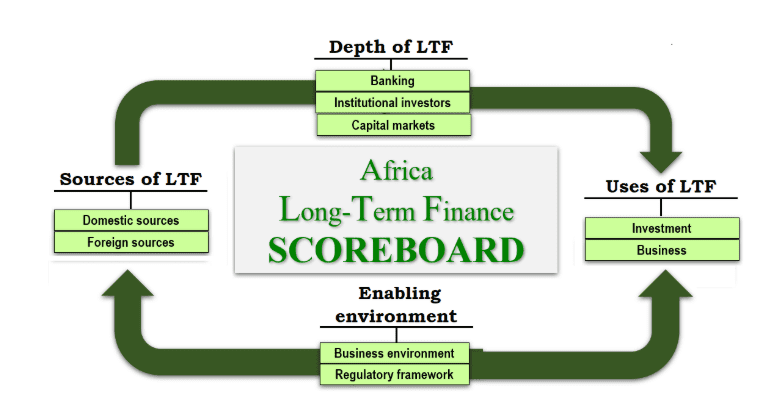
The purpose of the Scoreboard is to assemble information about the sources and uses of long-term finance in Africa – whether provided by governments, donors, foreign direct investors or the domestic private sector. Previously, information and data on the availability of long-term finance in Africa has been scarce, spread across numerous sources, or simply unavailable. Thus, the intention of the long-term finance initiative is both to bring together existing sources of information as assembled by third parties and to augment the availability of data as regards long-term finance through collection of primary data. The Scoreboard also provides bench-marking that will facilitate comparison of how countries are performing vis-à-vis one another, thereby engendering interest and applying peer pressure among countryakeholders.

The purpose of the Scoreboard is to provide information to policy makers, private investors – both domestic and foreign investors – and development partners to support their decision-making as regards investments in Africa. The pilot website currently under development will be published in the coming months with a view to soliciting feedback and enhancing the scope and quality information provided.

Link to the live and online scoreboard: http://afr-ltf.com

  1. In-country diagnostics:

The purpose of in-country diagnostics is to identify effective ways to deepen local markets for long-term finance. By mobilizing local, private sources of finance and more effectively leveraging funding provided by the public sector, African economies will gradually be able to reduce reliance on donor funding and foreign direct investment. The diagnostic framework is based on a comprehensive approach to long-term finance that ranges from contributions of governments, donors, and private sector funding, whether provided by local or foreign investors, to funding intermediated by banks and capital markets, and other sources of private finance, such as private equity or venture capital.

The intention is that country diagnostics will inform country reform programs and create momentum for dialogue among key public and private sector stakeholders, thereby enhancing the focus and effectiveness of implementation efforts.,

Value for money approach for the FSD network

Financial Sector Deepening programmes (FSDs) face increasing pressure to show that they provide value for money (VfM). This includes demonstrating that they are delivering their interventions efficiently and achieving their desired development impact. To achieve this, strengthening of internal procurement processes, as well as monitoring and results measurement (MRM) approaches, continue to be key areas of focus.

With these objectives in mind, FSD Africa commissioned the development of a new VfM approach, as a resource for the FSD Network – a group of FSD programmes including eight national programmes in Ethiopia, Kenya, Mozambique, Nigeria, Rwanda, Tanzania, Uganda, and Zambia and two regional programmes (FinMark Trust in Southern Africa, and FSD Africa).

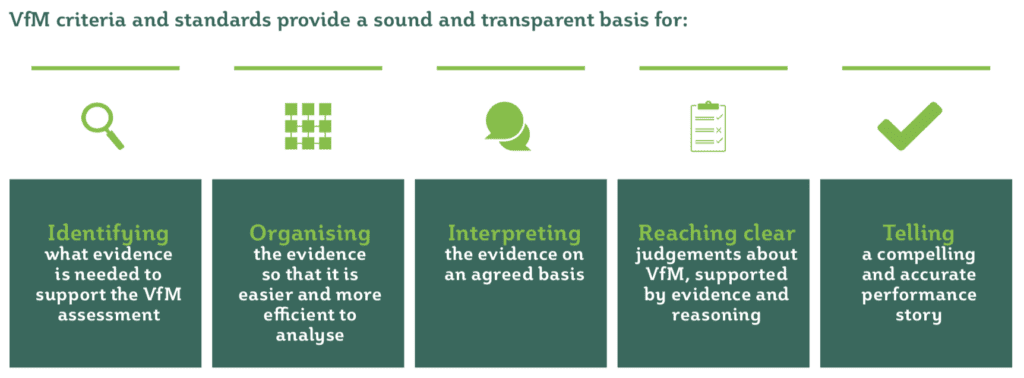
The approach was developed by Oxford Policy Management (OPM) and Julian King & Associates, building on OPM’s approach to assessing VFM. This approach treats VfM as an evaluative question about how well resources are being used, and whether the resource use is justified. Addressing an evaluative question requires more than just indicators – it requires judgements to be made, supported by evidence and logical argument.

The VfM approach emphasises evaluative reasoning as a way to make robust judgements, transparently and on an agreed basis. It involves developing definitions of good performance and VfM, which are agreed in advance of the VfM assessment. The definitions include criteria (aspects of performance) and standards (levels of performance) developed specifically for the FSD context. Criteria and standards provide a systematic framework to ensure the VfM assessment is aligned with an FSD programme’s theory of change, collects and analyses the right evidence, draws sound conclusions, and tells a clear performance story.

FSD programmes are complex and their performance depends not just on quantitative indicators of delivery (such as number of projects completed) but also on the quality of implementation (e.g. sound adaptive management to respond to a changing environment and to act on emergent opportunities and learning). A mix of evidence is necessary to support well-informed, nuanced judgements about FSD performance and VfM.

Indicators play an important role in measuring some aspects of FSD performance. But restricting a VfM assessment to indicators alone would run the risk of missing important information about the quality of delivery and outcomes – for example, focusing on aspects of performance that are easy to measure at the expense of aspects that are important but difficult to quantify.

Therefore, the new VfM approach accommodates a mix of indicators and narrative evidence. The approach seeks to maximise use of rigorous evidence from existing MRM frameworks. It is aligned with the FSD Network’s MRM frameworncluding  Impact-Oriented Measurement  (IOM) Guidance (on how FSDs can better measure their contributions to changes in the financial markets they seek to influence), and the FSD Compendium of Indicators (setting out a common theory of change and related measurement framework that form the basis of common indicators to track FSD outcomes and impact).

The VfM approach is designed to support accountability as well as reflection, learning and performance improvement across the FSD network. It can also be used to systematically identify areas where MRM systems can be improved, to provide better evidence and benchmarking of sound resource management, delivery, outcomes and impacts.

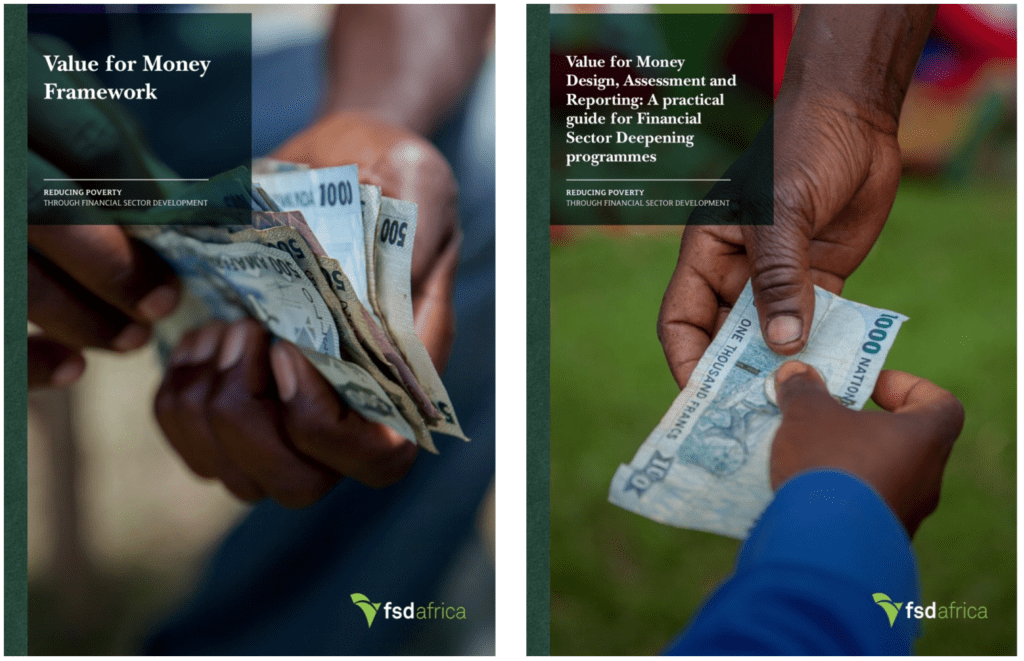
The VfM approach is detailed in our new VfM Framework and Guide. The VfM Framework explains the conceptual design and rationale for the approach. The Guide sets out a practical, user-friendly, step-by-step approach for design, assessment and reporting on VfM. These documents will support a consistent approach to VfM assessment and reporting across the FSD Network, while retaining sufficient flexibility to reflect differences in context.

These frameworks have undergone rigorous development and testing over the past 18 months. As detailed within the documents, this has included a consultative process with FSDs and donor agencies, a staged approach to framework development with input from all FSDs, a full-day workshop with FSD MRM teams (at the FSD Conference in Livingstone, Zambia, November 2017), and piloting of the approach during 2018 with FSD Moçambique, FSD Uganda, Access to Finance Rwanda, and FSD Africa.

It is hoped that FSDs will use this comprehensive VfM assessment approach to support accountability, learning, improvement, and making investment decisions. The FSD MRM Working Group serves as an ideal community of practice to support effective and consistent application of the approach.

Launch of the private equity investment guide

The PE investing guide is a tool to enable pension funds across East Africa assess and invest in private equity assets.

Nairobi, Tuesday 15th October 2019: The East African Venture Capital Association (EAVCA) in partnership with Financial Sector Deepening Africa (FSD Africa) and International Finance Corporation (IFC) have launched an investment guide to enable regional pension schemes to invest in Private Equity (PE) Funds.

Named Private Equity Investment Guide, the objective of the tool is to deepen the understanding of private equity structures among pension fund managers and their trustees to unlock more investment into the asset class. The guide mainly covers three key areas – understanding the asset class and where it sits alongside other asset classes, why and how to invest in PE’s and an overview of the benefits and risks of investing in private equity.

The development of the guide was informed by a market study report that sought tvestigate the low uptake of investment by pension schemes. In Kenya for instance PE allocations by pension schemes total only 0.08% of total industry assets under management. From a regulatory perspective there are provisions allowing Pensions to invest in PE funds in East Africa (Kenya, Uganda Rwanda, Tanzania and Ethiopia).

Across developed markets the pension industry is the backbone of investments, supporting asset classes such as private equity with the patient capital to deploy in growing businesses. Speaking at the launch event, EAVCA’s Executive Director, Eva Warigia noted “We are excited to be part of the evolution in Africa’s private equity industry. EAVCA has decided to be proactive in supporting our local capital markets with the capacity building and investor education that empowers our local institutional investors.”

“Private equity is a catalyst that enables pension funds to access growth opportunities in the unlisted African companies” Added Ms. Warigia.

noted that private equity investments facilitate active participation in the growth sectors of the real economy by pension funds, generating returns to investors while contributing to the creation of jobs and improving access to basic services.

“However, there is need to up skill regulators, fund managers and pension trustees to foster a greater understanding of the benefits, risks and process of investing in PE funds.” Dr. Osano added.

“Pension Schemes are guided by their Investment Policy Statements (IPS), which provides guidance for Strategic Asset Allocation for Pension Schemes. To boost Trustees, ability to make informed decisions about investing in Private Equity, the investing guide provides more information on policies and procedures to assist with risk management of the asset class,” said IFC SME Ventures Senior Operations Officer, Samuel Akyianu added.

Alongside the PE Investment Guide, EAVCA also released a market rele ‘Private Equity Investing for Pension Funds in East Africa’ which notes some of the macro trends that have influenced uptake of PE assets in the region. The report cited the knowledge gap on both pension fund and regulatory side and the absence of regulatory oversight of the PE Fund Managers by local regulators as some of the key impediments for Pensions seeking to invest in PE Funds. The study surveyed 18 Pension Schemes from Kenya, Rwanda, Tanzania and Uganda alongside 15 PE General Partners from Ethiopia, Kenya and the United Kingdom as well as 3 Pension regulators in Kenya, Uganda and Tanzania.

Of the five Eastern African countries Rwanda has the highest provision for Pension Fund investment in PE funds at 20% followed by Uganda at 15% and Kenya at 10% while Tanzania and Ethiopia have no defined limits. Uganda has the highest rate of Pension Fund investment in PE funds at 2.2% followed by Kenya at 0.07% while no data is available for the other countries.

––––––––––– ,

Fidelity bank Ghana’s journey to financial inclusion

Over the last few years there has been growing criticism about banks’ inability to spearhead innovations to meet emerging market needs. This may be partly true due to the high unbanked population in Sub-Saharan Africa and the cost to serve. Often, banks have innovative ideas, but need technical assistance to be able to build capacity for idea generation, prototyping and commercialization. As a result of this, banks are collaborating with like-minded partners to  help them innovate and to remain competitive in their markets.

In 2013, Fidelity Bank Ghana Limited (FBGL) saw the gap in financial services for the large unbanked population and was the first bank in Ghana to set up a dedicated unit to drive its Financial Inclusion agenda. The bank sought approval from Bank of Ghana to launch a low KYC account named Smart Account and the first bank led Agent network.  The Smart Account opened via mobile app with just one National ID, made it easy anyone to open a bank account whilst the Agent network se as an alternative low cost and effective channel to include largely unbanked and underserved rural populations. FBGL sold its vision to FSD Africa, and due to an alignment of objectives, FSD Africa agreed to support the project. Dubbed “Project 5x5x5”, FBGL aims to open 5 million accounts in 5 years through 5,000 agents.

The Project 5x5x5 started in earnest in 2015 with a sales force for recruiting agents and acquiring customers. This was a welcome change for the unbanked and underbanked in Ghana, which led to Smart Account winning an award for Best Bank in Product Innovation at the Ghana Banking Awards.  Due to unprecedented challenges, the project slowed down for several months to enable the technical teams from both institutions review some of the critical aspects on which the project deliverables depended. FBGL on its part was aware of the market backlash in response to withdrawal or slowed services but managed to counter this through by stepping up communication with its customers to allay any fea the market.

We are now happy to say that the project is back on track. A total of 2,600 Agents have been enrolled and over 790,000 Smart accounts opened. The split between male and female customers is at 49% and 51% respectively which is very impressive given the sub-Saharan context where female inclusion lags  behind men at 23%. The bank’s capacity to serve the underserved segment has been strengthened and internal reorganization of key departments within the Retail division and training of staff critical to the delivery of the project as well as the users, reinforced.

The bank has seen the value of Agency banking which is no longer viewed as a stand-alone project but one that has been mainstreamed into the bank’s business-as-usual processes. Agency banking is no longer a channel for inclusive-banking customers but has evolved into a channel that serves all banking segments unlocking a lot more value for the bank than initially envisaged. Additionally, the project has had to adapt to the changing ecom majorly influenced by digital innovations. Towards this, the bank has developed digital channels in partnership with Telcos which has enabled the roll out of digital savings and credit products. Soon customers will be able to open accounts on their mobile phones (self-onboarding) and access digital credit via USSD.

The success of this project relies on the close collaboration of FBGL and FSD Africa, and important lessons have emerged from this. Close working relationships are critical to project management in that they enable for candid discussions on performance leading to quick interventions where needed. In addition, being aware of the changing financial ecosystem has enabled the project to incorporate critical work-streams, like digital add-ons that were initially not part of the project, but critical to maintaining the bank’s relevance in the marketplace.

Although there were setbacks in the early stages of the project that could have easily discouraged the teams, FGBL had made a strategic decision reach the lower income segments through the Smart Account with a simplified way of account opening using a sales force, agents and bank branches. , This long-term vision fortified the determination to find solutions to emerging challenges. FSD Africa has been adaptable to emerging dynamics that have necessitated changes at various stages of the project. This is in line with its objective of incentivising financial institutions to innovate by availing the necessary technical assistance and supporting partners to iterate for optimal delivery of the projects.

This project is a clear demonstration of managing projects for results, and partners working together to overcome emerging challenges as they strive towards achieving the bigger goal. The project is on course to deliver the ambitious 5x5x5 objective with visible market system changes. Already, the Ghanaian market is responding positively to this innovation, as two banks have since launched Agency banking networks. FSD Africa is glad to have supported FBGL to set the pace in Ghana, and their financial landscape is permanently changed.,

Empowering women through savings groups

“Our economies are built on the back of women’s unpaid labour at home”

– Melinda Gates

Empowering women means, at its core, providing women with strength and confidence to control their lives, and knowledge of their own rights so that they can actively engage in their communities.

Increasing women’s access to financial services allows them to have better control over financial resources and improves independence and mobility. It also fosters greater investments in income-generating activities, and the ability to make decisions that serve the needs of women and their families. In short – financial inclusion empowers women.

But how do women, especially those living in rural areas, access financial services?

Savings groups (SGs) and access to finance

SGs are easily accessible groups of people who get together regularly to save money and borrow from the group savings, if needed, according to rules established by the group.

Programmes that promote SGs typically focus on women’s economic empowerment and measure change through quantitative indicators of economic well-being. This is mainly because SGs enable the accumulation of funds which can be used as capital for micro-enterprises and for such programmes, the quantification of results is easier. This approach, however, provides a limited understanding of the role of SGs in affecting various dimensions of women’s empowerment, such as social, political and reproductive empowerment.

The SEEP network, in partnership with FSD Africa and Nathan Associates, commissioned a savings group research across sub Saharan Africa. The aim of the research was to highlight good practices in the design and monitoring of Savings Group programmes for women’s empowerment outcomes. The research also led to the development of a monitoring tool for the measurement of the various dimensions of women’s empowerment within SGs.

Savings groups and women’s empowerment

The research built upon pre-existing frameworks and for the first time captured women’s empowerment in the specific context of SGs.

In particular, seven ‘domains’ or clusters of core areas within which empowerment can be measured have been identified. These are i) Economic independence; ii) Confidence and self-worth; iii) Decision-making; iv) Voice and leadership; v) Time use; vi) Mobility; vii) Health.

Through these domains, SGs market actors can design SGs interventions with sight of the empowerment impacts they aim to achieve. They can also observe the likelihood of empowerment outcomes and impacts across different SGs intervention types:

i) Savings Groups only interventions, for example, a development institution working on financial inclusion could adopt an SGs only approach to enable target groups to access appropriate financial services from formal financial institutions. For these kinds of interventions, empowerment impacts are strongly observed in 2 out of the 7 domains, economic independence and confidence and self-worth. Through this type of intervention, it was observed that participants gained access to appropriate financial services, enhanced financial management skills, expanded social and support networks. Fewer impacts on mobility, time-use and health were observed.

ii) Savings Groups in combination with other economic development activities, for example, a Savings Group initiative could be combined with financial education, technical or vocational training, or specific income generating activities. Strong empowerment impacts are observed for such interventions for 3 out of the 7 domains, that is, economic independence, confidence and self-worth and decision-making. Improved decision-making is observed through participants engaging in employment or self-employment and demonstrating abilities in influencing relevant decisions in their homes and communities.

iii) Savings Groups within other integrated programming i.e. programming that is aimed at weeding out harmful social norms & inequalities: for example, a Savings Group initiative could be integrated with gender programming that challenges harmful social norms such as domestic violence, female genital mutilation, negative attitudes to family planning/reproductive health, etc. The programming approach could combine SGs with education and capacity building for members accompanied by gender dialogue sessions, engaging members and their spouses, community and religious leaders.

For such interventions, impacts are strongly observed within 5 of the 7 domains: economic independence, confidence and self-worth, decision-making, voice and leadership and health. Empowerment demonstrated by leadership is observed through changes in gender norms, especially within women’s economic participation; empowerment in health through increased and improved investments in maternal, neonatal and child health or improved attitudes and norms with respect to reproductive and sexual rights. For empowerment demonstrated by time use, impacts are observed through more equitable allocation of unpaid household labour.

An example of an impactful SGs within an integrated programming intervention (i.e. intervention option iii), is the ‘Towards Economic and Sexual Reproductive Health Outcomes for Adolescent’ girls (TESFA) project under CARE International in Ethiopia. Girls within SGs provided with sexual and reproductive health (SRH) training demonstrated both economic and health related gains from programme participation. These were observed through, increased SRH knowledge, improved communication on SRH, decreased levels of gender-based violence, improved mental health, increased social support and gender attitudes.

A systematic approach to analyzing women’s empowerment

Saving Groups create economic independence for women but in order to analyze their contribution to other domains of empowerment, there is need for a systematic design of a monitoring and results measurement approach. Through this research, a toolkit that provides guidelines as to how to create an evidence-based theory of change was developed. Drawing from existing frameworks economic empowerment and existing data, the toolkit proposes a more holistic framework for SGs, based on the seven domains of empowerment discussed above. It also provides some standardized indicators to improve the comparability and aggregation of results across projects and organizations.

For more information and application of the WEE toolkit click here.


Trust in technology to unlock Africa’s remittances potential

The small bundles of cash loved ones send home might not seem much, but their impact on lives and economies is significant. For families, these regular lifelines help pay for health, education and living expenses. And, as more and more people go abroad to work, remittances have grown to become a significant part of the sub-Saharan African economy, making up 4.3 per cent of the continent’s gross domestic product. To put this in money terms, in 2017, sub-Saharan Africa received $42 billion in foreign direct investment and $25 billion in aid, compared to $42 billion in remittances.

With most remittances being sent from the UK in cash there is a strong drive to use technology to address some of the main challenges. This makes sense, with many online remittance providers offering transparency, security and convenience at significantly lower prices.

Recent focus group research, ‘Moving Money and Mindsets’, indicated that in 2016, 90 per cent of remittances sent by the research participants from the UK were being paid in cash at an agent. Two years later, half of the participants had moved to an online remittance service. Whilst not nationally representative, the groups demonstrate that people are changing the way they send cash home.

This is encouraging. Yet, despite the pricing and efficiency benefits, there are still challenges that digital money transfer operators need to overcome such as: A lack of understanding, problems with registering for a service, scepticism about online services and a lack of personal interaction with the sender. All of these issues could be summed up by one word: Trust. Trusted cash pay-out networks, trusted brands and trusted service. It’s human nature: When you are sending your hard-earned cash – trust matters.

Many traditional cash-based services that people use to send money home are known and trusted; they are established and have a track-record of delivering. Building trust takes sustained, consistent effort over a long period of time. It means getting it right every time.

Moving people to use digital services is not purely down to the actions of money transfer services. Authorities have responsibilities too. An important step is to provide some of the basic infrastructure that is still lacking in some countries. When sending money to countries like the Democratic Republic of the Congo and Sierra Leone, people use cash as there are limited digital alternatives for receiving remittances, especially in rural areas. Most people in these countries still don’t have access to bank accounts or mobile money.

But providing basic infrastructure is not the only step: We also need to build trust in the system. A good example of how to do this is M-pesa in Kenya. Part of M-pesa’s success can be attributed to the focus on gaining the trust of consumers from day one, beginning with domestic transactions and now used for receipt of international remittances. Leveraging the Safaricom brand, training agents to provide a consistent customer experience, and ensuring there was transparency around transactions gave people confidence to try the system. Today it is hard to remember how we transacted without it.

Through investments in marketing and infrastructure, the same could be the case for online remittances. We have the tools to help make sending money home cheaper and easier, now is the time to invest in building trust to get people to use them. One approach could be identifying a group of influencers within migrant circles to communicate the benefits – convenience, safety, and cost – of using online services.

Just as M-pesa transformed the way we transact; digital tools have the potential to change the way people send money home. Building trust is mission critical when it comes to unlocking the full potential of the remittance economy. A penny saved is a penny earned, by making it cheaper to send money home we can make the impact of the penny go further.

originally published in The East African, 1 Jun 2019

,