Author: Kihingu Inc

UK announces £132m of new investments in Kenya and backs Nairobi as an international financial centre in Nairobi

TheCityUK signs a Memorandum of Understanding with the Nairobi International Financial Centre.

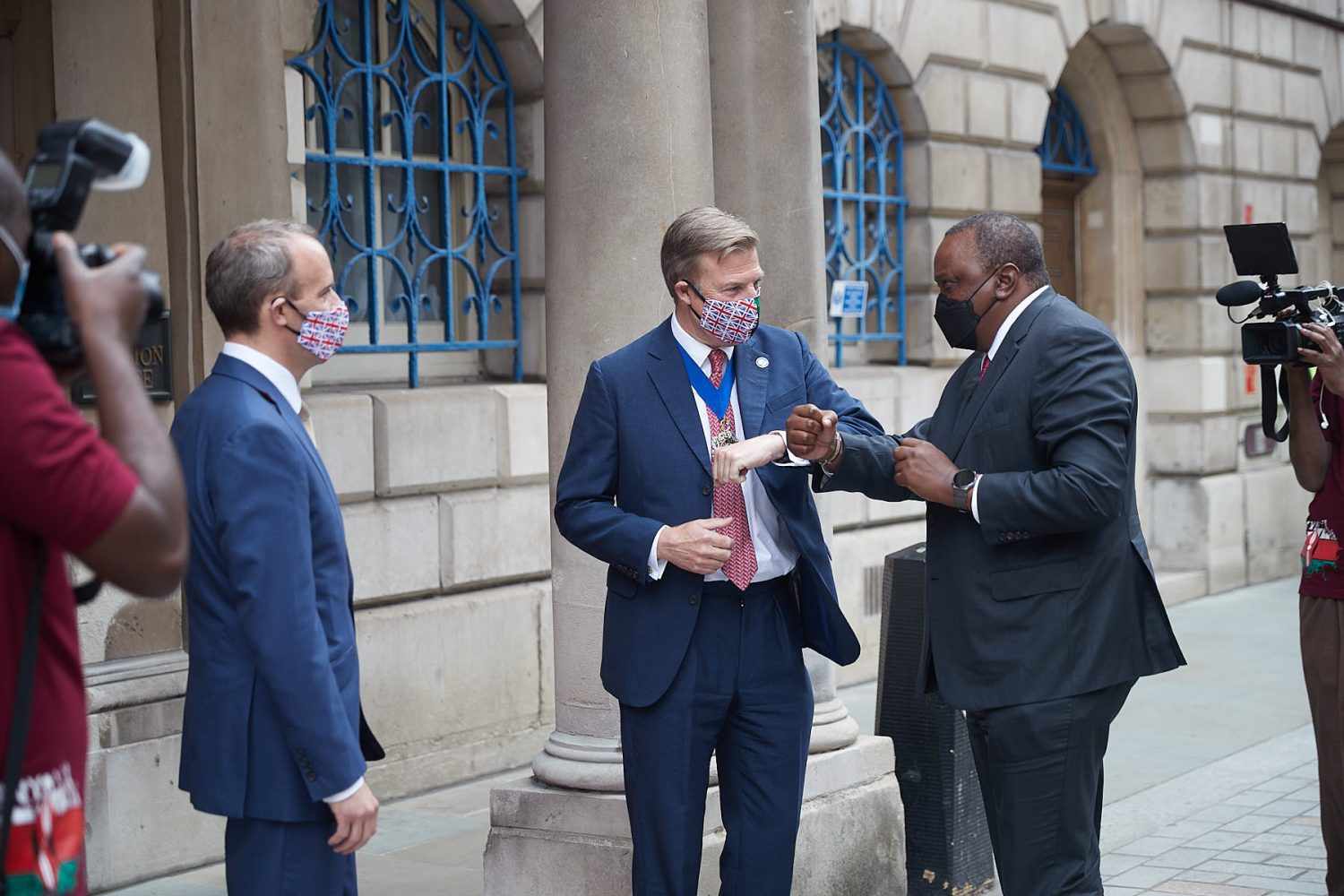
London, UK, 27 July 2021: Foreign Secretary Dominic Raab today welcomed Kenyan President Uhuru Kenyatta to Mansion House in London to announce £132 million of new UK investment in Kenya.

He also launched the Nairobi International Financial Centre, and its formal partnership with the City of London.

At the start of a three-day visit to the UK to co-host the Global Education Summit with Prime Minister Boris Johnson, President Kenyatta witnessed the signing of a new memorandum of understanding between TheCityUK and the Nairobi International Financial Centre Authority, establishing a formal partnership, including closer collaboration with the London Stock Exchange. This will help to channel international investment into Kenya and the wider region, making sure firms and investors are able to make the most of trade and investment opportunities.

Foreign Secretary Dominic Raab said:

“This £132 million package of new UK-Kenya deals from the UK government and British firms will support investment in the region, including building new green affordable homes, connecting households to clean energy, and boosting manufacturing.

“This package of investments will create new jobs and unlock new opportunities for UK and Kenyan businesses by strengthening the relationship between Nairobi and the City of London.”

British insurer Prudential intends to be the first firm to set up in Nairobi’s new International Financial Centre, while Kenyan mining company Mayflower Gold announced plans to dual list its shares on both the London and Nairobi Stock Exchanges in a deal worth £14 million.

Prudential PLC Chair Shriti Vadera said:

“Africa is an important part of our long term growth strategy and I am delighted that the UK and Kenya are collaborating on financial services, where there are many opportunities for innovation. Prudential is proud to be working with both countries on this initiative. We believe that deepening the financial sector across the continent is key to building and driving economic resilience, development and growth in a region of great promise and opportunity. Joining the International Financial Centre in Nairobi is a testament to our long-term commitment to supporting financial sector development across Africa.”

President Kenyatta also secured the backing of UK investors to boost affordable housing and manufacturing across Kenya. £28 million of private investment in Kenyan manufacturing was confirmed today as a result of the UK’s Manufacturing Africa initiative, and UK company ARC Ride announced plans to invest £4.5 million in growing its fleet of electric vehicles in Kenya.

The Foreign Secretary also announced a new £58 million fund, anchored by £35 million of UK government investment, which will finance the construction of 10,000 green affordable homes in Kenya. This is on top of £53 million of investment in Kenyan affordable housing announced during the Foreign Secretary’s visit to Kenya earlier this year.

A new digital customs system for Kenya will make it faster and easier for goods to move between Kenya and the UK, and between Kenya and the rest of the world. Delivered by TradeMark East Africa, and backed by £18 million of UK funding, this will boost Kenya’s economy, allowing firms to take greater advantage of the recently ratified UK-Kenya Economic Partnership Agreement and grow our £1.4 billion mutual trade.

Earlier in the day, President Kenyatta met with COP President Alok Sharma at Kew Gardens to celebrate progress on the Kenya-UK Year of Climate Action. The UK announced £3.7 million of new UK funding to accelerate Kenya’s climate transition, including projects supporting renewable energy, clean cooling, and forest restoration. UK-backed InfraCo Africa will also invest £3.3m in off-grid solar to provide clean energy access to 6,000 families in rural Kenya.

Tomorrow, President Kenyatta will meet with the Prime Minister at Chequers ahead of the Global Education Summit on Thursday, which will convene key global players and decision-makers, with the aim of getting all children into school and learning.


NOTES TO EDITORS

The £132 million announcement today is as follows:

o   A new £58 million fund, anchored by £35 million of UK Government investment, which will finance the construction of 10,000 green affordable homes in Kenya.

o   £28 million of private investment in Kenyan manufacturing through the UK’s Manufacturing Africa initiative.

o   £18 million of UK grant funding for a digital customs system to help smooth Kenya’s international trade, including with the UK, and allow firms to take greater advantage of the UK-Kenya trade deal ratified at the start of 2021.

o   £4.5 million investment by UK company ARC Ride to expand their fleet of electric vehicles in Kenya.

o   £3.3 million investment from UK-backed InfraCo Africa to finance expansion of off-grid solar in Western Kenya, providing 6,000 Kenyan homes with access to clean energy.

o   £3.7 million support from the UK government to back Kenya’s green transition including projects supporting renewable energy, clean cooling, and forest restoration – including Kaptagat Forest, a project spearheaded by Kenyan marathon legend Eluid Kipchoge.

o   £1 million of UK aid funding for technical support, to structure Kenyan infrastructure projects so they are able to attract private investment.

o   £0.9 million investment from InfraCo Africa, backed by the UK government, in Nopea Ride, an electric taxi service.

o   £0.5 million of UK funding for policy advice on how to support the development of green manufacturing in Kenya, including electric vehicles.

o   Mayflower Gold, a Kenyan mining company that employs 400 people, will float £14m of shares on the London and Nairobi stock exchanges.

  • The UK has supported the set-up, business case development and investor proposition of the Nairobi International Financial Centre through Financial Sector Deepening (FSD Africa and FSD Kenya).
  • The MoU comes shortly after the Chancellor Rishi Sunak set out a roadmap to cement the UK’s position as an open and global financial hub, and enhance relationships with jurisdictions around the world: https://www.gov.uk/government/publications/a-new-chapter-for-financial-services

FSD Africa signs on to United Nations – Principles for Sustainable Insuran

We are proud to announce that we have recently signed on to United Nations Principles for Sustainable Insurance (PSI). UNEP’s Principles for Sustainable Insurance (PSI) serve as a global framework for the insurance industry to address environmental, social and governance (ESG) issues—such as climate change, biodiversity loss and ecosystem degradation, pollution, and social inequality—as risk managers, insurers, and investors. 

Founded in 1992, UNEP’s Finance Initiative (UNEP FI) is a partnership between UNEP and the global financial sector to mobilise private sector finance for sustainable development. FSD Africa joins more than 360 members—banks, insurers, and investors—and over 100 supporting institutions—to help create a financial sector that serves people and the planet while delivering positive impacts.  

We have unique experience and understanding of African financial markets. Therefore, this membership will enable us to link and apply the global Principles for Sustainable Insurance to the African insurance industry. We will use our intellectual, operational, and capital capabilities to implement the four Principles across our spheres of influence to contribute to building resilient, inclusive, and sustainable communities and economies on a healthy planet.

As experts in managing long-term complex risks, the insurance industry has an important leadership role to play in helping the financial industry and society more generally sustainably navigate complex ESG risks. The UNEP PSI provides the principles and tools to enable the insurance industry to do just this. FSD Africa is thus committed to supporting the implementation of these principles in the African insurance industry as part of our commitment to creating a sustainable and resilient future.
Mark Napier – CEO, FSD Africa 


KES 5.3 million accelerator programme launched to drive innovation in Kenya’s insurance sect

The accelerator programme aims to harness technology innovations that increase insurance coverage among low-income consumers.

Nairobi, July 16, 2021 – FSD Africa, the Insurance Regulatory Authority, and Tellistic Technology Services have launched BimaLab [launch recording], a KES 5.3 million accelerator programme designed to support Kenyan innovators to develop innovative solutions for the insurance sector.

The BimaLab accelerator program will emulate global best practices and place them in a local context to build Kenya’s most competitive and attractive start-up accelerator program. Through the programme, 12 innovators will benefit from a ten-week programme that provides them with expertise, resources, and support to develop and scale market-ready solutions.

“At FSD Africa, we are committed to the growth of the insurance sector and are excited to be involved in grooming the next generation of insurance innovators. By supporting start-up innovators through the BimaLab II accelerator programme, we will not only enhance insurance coverage but also deliver insurance solutions that are both convenient and efficient.”
Kevin Massingham, Director, Risk & Resilience, FSD Africa

Applications are now open on: https://bit.ly/36uUtu9. The deadline for submission is 31st July 2021.

The role of insurance in climate change and sustainable development

Climate change is increasing extreme weather events, and Africa is greatly exposed. Drought, flooding, extreme heat and tropical cyclones are all major risks with the consequence that 30 of the world’s 40 most climate-vulnerable countries are in sub-Saharan Africa1. Given Africa’s high dependence on its natural resources, with agriculture contributing 16% of the continent’s GDP and employing roughly 60% of the population, these climate extremes pose a very high risk in the continents’ economies and household livelihoods. In Kenya, for example, in the three drought years in 2009, 2010 and 2011, the drought cost the country 11%, 7% and 9% of its entire GDP.

At the same time, only 3% of global climate finance2 finds its way to Africa to drive mitigation and adaptation. There is also a large protection gap with a very low percentage of African weather-related losses currently being insured. A specific example is Cyclone Idai which in 2019 affected Mozambique, Malawi and Zimbabwe. Of t0bn losses, only 7% were covered by insurance3. As the frequency and severity of weather events increases, if more is not done to change this situation and increase resilience, then the cost of climate disasters will render sustainable development virtually impossible in Africa.

We thus face a major sustainable development crisis for which urgent action is required. The insurance industry has a vital role to play in responding to help drive both mitigation and adaptation.

Mitigation

Insurers are underwriters and asset managers of long-term capital and, in both capacities, can meaningfully contribute towards reaching net-zero carbon emissions.

As underwriters, insurers play an essential role in facilitating the flow of capital to mitigation projects through providing de-risking solutions to investors. For example, in the geothermal energy sector in East Africa, where capital intensive early-stage development drilling has a low probability/high severity risk profile, investors need risk transfer solutions to make the risk-return profile attractive. To address this barrier, FSD Africa is working on setting up a local underwiring pool that will provide de-risking solutions to enable the crowding-in of private capital to this important renewable energy source.

On the flip side, insurers can leverage their underwriting to reduce capital flows to the fossil fuel industry by making underwriting decisions using an ESG lens and not purely based on short-term commercial factors.

As managers of significant pools of long-term capital, insurers also have a critical role to play in the transition to a net-zero emissions economy through green investing.

The recently convened UN Net-Zero Insurance Alliance demonstrates the growing global momentum towards this.

Adaptation

The insurance industry is expert at managing complex long-term risks, and so when it comes to managing the unavoidable long-term consequences of a warming planet, the industry has much to contribute.

The starting point in managing risk is understanding it and having the right data and models to make informed decisions on how to respond. In simple terms, you need to know the likelihood of a hazard occurring, the direct financial losses it will cause and the indirect impacts (e.g. services disruption) that will result. Catastrophe models have been used for many years by insurers to model these types of impacts and price the risk. By incorporating climate risk modelling into these projections, insurers can help businesses and governments make informed decisions on what resilience initiatives to pursue.

Once risk is understood and evaluated, it needs to be managed. Investing in physical risk reduction measures (e.g. irrigation systems or flood defences) and pre-arranging risk finance are two important management options. The insurance industry is a key player in enabling both. For the necessary private finance to flow to resilient infrastructure, as with mitigation projects, risk transfer solutions underwritten by insurance companies are often required. And when it comes to pre-arranging risk finance, this is obviously the core of what the insurance industry offers. So, insurers making the necessary solutions available to individuals, businesses and governments is vital to ensuring climate resilience.

The way forward

One of the key global initiatives developed explicitly for the insurance industry is UNEP’s Principles for Sustainable Insurance (PSI). It focuses on sustainable insurance that reduces risk, develops innovative solutions, improves business performance, and contributes to environmental, social, and social-economic sustainability[1].

Given FSD Africa’s increasing focus on the role of finance in climate mitigation and adaptation, we have joined the UN Environment’s PSI initiative and will be directly supporting the implementation of the PSI global programme in Africa. FSD Africa was also a founding signatory to the recent Nairobi Declaration, which commits African insurance organisations to play the sustainability roles described in this article. We strongly appeal to all African insurance industry leaders is to also sign the Nairobi Declaration.  Let’s work together to leverage the collective financial might of the insurance industry towards a sustainable future.


<"#_ftnref1" name="_ftn1">[1] UNEP FI: PSI – Principles for Sustainable Insurance – a global sustainability framework and initiative of the UNEP Finance Initiative (2012)

1 Notre Dame Research
2 CPI, 2019
3 Swiss Re Institute,

FSD Africa launches new partnership to deliver climate finance training in Africa

Th first-of-its-kind partnership will equip Africa based policymakers, regulators, academics, and business leaders with the knowledge they need to secure financing and tackle the climate crisis.

NAIROBI, 29 June 2021: FSD Africa has launched a first-of-its-kind climate finance training programme, designed to expand access to funding for climate mitigation and adaptation on the continent.

Developed collaboratively with the National Treasury and Planning – Kenya, the training will be delivered through a coalition of global partners, including the University of Cambridge Institute for Sustainability Leadership (CISL), the International Institute for Environment and Development (IIED), and the Eastern and Southern Africa Management Institute (ESAMI).

The training is focused on giving regional policymakers, regulators, academia, business leaders and financial market professions the knowledge needed to access climate finance from global sources and fast-track capital mobilisation for projects across Africa.

The training programme will target 100 trainees annually with the first cohort of 50 joining in August. A subsequent class will be held in September. Through a combination of knowledge building and targeted investment, FSD Africa aims to help firms, regulators, and government ministries in Africa and beyond to better identify, understand, manage, and monitor key climate and environmental risks and opportunities.

“This is an exciting opportunity to partner with decision-makers in financial markets from the public and private sectors. Committing to raising awareness for the development of appropriate policies and financial products is crucial if we are to reduce the cost and impact of climate change in the region.”
Mark Napier, CEO

Enrolment is open. To learn more visit https://esami-africa.org/climatefinance

FSD Africa Investments invests US$4.5m in Nithio FI, to support the scale up of off-grid energy access in African markets

FSD Africa’s funding contributes to Nithio FI’s first raise of US$23 million to scale off-grid energy financing in Kenya, Nigeria, and Uganda.

Tuesday, June 22, 2021: FSD Africa Investments (FSDAi), the investing arm of FSD Africa, has today invested US$4.5m in Nithio FI, a renewable energy financing intermediary focused on the Pay as You Go (PAYG) off-grid solar sector, to provide reliable and sustainable renewable energy solutions for households and small businesses in Kenya, Nigeria, and Uganda

Nithio Holdings is an AI-enabled energy financing platform whose mission is to standardize credit risk assessments and therefore drive more capital to the sector, including by investing directly and efficiently in off-grid solar companies. Over the next five years, Nithio FI aims to provide financing to more than 224,000 energy access products across the continent, including solar home systems (SHS) and productive use appliances.

Despite the increasing interest in Africa’s off-grid solar offerings, GOGLA’s statistics reveal that investment in the sector has stalled over the last five years. In addition, nearly 600 million people across the continent are still expected to be without electricity in 2030 unless there is significant progress in scaling up financing access.

“Innovation must play a central role in closing the power gap in Africa. By leveraging the technical and analytical capabilities of Nithio, we are ensuring that those communities who are most at need are provided priority access to renewable electricity. With renewable energy emitting the least greenhouse gases and air pollutants, both the planet and our health will benefit from the investment in greener power sources.”
Anne-Marie Chidzero, Chief Investment Officer, FSD Africa Investments

The Kenya sovereign green bond second-party opinion

Climate change has severe consequences over the short to medium term across multiple sectors, such as agriculture, industry, energy, water, trade and tourism. If we don’t act now, it will impede Kenya’s vision to be a nation that has a clean, secure and sustainable environment by 2030 under the country’s long-term development blueprint, Vision 2030.

Under the Social Pillar (environmental management) of this plan, the country plans to achieve the vision by intensifying conservation of strategic natural resources, applying measures to guard against the adverse effects of increased pollution and waste, insulating development from natural hazards; and building institutional capacity in environmental planning and governance. The issuance of the Kenya Sovereign Green Bond is one of the mechanisms that have been conceptualised as a plan to secure alternative green and sustainable funding sources to finance this vision, and also fund the budget deficit as part of the Post Covid-19- Green and Resilient Recovery plan to build back Better.

The Kenya Sovereign Green Bond framework articulates the country’s governance on the funds raised from the issuance of the bond, including use of proceeds, the process for project selection and evaluation, management of proceeds, and reporting progress and impact requirements. The framework has been developed in a consultative process, receiving input from government agencies and other stakeholders.

Proceeds of the Kenyan Sovereign Green Bond will be used to finance in whole or in part eligible green assets/projects that will be identified from the approved National Budget by parliament.

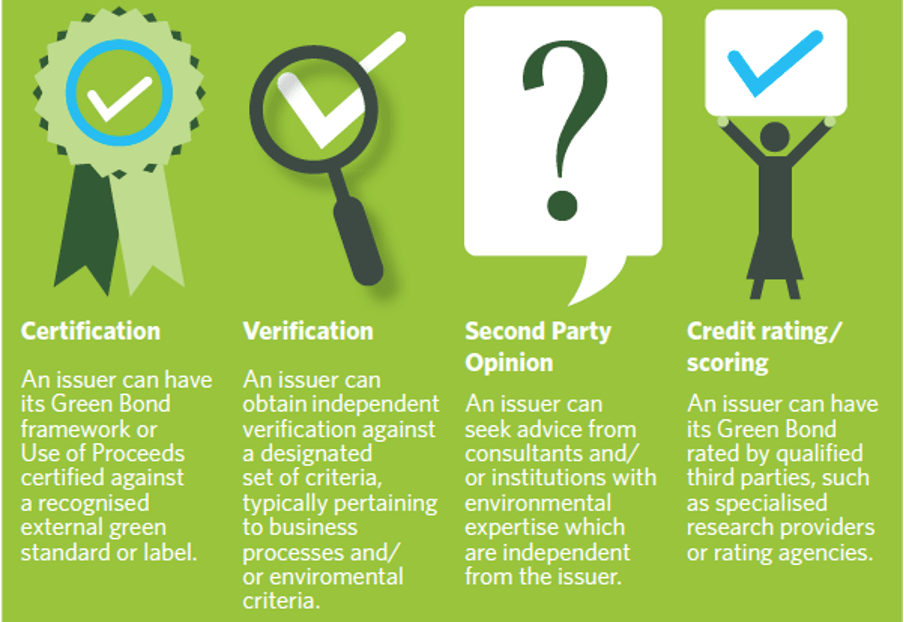
Transparency and disclosure on what is being financed by green bonds are important for investors. Credible, science-based, widely supported guidelines about what assets/projects qualify for green bonds helps investors make informed decisions about the green credentials of a bond. Evaluating the green features of underlying assets/projects may be referred to as verification or external review.

The phrase ‘external review’ refers to the independent assessment of the green credentials of a bond provided to the issuer by an external auditor (reviewer). Most external reviews can provide both a Second-Party Opinion (SPO) as well as a Verification (Assurance) Report against the Climate Bonds Standard.

External reviewers are generally engaged while or soon after the issuer has set up a Green Bond Framework and the review is normally made public before the roadshow. This is because the issuer can then use the independent review to promote the green credentials of the bond during the roadshow and it is now common practice for the review to accompany the bond’s information memorandum or prospectus when it is sent to potential investors.

Coding, tracking, monitoring and reporting of the utilisation of all climate finance and sovereign Green Bond proceeds during the fund allocation process until the completion of allocation of proceeds will be ongoing to ensure there is compliance with the Kenya Sovereign Green Bond Framework and any environmental and social risk assessments.

The National Treasury and Planning has obtained an independent second opinion from an appropriate provider to verify that the eligibility criteria, project selection, sovereign green bond proceeds allocation and management process, selected eligible green assets/projects are in line with international best practices on Green Bonds.

To guarantee that funds are properly attributed to the sovereign green bonds assets/projects as outlined in the framework, within the amounts set, the SPO will be published on the National Treasury and Planning website as well as all other websites globally. As per the green bond reporting guidelines, The National Treasury and Planning Ministry is expected to engage, annually, an independent third party to provide assurance on its annual use of proceeds and any impacts realised.

FSD Africa signs on to United Nations-supported Principles for Responsible Investment

We are proud to announce that our investment arm, FSDAi, has recently been listed as a signatory to the United Nations-supported Principles for Responsible Investment (PRI). Through this new membership, FSDAi joins more than 3,000 other organisations around the world that have publicly demonstrated their commitment to responsible investment.

The membership into this unique and leading platform will enable FSDAi to deeply embed environmental, social and governance (ESG) standards into its investment process while providing opportunities for leadership in thematic areas such as biodiversity and climate change

As institutional investors, we have a duty to act in the best long-term interests of our beneficiaries; we believe that environmental, social, and corporate governance issues can affect the performance of investment portfolios. We also recognise that applying these Principles may better align investors and our investees with the broader objectives of the society. As we grow our portfolio, the adoption of these principles will aid in the escalation of ESG issues during portfolio monitoring but also in taking up ESG opportunities.

We are delighted to join PRI and to the opportunity that this offers to advance further capital investment for sustainable finance, in meeting SDG targets and greening the planet.
Anne-Marie Chidzero, CIO, FSDAi.

PRI is recognised as the leading global network for investors who are committed to integrating ESG considerations into their investment practices and ownership policies, guided by the six Principles of Responsible Investment.


The Arab Financial Inclusion Innovation Prize returns for its third edition

Take financial inclusion to the next level

The Arab Financial Inclusion Innovation Prize (AFIIP) is back to scout and support the most innovative solutions that can make financial services more accessible and affordable for the low-income and MSMEs in the Arab world.

AFIIP is offering prizes of up to $60,000 USD in cash and technical support to ideas, products and services that can improve financial inclusion in the region.

Since 2018, the Arab Financial Inclusion Innovation Prize has identified over 200 innovators in the region. AFIIP has supported solutions span the financial services sector, from start-ups to incumbent institutions, operating in microfinance, digital payments, financial literacy, digital identity, and beyond. AFIIP provides winners with multi-year technical support and gives them access to a global network of thought leaders and investors to help take their ideas to the next level. Applications are judged on their impact, feasibility and marketability by a panel of world-class experts.

This year, AFIIP is also providing additional resources to innovations that can generate green outcomes. There is a second stream to the prize looking for financial solutions that can help mitigate the risks of climate change, increase environmental resilience for the low-income and MSMEs, provide sustainable opportunities to the underserved and enhance the green finance ecosystem of the Arab world.

The call for applications is now open, with the support of SANAD Technical Assistance Facility, FSD Africa and UK aid from the UK government and Spectrum Digital Holdings.

Visit www.afiip.org to learn more and apply.

Together, we can put financial inclusion at the heart of innovation in the Arab world.

Winning AFIIP gave us the opportunity to prove our vision. Two years on, their team continues to engage us in a wide-reaching and fruitful network.
Valify Solutions, 2019 winner


Linking refugees in Uganda to formal financial services

The Financial Inclusion for Refugees (FI4R) project which was jointly supported by FSD Uganda and BFA Global, and other partners (Equity Bank Uganda, VisionFund Uganda and Rural Finance Initiative) worked to offer financial services to refugees in Uganda.

In a world dealing with unprecedented crises, over 100 million people – equivalent to the population of the world’s 14th largest country – find themselves forcibly displaced. On May 23, 2022, the UNHCR unveiled a staggering reality: 1% of humanity is on the move, struggling for survival away from their homes. Beyond the distressing stories of human suffering, there lies a lesser-known struggle – the battle for financial inclusion and dignity. In this video, we uncover the profound journey of resilience and hope in the face of adversity of refugees in Uganda.

Through the lens of the financial diaries methodology, this animation offers a unique glimpse into the financial lives of refugees, revealing challenges, opportunities, and the relentless spirit of those fighting to rebuild their lives. The project, in partnership with a spectrum of financial service providers, including banks, MFIs, mobile network operators, and SACCOs, showcases practical insights and hopeful stories of empowerment and resilience.